What Is Check Behind in Poker?
Check behind means you check in position after your opponent checks, closing the action and seeing the next card free. Learn when checking behind is the right play.
On this page · 6 sections
Checking behind is a simple, positional move: you are last to act, your opponent has already checked, and you also check rather than bet. That closes the betting for the street. On the flop or turn you get a free card; on the river you go straight to showdown at no cost. It is only possible in position, because checking behind means someone checked to you and no one acts after you.
Why checking behind matters
New players often feel they must bet whenever the action checks to them. That instinct leaks chips. Checking behind is a deliberate choice with real strategic value: it keeps the pot small when you want it small, lets weak hands see cheap cards, and protects you from getting blown off a hand by a check-raise. Learning to check behind confidently is a sign you have moved past the “bet everything” phase.
The main reasons to check behind
- Pot control with a medium hand. With a middling made hand that does not want a big pot, checking behind keeps things small and gets you to showdown cheaply.
- Realizing equity for free. With a draw or a weak hand that would rather not face a check-raise, taking a free card is often worth more than a continuation bet.
- Protecting a checking range. If you only ever bet when strong, observant opponents will exploit you. Checking behind sometimes with strong hands and sometimes with weak ones keeps your checks balanced.
- Inducing bluffs. By checking behind, you show weakness. A tricky opponent may then bluff a later street, letting your medium hand pick them off.
- Avoiding a value cut. With a marginal hand that only better hands would call, checking behind saves you from betting into a stronger range.
A worked example
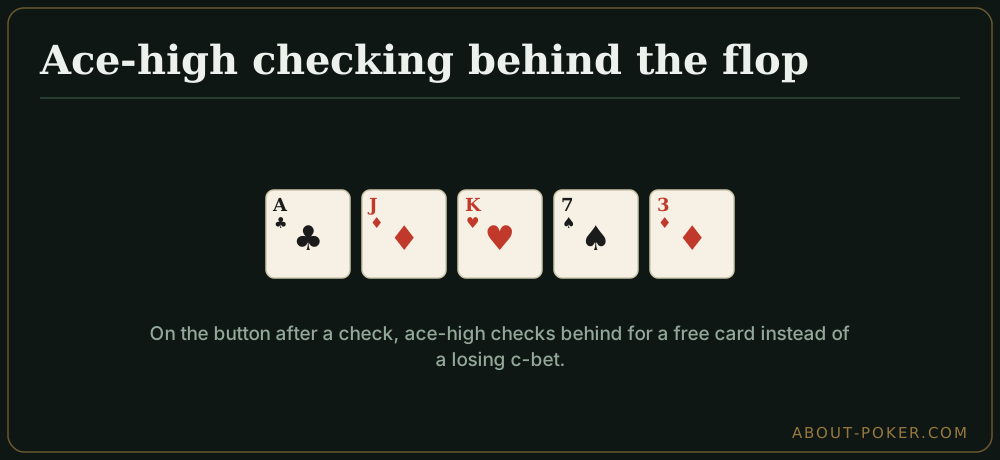
You are on the button with Ac-Jd. You raise, the big blind calls, and the flop is Kh-7s-3d. The big blind checks. You have ace-high with a backdoor draw. Many players fire a c-bet here, but consider checking behind.
If you bet, worse hands mostly fold and better hands (any king or pair) call or check-raise, so you gain little. By checking behind, you take a free card, keep your ace-high showdown value alive, and disguise your hand. If the turn brings a jack or an ace, you have improved and can now bet with a real hand. If the turn bricks and the big blind bets, you can fold cheaply having invested nothing extra. Checking behind here loses less and keeps more options open than an automatic c-bet.
Checking behind on the river
The river is where checking behind matters most, because there are no more cards. On the river you should check behind when:
- Your hand has showdown value but cannot get called by worse. Betting would only get called by better, a classic value cut.
- Your hand is a busted draw with zero showdown value but no fold equity, so a bluff would not work. Give up and check behind.
- You want to realize the pot you have already earned rather than risk a check-raise bluff or a fold from worse.
Conversely, do not check behind the river with a strong value hand that worse hands will pay off, or with a busted draw that can profitably bluff. Checking behind is for the middle of your range, not the top or the pure bluffs.
Common mistakes
- Checking behind too many strong hands. If you check back everything decent, you never get value. Bet your value hands and reserve checking behind for medium strength and give-ups.
- Betting when you should check behind. Firing marginal hands that only get called by better bleeds chips. When in doubt on the river with a medium hand, check behind.
- Forgetting the free card advantage. In position with a draw, a free card is often worth more than a bet. Do not surrender that edge by c-betting into a check-raise.
- Being predictable. If you only check behind when weak, good players will bet every time you check. Mix in strong hands occasionally to protect your range.
Quick checklist for checking behind
- Am I last to act after a check? If yes, checking behind is available.
- Does betting get called only by better hands? If yes, check behind.
- Would I rather see a free card than risk a raise? If yes, check behind.
- Is my hand a strong value hand or a good bluff? If yes, bet instead.
Checking behind is unglamorous, but it is one of the highest-frequency correct plays in position. Master it and you will save bets, realize more equity, and stop paying off better hands.
Frequently asked
What does check behind mean in poker?
Checking behind means you check when you are last to act and your opponent has already checked. This closes the action for the street and you see the next card, or reach showdown, for free.
Why would you check behind instead of betting?
You check behind to control the pot with a medium hand, to realize equity for free with a marginal made hand, to keep a bluff-catching range strong, and to avoid getting raised off a hand you want to see showdown with.
Can you only check behind in position?
Yes. Checking behind requires you to act last after your opponent has checked. If you are first to act you are simply checking, not checking behind, because someone can still act after you.