What Is Chop The Blinds in Poker?
Chopping the blinds means the two blind players agree to take their money back when everyone folds. Learn the rules, etiquette, and when to chop.
On this page · 6 sections
Chopping the blinds is a friendly cash-game agreement: when every player folds around to the small blind and big blind, those two players agree to simply take their blind money back and deal the next hand, rather than playing the pot out. It’s a courtesy that speeds up the game and avoids grinding against the rake in tiny heads-up pots. Crucially, it’s optional — both blind players must agree.
The core rule: mutual agreement to take blinds back
Here’s the exact situation. Everyone from under the gun to the button folds. The only two players left with money in the pot are the small blind and the big blind. Instead of the small blind completing and the big blind checking (or raising), the small blind can ask, “Chop?” If the big blind agrees, both players pull their blinds back, muck their cards, and the dealer moves the button along.
The reason this matters: in a raked cash game, playing out a tiny blind-versus-blind pot means the house takes a cut of already-small money. Chopping avoids feeding the rake on hands neither player cares about. It also keeps the pace brisk.
If either player declines — some players always want to play blind-versus-blind pots — the hand proceeds normally. Nobody can force a chop.
How it differs from chopping a pot
Don’t confuse “chop the blinds” with a chopped pot. A chopped pot happens at showdown when two or more hands tie and split the winnings. Chopping the blinds happens preflop, before any real betting, and there’s no showdown at all — the players just reclaim their own money. One is a rules outcome (tie), the other is a table agreement (skip the hand).
A worked example
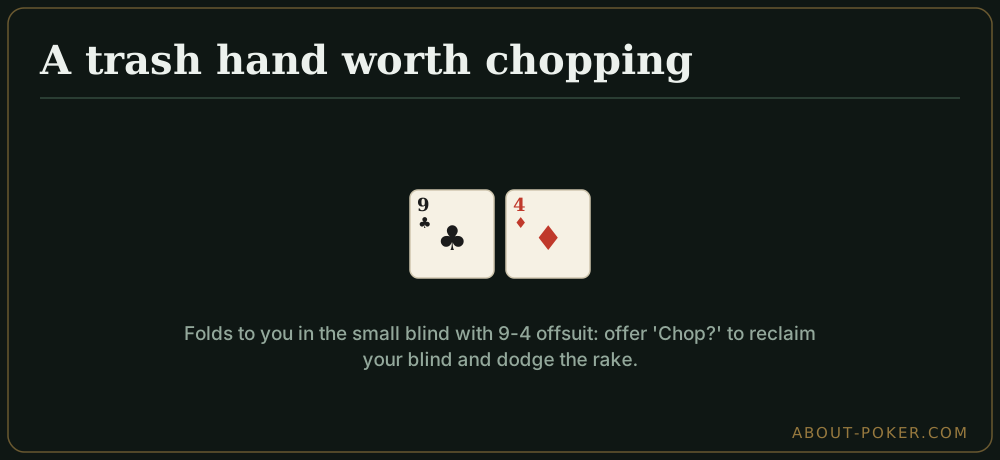
Blinds are 2/5. It folds all the way around to you in the small blind. You look down at 9♣4♦ — a hand you have no interest in playing out of position.
- Without chopping: you’d either fold your 2 (giving the big blind a free 2) or complete to 5 and hope to see a cheap flop. Both are unappealing with a weak hand and rake looming.
- With chopping: you say “Chop?” The big blind, holding J♠6♥ and equally uninterested, agrees. You each take your blinds back, the cards are mucked, and the next hand is dealt with zero rake paid.
Over a long session, chopping marginal blind-versus-blind hands saves real money in rake and lets you preserve your focus for pots that matter. But if you looked down at A♠A♣ in the small blind, you’d obviously decline the chop and play — you want that money in the pot with a premium hand.
Etiquette and unwritten rules
- Ask early and clearly. A quick “Chop?” before touching chips keeps it clean.
- Be consistent. Some players who normally chop will suddenly refuse when they have a strong hand — which telegraphs strength. If you’re a “chopper,” it’s smoother etiquette to chop or not-chop by habit rather than by hand strength.
- Respect a decline. If the big blind wants to play, don’t grumble. It’s their right, and blind-versus-blind is a legitimate spot. Your blind is still a live blind, so you retain full betting rights.
- Straddles change nothing here. If a straddle is on and folds around, the chop conversation typically involves whoever holds the live money — usually the straddler — under the same mutual-consent principle.
When you should and shouldn’t chop
Chop when: you have a marginal or trash hand out of position, the rake is significant relative to the blinds, and you’d rather conserve energy for bigger pots. Decline when: you hold a strong hand, you have a clear positional or skill edge over the big blind, or you’re deliberately building an aggressive blind-versus-blind image.
Remember that repeatedly chopping means giving up thin edges you might have against a weaker opponent. Strong players in soft games sometimes never chop, preferring to exploit opponents heads-up. In tougher or heavily raked games, chopping the junk is perfectly sensible.
Quick checklist
- Chopping only happens when it folds to the two blinds.
- Both players must agree — it’s never forced.
- It’s a cash-game custom; tournaments always play out.
- Chopping avoids rake on tiny pots and speeds play.
- Chop marginal hands; decline with strong hands or a clear edge.
Chopping the blinds is one of those small live-poker conventions that new players don’t learn from books. Now you know the rule, the etiquette, and the strategy behind saying “Chop?”
Frequently asked
What does 'chop the blinds' mean in poker?
Chopping the blinds means that when everyone folds to the small and big blind, those two players agree to take their blinds back and move on to the next hand instead of playing it out. Both players must agree to chop.
Do both players have to agree to chop the blinds?
Yes. Chopping is optional and requires mutual consent. If either the small blind or the big blind wants to play, the hand proceeds normally with a chance to raise, call, or fold.
Is chopping the blinds allowed in tournaments?
No. Chopping the blinds is a cash-game custom only. In tournaments the blinds are always played out because every chip has bracket and payout implications.