What Is Float in Poker?
A float is calling a flop bet with a weak hand, planning to bluff a later street when the aggressor gives up. Learn when floating works and how to do it.
On this page · 7 sections
A float is calling a bet with a weak hand, not because the hand is strong enough to continue, but because you plan to take the pot away on a later street. You “float” over the top of the flop, letting the aggressor keep leading, and then pounce when they slow down. It is one of the sharpest tools for beating players who bet too often on the flop and give up too easily afterward.
The Core Idea
Most players fire a continuation bet on the flop with a huge portion of their range — hits and misses alike. But on the turn, they only keep betting when they actually connected. That gap is what floating exploits. By calling the flop with a marginal hand, you keep the pot alive precisely so that when the opponent checks the turn (because they missed), you can bet and win.
A float is defined by intent. The same call can be a routine peel with a draw or a deliberate float with air — what makes it a float is that you are calling to bluff later rather than to reach showdown.
A Worked Example
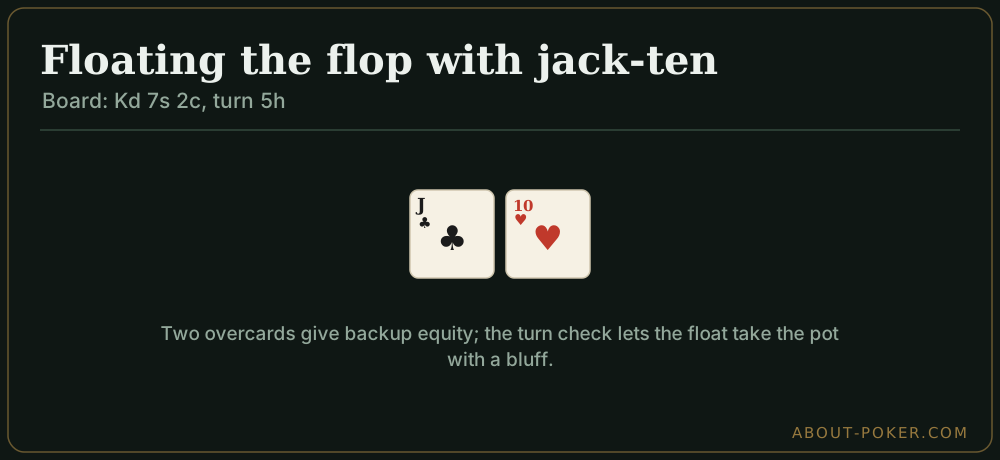
You are on the button with Jc Th. The preflop raiser bets a flop of Kd 7s 2c. You completely missed — no pair, no draw — but you have two overcards and position. This is a textbook float spot: you call.
The turn is the 5h, another blank. Your opponent, who had nothing beyond ace-high or a small pair, checks. You bet two-thirds of the pot. Their weak, missed hand cannot continue, and they fold. You just won a pot without ever making a pair, using a float and a well-timed bluff.
Notice the extra upside: even if they had bet the turn, your jack-ten can still improve to a straight or a pair. That backup equity is what separates a good float from a reckless one.
Float vs Peel
People use “float” and “peel” loosely, but there is a shade of difference. A peel usually means calling one street with a real reason to continue — a draw, backdoor equity, a pair — with a plan to reassess. A float leans harder on the bluffing plan and can be made with pure air. In practice they overlap; the distinction is how much of the call’s value comes from your hand versus your plan to attack later.
When Floating Works
Floating is profitable when several conditions line up:
- You are in position. Acting last lets you see the opponent check before you decide to attack. Floating out of position is far harder and much less profitable.
- The opponent c-bets too much and gives up too often. High flop aggression plus low turn aggression is the ideal target.
- The board favors your perceived range. You want turn cards you can credibly represent — overcards, flush completers, straight cards.
- Your hand has backup equity. Overcards, gutshots, or backdoor draws turn a pure float into a hand that can also win by improving.
Common Mistakes
Floating without a plan. Calling the flop and then just checking the turn back defeats the purpose. If you float, you must be ready to fire when the opponent shows weakness.
Floating out of position. Without position you cannot see them give up before you act, so your float loses most of its edge. Save floats for when you are last to act.
Floating stations. Against a calling station who will never fold the turn, there is no pot to steal. Float against players who can fold, not against players who cannot.
Picking bad boards. On a coordinated board where the opponent barrels a lot of turns, your float gets shoved off. Prefer dry flops where the turn is unlikely to help them keep betting.
How Stack Depth and Sizing Matter
Floating needs enough chips behind to make the later bluff meaningful. If the flop bet already commits most of the stack, there is no room to apply pressure on the turn, and your float becomes a call with air that just gets checked down. Deeper stacks give your turn barrel real teeth, which is why floats show up more in cash games and deep-stacked tournament play than in short-stacked endgames.
Quick Checklist
- Am I in position? If not, reconsider.
- Does this opponent c-bet a lot and give up on turns?
- Do I have backup equity — overcards, a gutshot, a backdoor draw?
- Is there a turn card I can credibly represent?
- Do I have a plan to bet when they check?
If you can answer yes to those, calling the flop with a weak hand stops being loose and becomes a calculated float — one of the cleanest ways to win pots you have no business winning.
Frequently asked
What is a float in poker?
A float is calling a bet with a weak or marginal hand — often with little to no showdown value — planning to take the pot away on a later street when your opponent gives up. You are floating to bluff later, not because your hand wants to see a showdown.
When should I float?
Float in position against opponents who bet the flop a lot but give up on the turn. You want a hand with some backup equity, a scary turn card you can represent, and an opponent whose turn checking range is weak enough to fold to your bet.
What is the difference between a float and a call?
A normal call is made because your hand has enough equity or value to continue. A float is made because of what you plan to do next — you are calling to set up a bluff on the turn or river, not because the hand itself justifies the call.