What Is Floated Bet in Poker?
A floated bet is calling a flop bet with a weak hand to steal the pot on a later street. Learn when floating works, who to target, and how to run it.
On this page · 6 sections
A floated bet describes one of the most reliable ways to punish an over-aggressive flop bettor: you call the flop with a weak hand, wait for them to check the turn, and then bet to take the pot away. The word “floated” points to the flop call itself — you floated over the top of their bet rather than folding or raising — and the whole play is built around what you intend to do next, not the strength of your current hand.
What the Term Actually Means
When someone says a hand was “floated,” they mean the caller had little to no showdown value and continued anyway, planning to bluff a later street. This makes floating the flip side of a continuation bet. Most players fire the flop with almost their entire range, hits and misses alike. But on the turn they only keep betting when they actually connected. That gap between how often they bet the flop and how often they follow through is exactly what the float exploits.
The related idea of a plain float covers the concept generally; the phrase “floated bet” simply emphasizes the concrete action — you called, then bet. Intent is everything. The same flop call can be a routine peel with a draw or a deliberate float with air. What makes it a float is that you are calling to bluff, not to reach showdown.
A Worked Example
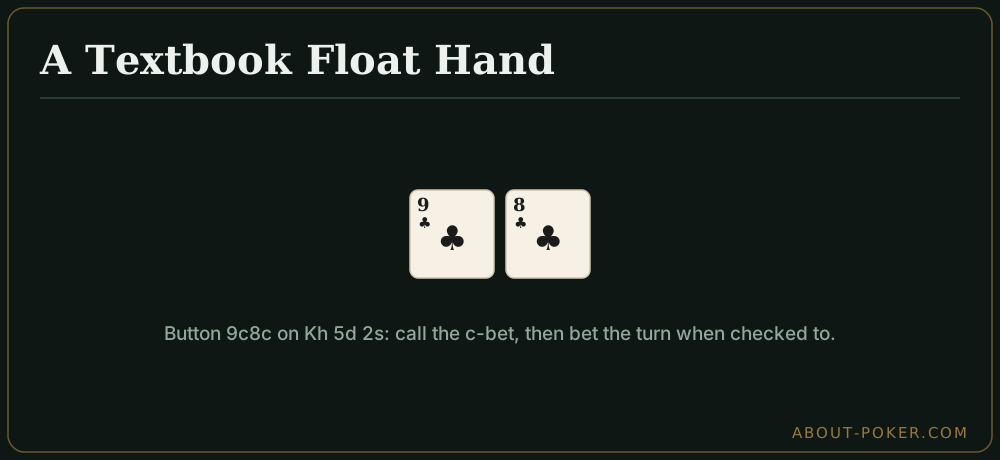
You are on the button with 9c 8c. A tight-aggressive player opens from the cutoff, you call, and the flop comes Kh 5d 2s. It misses you completely — no pair, no draw. Your opponent c-bets one-third pot. Most of this player’s range is unpaired hands that missed too, plus a handful of kings.
Instead of folding, you float: you call. The turn is the 7h. Now your opponent checks. That check screams weakness — with a king they almost always keep betting. You bet two-thirds of the pot. Against a range full of missed broadways and small pairs that hate the runout, your opponent folds far more often than the roughly 40% they would need to break even against a two-thirds-pot bet. You picked up the pot with nine-high, and if you happened to be called, your gutshot and backdoor flush leftovers give you a few extra outs.
Who to Target
Floating is opponent-dependent. Aim it at players who:
- C-bet the flop at a very high frequency (they have lots of air to give up).
- Rarely double-barrel the turn without a real hand.
- Fold too much when checked to and then bet into.
Avoid floating against players who barrel relentlessly, check-raise turns, or almost never c-bet without a hand. Against those opponents your float just bleeds chips because they keep firing and you keep folding.
Position Makes or Breaks It
Floating is almost always an in-position play. When you are last to act, your opponent has to reveal weakness by checking before you decide to bet — you get free information. Out of position, floating is much weaker: you check, they can bet again, and you never get the clean “they gave up, now I pounce” moment that makes the play profitable. If you are out of position and want to contest the pot, a check-raise on the flop or a delayed line is usually better than a passive float.
Stack depth matters too. With deeper stacks you have more room to represent big hands on later streets, so your floated bets carry more credibility. Short-stacked, there is less room to maneuver and your bluffs get less fold equity.
Common Mistakes
The biggest error is floating with total air on a board that hits the opponent’s range hard. If the flop smashes the range they are betting, your turn bluff runs into too many real hands. Pick boards where the c-bettor whiffs often — dry, high-card flops are ideal.
Second, players float and then give up when the turn goes as planned. If you floated to bluff, you have to actually bet when they check. Following through is the whole point.
Third, floating out of position or against a station. If your opponent will not fold, floating turns into a leak. Reserve it for spots where the fold equity is real.
Quick Checklist Before You Float
- Are you in position? (Strongly prefer yes.)
- Does the flop miss the c-bettor’s range? (You want boards where they whiff.)
- Does this player give up on the turn a lot? (The read that unlocks the play.)
- Do you have backup equity? (A gutshot or backdoor draw is a bonus.)
- Will you actually fire the turn when checked to? (Commit to the plan.)
Hit most of those and the floated bet is one of the highest-EV plays available against straightforward, c-bet-happy opponents.
Frequently asked
What is a floated bet in poker?
A floated bet refers to the play of calling a flop bet with a weak hand and then betting a later street when the aggressor checks. The 'float' is the flop call made purely to set up a bluff on the turn or river, not because the hand itself wants to continue.
Is floating the same as calling?
No. A normal call is made because your hand has enough equity or value to keep going. A float is made because of your plan for the next street — you are calling now specifically to bet and take the pot away later when your opponent gives up.
When does floating work best?
Floating works best in position against opponents who continuation-bet the flop frequently but give up on the turn. You want position, an opponent with a weak turn-checking range, and ideally a hand with a little backup equity so you can improve if called.