What Is Freeroll Draw in Poker?
A freeroll draw is when you are tied to win but can only win or tie, never lose, thanks to a redraw. Learn how freerolls work and how to spot them.
On this page · 6 sections
A freeroll draw is one of the sweetest situations in poker: you are guaranteed not to lose, and you have a live chance to win the whole pot. It happens when your hand is currently tied with an opponent’s, but you hold an extra card or draw that can only improve your side. Because there is upside with zero downside, you are “rolling for free.” Understanding freerolls helps you recognize when to keep betting fearlessly and when you might be the one on the wrong end of one.
What a freeroll draw is
The core idea is simple: two hands are level right now, but only one of them can get better. The player with the extra improvement is freerolling. At worst they chop the pot; at best they scoop it. They can never lose the money they put in, which is why a freeroll is such a strong spot to apply pressure.
The word comes from the same idea as a freeroll tournament, where you enter for nothing but can still win real prizes. In both cases you have something to gain and nothing to lose. In a hand, that “nothing to lose” comes from being tied with a live redraw that your opponent lacks.
Where freerolls come from
Freerolls appear most often in Pot-Limit Omaha (PLO) because players frequently make the same straight, then one of them has a flush or bigger-straight redraw on top. They also occur in Hold’em, though less often, when two players share the same made hand but one has an extra out to improve.
The essential ingredients are:
- Both hands are currently equal, usually the same straight or the same nuts.
- One player holds an additional draw, a flush draw, a higher straight draw, or a pair that can boat up.
- That extra draw cannot help the opponent, only the freeroller.
When all three are present, the freeroller can jam or bet with total confidence, since the worst outcome is getting their own money back.
A worked example
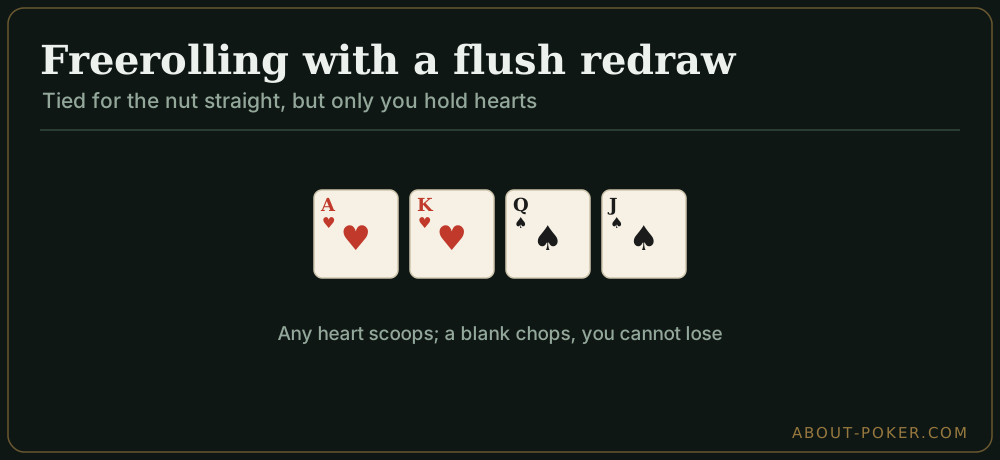
You hold Ah Kh Qs Js in Omaha and your opponent holds Kd Qd Ts 9c. The board comes Th 9h 8s, and both of you have flopped the same straight using different cards, the nut straight, queen-jack-ten-nine-eight, is shared. Right now you are tied. But look at your hand: you also have Ah Kh, giving you a heart flush draw. Your opponent has no flush draw and no way to make a higher straight than you.
That means any heart on the turn or river makes you a flush and wins the whole pot, while nothing your opponent hits beats you. If a blank comes, you simply chop. You are freerolling: you can win, you can tie, but you cannot lose. This is exactly the kind of spot where you keep betting, because your opponent has to call to chop while you have all the upside.
The other side of the freeroll
Freerolls cut both ways. If you find yourself with the bare nut straight and no redraw, facing heavy aggression on a two-flush board, you may be the one getting freerolled. In that spot, calling large bets is dangerous: you are drawing only to a chop, and your opponent is drawing to scoop. This is why bare, redraw-less nut hands in Omaha, especially the nut flush draw that never arrives, must be played with awareness that someone else may have the free shot at your stack.
Common mistakes around freerolls
- Not recognizing your redraw. Players sometimes just call when they are freerolling, leaving money on the table. If you can only win or tie, bet and get value.
- Paying off when you are freerolled. If your nut hand has no redraw and the board is dangerous, calling large bets can be pouring chips into a pot you can only chop.
- Confusing a freeroll with a coinflip. A coinflip is roughly even money with real downside. A freeroll has no downside; the distinction should change how aggressively you play.
- Overlooking backdoor redraws. A backdoor flush or full-house draw can quietly make you the freeroller. Always scan for the extra out.
Quick checklist
When you suspect a tie, ask two questions: Am I tied right now, and does one of us have a live draw the other cannot match? If you hold the extra draw, you are freerolling, so bet with confidence. If your opponent might hold it and you have the bare nuts, tighten up. Spotting who is freerolling turns a confusing tie into a clear, profitable decision.
Frequently asked
What is a freeroll draw in poker?
A freeroll draw is a situation where your hand currently ties an opponent's but you hold an extra draw that can only improve you, never them. You can win the whole pot or, at worst, split it, so you are risking nothing to win more. This is different from a freeroll tournament.
What is the difference between a freeroll and a freeroll tournament?
A freeroll draw is an in-hand equity situation where you can win or tie but not lose. A freeroll tournament is a free-to-enter event with a real prize pool. The word freeroll means the same idea in both: you have upside with no downside risk.
How do freerolls happen in Omaha?
Freerolls are common in Pot-Limit Omaha because players often make the same straight while one player holds an additional flush or higher-straight redraw. When two players share the nut straight but one also has a flush draw, that player is freerolling.