What Is Merge in Poker?
Merging means betting a range of strong and medium hands at one size, not just nuts and air. Learn how merged bets work and when to use them.
On this page · 6 sections
Merging is a betting concept that describes which hands you choose to bet and at what size. To merge means to bet a connected band of hands — your strong ones plus your medium-strength ones — at the same size, instead of splitting your bets into only the very best hands and pure bluffs. A merged bet is built to get called by a wide swath of worse hands, and it is one of the most profitable adjustments against opponents who call too often.
What merging means
Every time you bet, you choose a group of hands to bet with — that is your betting range. There are two broad shapes that range can take. A polarized range contains only the top of your holdings and some bluffs, with the medium hands checked. A merged range instead bets a smooth, continuous band: nut hands, strong hands, and medium hands all bet together, usually with few or no pure bluffs mixed in.
Merging is essentially the opposite of polarizing. Where a polarized bettor says “I either have it or I don’t,” a merged bettor says “I have a whole range of hands good enough to get value from your calls.” This is the everyday version of a merged range in action.
Merge versus polarize
The choice between the two comes down to your opponent and your sizing.
- Polarize (big bets, only nuts and bluffs) against opponents who fold correctly. Large sizing pressures their medium hands and lets your bluffs win pots, while your nutted hands get maximum value.
- Merge (smaller bets, wide value, few bluffs) against opponents who call too much and rarely fold. If they never fold, bluffing is pointless — so you drop the bluffs and instead bet every hand that beats their calling range, at a size they will happily pay.
The key insight: bluffs need fold equity to profit. Against a calling station, fold equity is near zero, so you merge and let their loose calls pay off your medium-strength hands.
A worked example
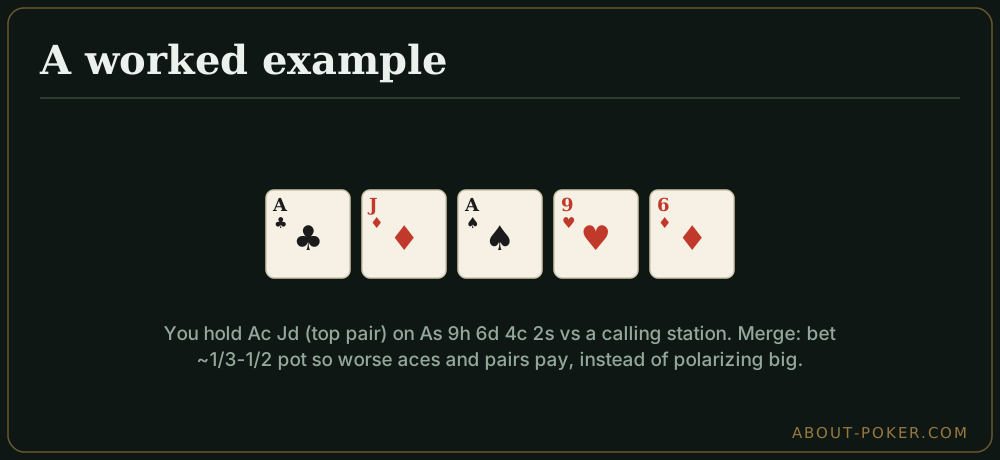
You reach the river with A♣ J♦ on a board of A♠ 9♥ 6♦ 4♣ 2♠. You have top pair, decent kicker — a medium-to-strong hand. Your opponent is a station who calls the river with any pair or ace-rag.
Against this player, a polarized approach (big bet or check) would be wrong. A big bet folds out worse aces and weaker pairs you want to keep in; a check leaves money on the table. Instead you merge: bet about one-third to half the pot. Now A-8, A-5, 9-x, and various pairs all call, and you collect value from a wide band of worse hands. Your A-J is not the nuts, but against a calling range it is a clear favorite, so betting it for value at a merged size prints money.
Why sizing matters
Merged ranges use smaller bets, and that is not a coincidence. A small bet keeps weak hands in the pot, which is exactly the point when your value comes from getting called by many worse holdings. If you sized up, you would fold out the very hands you are targeting. Polarized ranges use larger bets because they need to charge draws and maximize on the nuts while leveraging bluffs. Matching your sizing to your range shape is what makes the strategy coherent — a big bet with a merged range gives the whole thing away.
When to merge
Merge when:
- Your opponent is a calling station who rarely folds.
- The board is dry enough that few draws need charging.
- Your value range is wide but not nutted — lots of medium-strength hands.
- You are on a later street where hand values are mostly defined.
Avoid merging against thinking opponents who fold and raise correctly; against them, a well-balanced polarized range is harder to exploit, because a merged range full of medium hands can be raised off its value.
Common mistakes
The classic error is merging against the wrong opponent — betting a wide, thin range into a player who only continues with strong hands, which just donates money when they raise or trap. Another is using a big bet size with a merged range, which folds out the weak hands you meant to milk. Finally, do not confuse merging with bluffing: a merged bet is almost all value, so if you find yourself betting to fold hands out, you have drifted into polarization instead. Pick the shape that fits the opponent, size it accordingly, and merging becomes a quiet, reliable edge.
Frequently asked
What does merge mean in poker?
To merge means to bet a connected band of hands — strong and medium-strength ones — at the same size, rather than splitting your range into only the nuts and pure bluffs. A merged bet targets calls from a range of worse hands.
What is the difference between merging and polarizing?
A polarized range bets only very strong hands and bluffs. A merged range bets strong and medium hands together, with fewer or no pure bluffs. Merging uses smaller sizes; polarizing uses larger ones.
When should I use a merged bet?
Use merging when your opponent calls too much and rarely folds. A smaller merged bet with a wider value range extracts money from all the weak hands that will pay you off, which pure polarization would miss.