What Is Monotone Board in Poker?
A monotone board shows three cards of the same suit. What it means for flushes, how it caps ranges, and the right way to bet on all-one-suit flops.
On this page · 6 sections
A monotone board is a set of community cards showing three of the same suit — a flop like J♥ 8♥ 3♥, or a board where three of the five cards match in suit. The name comes from “one tone,” meaning one color of suit dominates. Monotone boards are among the trickiest textures to play because a flush is possible the instant the flop lands, which flips a lot of normal single-pair logic on its head.
What “monotone” means
Monotone simply means all three flop cards are the same suit. Compare it to a rainbow flop (three different suits) or a two-tone flop (two of one suit). On a rainbow flop no flush is possible for two more cards; on a monotone flop, someone can already hold a completed flush right now.
That single fact drives everything. Every player only needs two more cards of the suit to have a flush, and any one card of the suit is a strong flush draw with nine outs. So the board interacts with far more hands than a dry, unpaired texture would.
Why flushes dominate the texture
On a J♥ 8♥ 3♥ flop, a hand like A♥ 4♥ is already the nut flush. Even hands that look weak preflop, like small suited connectors in the board’s suit, may have flopped a flush. This compresses the value of one-pair hands: your overpair of aces with no heart is still ahead of most single hearts, but it is behind every made flush and can be drawn out on by any lone heart.
Holding the ace of the suit is especially powerful. It works as a blocker — if you hold A♥ on a heart board, no one else can have the nut flush, and you carry a nut-flush redraw yourself. That is why the ace-high card of the board’s suit is worth far more here than on other textures.
A worked example
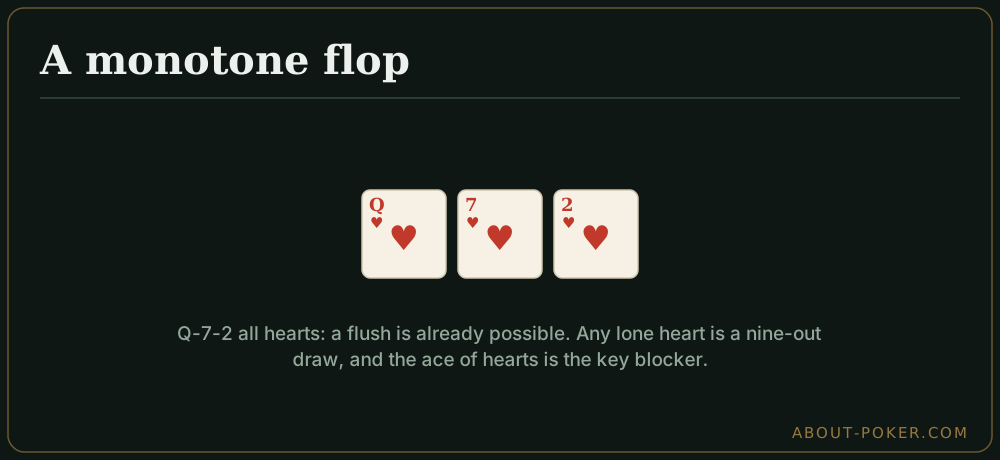
You raise with A♠ K♠ from the cutoff and the big blind calls. The flop comes Q♥ 7♥ 2♥ — a monotone board, and none of your cards is a heart.
You have ace-king high with a gutshot to broadway at best, and the board is fully coordinated against you. This is a classic small-bet or check spot. If you bet, keep it around one-quarter to one-third pot: you can fold out unpaired non-heart hands cheaply, but there is no reason to pour money in when made flushes call and you have little equity. Firing large here is a mistake because your opponent’s continuing range is heavily weighted toward hearts and pairs that already beat you.
Now flip it: if you held A♥ K♠ instead, you would have the nut-flush blocker plus a nut-flush draw on any further heart. That hand can barrel more confidently because you both block the current nuts and can improve to it.
Betting adjustments on monotone boards
The guiding principle is restraint. Because both players can hold flushes and flush draws, ranges are closer than on a dry board, so the automatic large continuation bet you might use on A-8-3 rainbow does not apply.
- Size down. Small bets accomplish the goal of charging draws and folding out complete air without over-committing against made flushes.
- Bet less often. Check more of your medium-strength hands; they do not want to build a big pot on a board that beats them so easily.
- Value your suit blockers. Any hand with a high card of the board’s suit gains bluffing and value potential.
- Respect a raise. On a monotone board a raise very often means a made flush or a strong flush draw with a pair.
Monotone versus paired boards
It is worth contrasting monotone texture with a paired board. A paired board threatens full houses via the shared rank; a monotone board threatens flushes via the shared suit. Both narrow the set of true nut hands and reward careful sizing, but the danger cards differ — on a paired board watch the rank, on a monotone board watch the suit. Knowing which “nut” hand is out there tells you how hard you can push.
Quick checklist for monotone boards
- Three cards of one suit — a flush is already possible.
- Any single suited card is a nine-out flush draw, so equities run close.
- The ace of the suit is gold: it blocks the nut flush and gives a redraw.
- Size down and bet less often; do not overbuild pots with one pair.
- A raise usually means a made flush — proceed carefully.
Play monotone boards with humility. The flush is on the table the moment the flop appears, so trade the reflex to barrel big for smaller, more selective bets and a sharp eye on who holds the suit.
Frequently asked
What is a monotone board in poker?
It is a flop or board where three community cards share the same suit, such as J-8-3 all of hearts. Any player holding two more cards of that suit already has a flush, and a single card of the suit gives a flush draw.
How do you play a monotone flop?
Bet smaller and more selectively than on a rainbow flop. Made flushes are possible immediately, so overpairs and top pair are more vulnerable. Holding the ace of the board's suit is valuable because it blocks the nut flush and gives you a strong redraw.
Does a monotone board favor the preflop raiser?
Often only slightly. Because flushes can already be made and both players can hold suited hands, ranges are close. The raiser still bets, but usually smaller and less often than on a dry board.