What Is Merge Range in Poker?
A merged range packs value, medium-strength, and some bluffs into one betting range. Learn how merging differs from polarising and when to use it.
On this page · 6 sections
A merged range is a betting range built from strong value hands, medium-strength hands, and a modest number of bluffs — all bet together. The word “merge” points to the middle: instead of splitting your bets into only the nuts and pure air, you fold in the in-between hands too. It is the same concept as a merged range, and it sits opposite the polarised range on the spectrum of how you structure a betting range.
Merged vs Polarised
The cleanest way to understand merging is to compare it with polarising:
- A polarised range is only very strong hands and bluffs, with nothing in the middle. It uses large bet sizes and puts opponents to tough decisions — call big or fold.
- A merged range adds medium-strength hands into the betting range. It uses smaller bet sizes and gets called by a wide band of worse hands.
Neither is universally better. Polarising maximizes pressure and fold equity; merging maximizes how many worse hands pay off a bet. The right choice depends on your opponent and your sizing.
When Merging Wins
Merge your range when the situation rewards thin value over fold equity:
- Your opponent calls too much and rarely raises. Medium hands then get paid by even weaker holdings.
- You are using a small bet size. Small bets invite calls, so betting medium hands for value makes sense.
- You want to protect a medium made hand and deny equity, while still getting called by worse.
Against a calling station, a big polarised bet just folds out the bluff-catchers and gets snapped by better hands. A smaller merged bet quietly extracts value from all the second-best hands the station refuses to fold.
A Worked Example
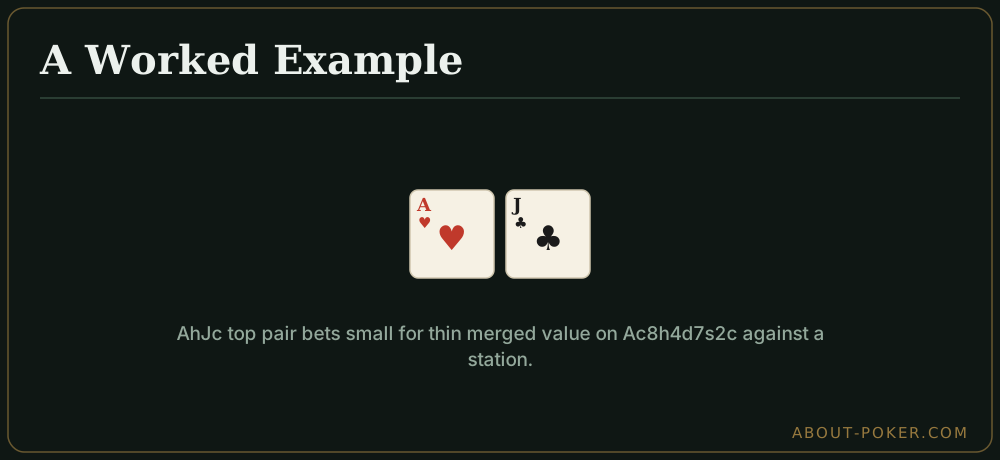
You are in a single-raised pot with Ah Jc on a board of Ac 8h 4d 7s 2c — a dry runout where you hold top pair, decent kicker. Your opponent has called the flop and turn and looks like a sticky player who peels a lot of weak aces, middle pairs, and busted draws.
A polarised approach might check the river, giving up on getting value because you fear a raise. But against this station, that leaves money on the table. Instead you merge: you bet a small size, around one-third of the pot. Now worse aces (A9, A6, A5), pairs like 88 down to small pairs, and stubborn bluff-catchers all call. Your A-J is nowhere near the nuts, but it beats a wide slice of the calling range, so a small merged value bet prints chips. The key insight — betting a medium hand for thin value with a size that keeps worse hands in — is the heart of merging.
Sizing and Merging Go Together
Merged ranges and small bet sizes are a natural pair. A small bet gets called by many hands, so filling your range with medium value hands makes the bet profitable across a wide band. A big bet, by contrast, folds out the medium hands you would want to value-bet against, which is why large sizes belong to polarised ranges. If you find yourself wanting to bet small, that is usually a signal your range should be merged; if you want to bet big, lean polarised.
Common Mistakes
The first mistake is merging against the wrong opponent. Betting medium hands into a player who check-raises a lot or only calls with strong hands turns thin value into a trap — you get raised off the best hand or called only when beaten. Merge against callers, not aggressors.
The second mistake is over-sizing a merged range. If you load your betting range with medium hands but then bet big, you fold out the worse hands you wanted to value, and you get called only by better. Match the small size to the merged construction.
The third is failing to have any bluffs at all. Even a merged range benefits from a few bluffs so that observant opponents cannot always call your small bets profitably with any pair.
Quick Checklist
- Does your opponent call too much and rarely raise? (Ideal to merge.)
- Are you using a small bet size? (Merging fits small bets.)
- Do you have a medium hand that beats many worse calls? (Prime merged value.)
- Have you kept a few bluffs in the range? (Keeps it uncallable-proof.)
When your opponent will pay off with second-best hands, merging your range and betting small turns marginal holdings into steady, low-risk value.
Frequently asked
What is a merge range in poker?
A merged range is a betting range made up of strong value hands, medium-strength hands, and a smaller number of bluffs — as opposed to a polarised range of only very strong hands and pure bluffs. You merge to get value from a wider set of worse hands that will call a smaller bet.
When should you use a merged range?
Merge when your opponent calls too much and rarely raises, when you want to bet a medium-strength hand for thin value, and when using a smaller bet size. Merged ranges pair naturally with small bets because they get called by many worse hands.
What is the difference between a merged and a polarised range?
A polarised range contains only strong value and bluffs, uses large sizes, and targets folds or big calls. A merged range adds medium hands in the middle, uses smaller sizes, and targets thin value from opponents who call down light.