What Is Mucking in Poker?
Mucking means discarding your cards face-down into the pile. Here's what the poker term means, how it differs from folding, and the costly mistakes to avoid.
On this page · 6 sections
Mucking means discarding your cards face-down into the pile of dead cards — a pile that is itself called the muck. When you fold, you muck. When you reach showdown with a losing hand, you can muck rather than reveal it. It’s one of the most basic actions in poker and one of the easiest to get wrong in a way that costs you a pot, so it’s worth understanding exactly what happens when cards hit the muck.
The muck is the graveyard
Every hand that folds goes to the same place: a face-down pile in front of the dealer. That pile is the muck. The word doubles as a verb — “I mucked” means “I threw my cards into that pile.” The rule that governs it is short and unforgiving:
A hand that touches the muck is dead.
Dead means gone. It doesn’t matter if you mucked pocket aces by accident, or if the cards you tossed would actually have won. Once they mix with the dead pile, they can’t be retrieved and you have no claim to the pot. Dealers enforce this strictly precisely because it’s impossible to prove what a face-down, mixed-in hand contained.
Mucking versus folding
People use the words loosely, but there’s a clean distinction worth keeping straight:
- Folding is the decision to give up your hand and step out of the pot. It sits alongside your other options — you can check, call, raise, go all-in, or fold.
- Mucking is the physical act of pushing your cards face-down toward the dealer to make that fold official.
So every fold ends in a muck, but not every muck is a preflop or in-hand fold. You can also muck at showdown, after all betting is complete, which is a different situation entirely.
Mucking at showdown
At showdown, the last aggressor typically shows first, and remaining players either table their cards to compete for the pot or muck them face-down and concede. Why would you muck a hand you paid to see the river with?
Because showing your cards gives away information. If you called down with a weak holding and got beat, tabling it teaches observant opponents how loosely you call. Mucking face-down keeps that a secret. Many strong players muck losing hands routinely for exactly this reason.
The critical safeguard: only muck at showdown once you’re certain you’ve lost. If there’s any chance you win — even a slim one — table your cards face-up first. Let the dealer read the board. You cannot lose a pot your hand actually wins if the cards are face-up on the table, but you absolutely can lose it if you muck them.
A worked example of a costly muck
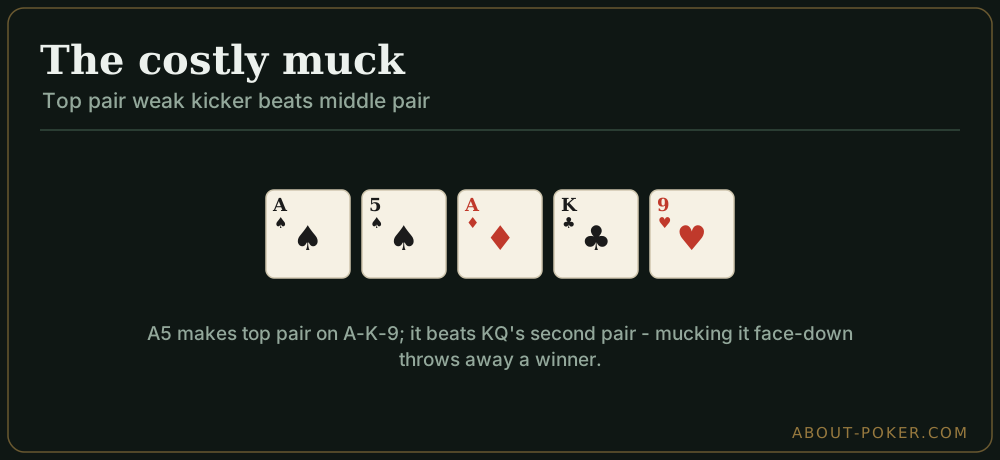
You’re heads-up on the river holding A♠ 5♠ on a board of A♦ K♣ 9♥ 4♠ 2♣. You’ve made top pair, weak kicker. Your opponent bets, you call, and they table K♦ Q♦ — second pair, king-queen.
You glance at your hand, see the weak five kicker, assume you’ve lost to the king, and toss your cards toward the dealer. Disaster: your pair of aces beats their pair of kings. Top pair beats middle pair regardless of kicker. But your cards are now in the muck, they’re dead, and the pot is pushed to your opponent. You threw away a winner because you misread the showdown.
This happens more than beginners expect. The lesson is iron-clad: never release your cards until the pot is decided and you’re sure it isn’t coming to you. When in doubt, turn them face-up and let the dealer sort it out — that’s what they’re there for. If you’re unsure whether your hand even beats a given holding, brush up on the nuts and hand strength.
Common mucking mistakes to avoid
- Mucking a winner. Covered above — the cardinal sin. Always confirm before you release.
- Mucking out of turn. Tossing your cards before the action reaches you can give away information and, in some rooms, draw a penalty.
- Letting your cards drift toward the muck. Keep your hand clearly in front of you and protected until you act, so it never accidentally mixes in.
- Flinging cards off the table. A card that leaves the felt or turns face-up can be ruled dead or exposed. Slide them gently.
Table etiquette
Mucking cleanly is part of being a good tablemate. Push your cards face-down toward the dealer without flashing them to your neighbors, don’t slow-roll by pretending to muck a winner, and don’t announce what you folded in a way that could affect a live hand. Smooth, quiet mucking keeps the game moving.
For the rest of the poker vocabulary — from betting actions to showdown rules — browse the full poker glossary.
Frequently asked
What does mucking mean in poker?
Mucking means discarding your cards face-down into the pile of dead cards, called the muck. You muck when you fold, and you can also muck at showdown by declining to reveal a losing hand. Once cards touch the muck, they are dead and cannot be reclaimed.
What is the difference between mucking and folding?
Folding is the decision to give up your hand and forfeit the pot; mucking is the physical act of tossing your cards face-down to make that fold official. Every fold ends in a muck, but you can also muck at showdown after the betting is done.
Can you win a hand if you muck your cards?
Almost never. Once your cards hit the muck they are dead, even if they would have won. The rare exception is when your hand is tabled face-up and clearly wins before it's mucked, but as a rule, never release your cards until you're certain you've lost or the pot is awarded to you.
Should you muck a losing hand at showdown?
You can, and many players do to hide information about how they play. If your hand cannot beat what's already shown, mucking face-down keeps opponents from learning your tendencies. But if there's any chance you win, always table your cards face-up first.