What Is Open Shove in Poker?
An open shove is moving all-in as the first player to enter the pot. Here's what the term means, a short-stack example, and the ranges that make it correct.
On this page · 6 sections
Open shoving is moving all-in as the first player to voluntarily enter the pot. No one has raised ahead of you; you simply push your entire stack forward. It’s the signature move of short-stacked tournament play, where a standard-sized raise would commit most of your chips anyway — so instead of raising small and facing an awkward decision later, you jam everything in at once and take the fold equity that comes with it.
The exact definition
To open a pot is to be the first player to put in a raise. To shove is to move all-in. Combine them and an open shove is being the first raiser and betting your whole stack in a single motion. The word “open” is doing important work here — it distinguishes this from a re-shove, where you jam over someone else’s raise.
Open shoving belongs to what’s called push-fold poker: a simplified strategy for short stacks where your only two options preflop are to shove all-in or fold. When your stack is small enough, this binary approach is not just simpler — it’s close to mathematically optimal.
Why short stacks shove
The logic comes down to your effective stack measured in big blinds. Suppose you have 8 big blinds. A normal open raise is around 2 to 2.5 big blinds. If you raise to 2 and someone re-raises, you’re now facing a decision with 6 big blinds behind and most of your stack already at risk — you’re committed but haven’t captured the full pressure of being all-in.
By open shoving all 8 big blinds instead, you accomplish two things at once. You give your opponents the maximum incentive to fold (fold equity), and you remove every post-flop decision from a stack too small to maneuver. The blinds and antes you pick up uncontested are large relative to your stack, so stealing them repeatedly is how short stacks stay alive.
A worked example
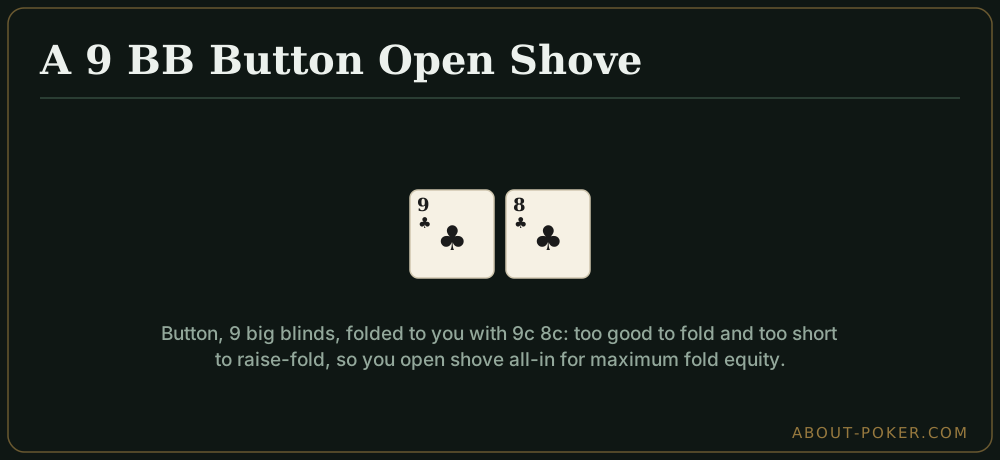
It’s a tournament. You’re on the button with 9♣ 8♣ and a stack of 9 big blinds. The action folds to you. You have a decent hand, a small stack, and two opponents left to act who each cover you.
Open shove. Here’s why. Nine-eight suited is far too good to fold at 9 big blinds from the button. But if you min-raise, you invite a re-raise from the blinds that puts you in a guessing spot for your tournament life. Shoving all-in instead pressures both blinds to fold everything but genuinely strong hands. If they both fold, you win 1.5 big blinds plus antes without a fight — a meaningful boost. If you get called, nine-eight suited still has reasonable equity against most calling hands, often around 35 to 40%. The shove is clearly better than either folding a playable hand or raising into an awkward pot.
How your range changes
Your open-shoving range — the set of hands you’re willing to jam — depends on two factors:
- Stack depth. The shorter you are, the more hands you can profitably shove. At 5 big blinds you’re jamming a very wide range because fold equity plus the desperation to accumulate chips outweighs the risk. At 15 big blinds you shove a much tighter, stronger set of hands.
- Position. From the button or cutoff, fewer players are left to wake up with a big hand, so you can shove far wider. From early position with the whole table behind you, you tighten up to premium and strong hands only.
Published push-fold charts exist for exactly this reason — they tell you, for a given stack size and position, which hands are a profitable open shove. Memorizing the rough shape of these ranges is one of the highest-value study projects for tournament players.
Common mistakes
- Shoving too tight when short. At 6 big blinds, waiting for a premium hand bleeds your stack away through blinds and antes. You must shove wide to survive.
- Open raising small when you’re committed. If a normal raise would commit a third or more of your stack, just shove — the small raise gives up fold equity for nothing.
- Ignoring who’s behind you. A big stack in the blinds may call lighter to bust you; a fellow short stack may fold more to preserve their own life. Adjust which hands you jam accordingly.
A quick checklist
- Count your big blinds first. Under 15, start thinking push-fold; under 10, shove or fold is usually correct.
- Widen from late position, tighten from early. Fewer players behind means more hands you can jam.
- Prefer shoving over committing raises. If you’ll be pot-committed anyway, take the fold equity of the full all-in.
Open shoving is where discipline and aggression meet: fold the truly bad hands, but jam everything playable to keep the pressure on. For more short-stack terms, browse the full poker glossary.
Frequently asked
What does open shove mean in poker?
An open shove is when you move all-in while being the first player to voluntarily put money in the pot — no one has raised before you. It's most common with short stacks in tournaments, where raising a normal amount would commit most of your chips anyway, so you just push everything in at once.
When should you open shove?
Open shoving is standard when your stack is short — roughly 15 big blinds or fewer, and especially under 10. At those depths a normal raise leaves you pot-committed, so shoving captures the fold equity of moving all-in while avoiding tricky post-flop decisions with a tiny stack.
What hands do you open shove with?
Your shoving range widens as your stack shrinks and as you move closer to the button. Under 10 big blinds from late position you can shove many suited and offsuit hands profitably; from early position with a slightly larger stack you shove a tighter, stronger range.
Is open shoving the same as a re-shove?
No. An open shove is going all-in first, before anyone else has raised. A re-shove is going all-in over the top of someone else's raise. Both are push-fold moves, but the open shove has more fold equity because no one has yet shown strength.