What Is Protection Bet in Poker?
A protection bet charges opponents to draw and denies free cards to hands that could beat you. Learn sizing, when to use it, and a worked example.
On this page · 6 sections
A protection bet is a bet you make with a decent-but-vulnerable made hand specifically to charge the hands that could beat you if they hit. When your top pair or overpair is ahead right now but there are live draws on the board, checking gives those draws a free card. A protection bet takes that free card away and makes the opponent pay to try to catch up. It is closely tied to the idea of denying opponents their share of the pot.
What protecting a hand means
Imagine you hold the best hand on the flop, but the board is dangerous — flush draws and straight draws everywhere. Your hand is good now, but plenty of turn and river cards will make it second-best. A protection bet answers a simple question: why let those cards come for free?
By betting, you accomplish two things. First, you charge the draws a price to continue, so they either fold (giving up their outs) or pay you when they are behind. Second, you build a pot while you are ahead. This is the practical arm of equity denial: you are protecting the equity your hand holds this moment rather than gifting it away.
Protection bet versus pure value bet
A pure value bet wants worse hands to call — its profit comes from getting paid. A protection bet still loves calls, but it earns extra by folding out or charging drawing hands. The distinction matters for sizing. When your primary concern is protection, you can bet a little larger than you would for thin value, because charging draws is worth more on a wet board than squeezing an extra call from a marginal hand.
The honest truth is that most bets with vulnerable made hands are both at once: value against worse pairs, protection against draws. Good players do not agonize over the label — they just recognize that a wet board calls for a bet, and they size it to make the draws pay.
A worked example
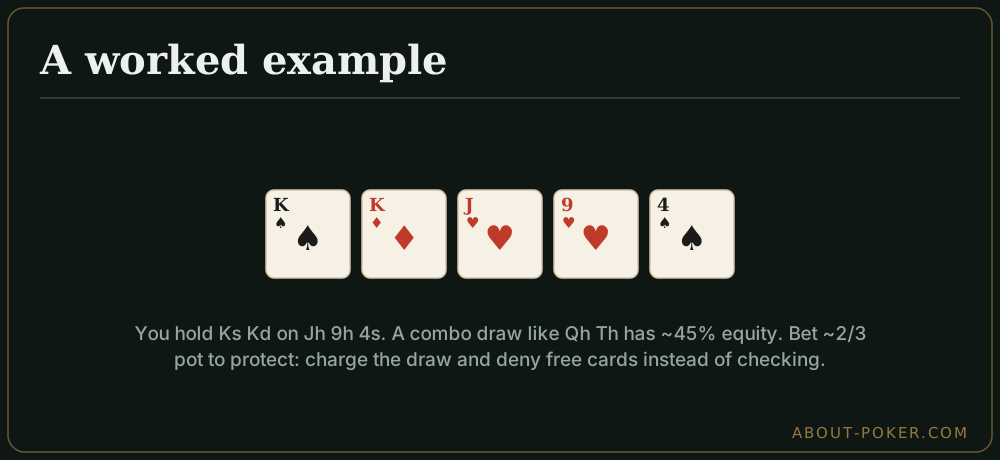
You raise with K♠ K♦ and get one caller. Flop: J♥ 9♥ 4♠. You have an overpair, but this board is loaded. Your opponent could hold flush draws (any two hearts), straight draws like Q-T or T-8, and combo draws that have big equity against you.
A hand like Q♥ T♥ has roughly 45 percent equity against your kings on this flop — nearly a coin flip. If you check, you invite that hand to see a free turn and river. Instead you bet about two-thirds of the pot. Now the draw must pay to continue, and every time it folds you have denied a huge chunk of equity. Checking here to “control the pot” would be a costly mistake, because the pot you are protecting is one you are currently winning.
Sizing your protection bets
The rule of thumb: bet big enough to make the draw unprofitable. A common flush draw has about nine outs, roughly 18 to 20 percent to hit on the next card. A bet of half pot or more usually makes chasing it a losing proposition on its own. On very wet boards, two-thirds to full pot is often right. Undersized bets are the classic error — a small bet lets a flush draw call cheaply and still profit, which defeats the entire purpose of protecting.
When you do not need to protect
Not every board needs a protection bet. On dry, disconnected boards like K♣ 7♦ 2♠, there are almost no draws to charge, so your top pair or overpair is rarely in danger. There you can check to trap, since the hands that would fold had little equity anyway. Protection matters in proportion to how many live draws the board offers — the wetter the board, the more urgent the bet.
Common mistakes
The biggest mistakes are checking vulnerable hands “to trap” on wet boards, and betting too small when you do bet. Both leak equity to draws. A subtler error is protecting hands that do not need it — betting a set on a dry board, for instance, when slow-playing would earn more. Learn to read the board texture first: count the draws, ask how many turn cards you fear, and size your protection bet to make those draws pay. Done right, a protection bet is one of the steadiest ways to convert a good hand into a won pot.
Frequently asked
What is a protection bet in poker?
A protection bet is a bet made with a vulnerable made hand to charge opponents who could draw out on you. It makes their draws unprofitable and denies them the free cards that could turn a losing hand into a winner.
How big should a protection bet be?
Big enough to make the opponent's draw unprofitable, usually two-thirds to full pot on wet boards. Smaller bets fail to charge draws properly, while overbets can fold out the worse hands you also want to keep in.
Is a protection bet the same as a value bet?
They overlap. A value bet wants calls from worse hands; a protection bet also wants to fold out or charge drawing hands. Most bets with vulnerable made hands do both jobs at once.