What Is Punt in Poker?
A punt is throwing away chips or a whole stack on a bad play. Learn what punting means in poker, why it happens, and how to avoid the classic punt spots.
On this page · 6 sections
A punt is throwing away chips — often your entire stack — on a clearly bad play. The word borrows from soccer, where you “punt” the ball away when you have nothing better to do. In poker it means giving up your chips almost voluntarily: shoving into an obvious monster, calling off drawing nearly dead, or launching a hopeless bluff for stacks. When someone “punts their stack,” they did not get unlucky; they made a bad decision and paid the maximum for it.
Punting is the loudest, most painful version of a leak. One punt can wipe out a session’s worth of patient, correct play in a single hand — which is exactly why plugging punts matters more than squeezing out thin edges.
Punt vs. Spew
Punting and spew are close relatives, and players use them almost interchangeably. The useful distinction is scale and finality. Spew is the ongoing habit of bleeding chips through loose, ego-driven plays. A punt is the single catastrophic instance — usually losing a whole stack in one reckless decision. You can spew slowly over an hour; you punt in one hand. Every punt is a form of spew, but not every spew is a full punt.
The Anatomy of a Punt
Most punts share a shape: a player commits far more than the situation justifies, ignoring the story the hand is telling. The classic punt spots are worth memorizing so you can feel them coming:
- Turning a made hand into a bluff. Shoving a decent hand as a bluff into someone who will obviously call.
- Calling off drawing dead or near-dead. Stacking off with a hand that can only beat a bluff, against a line that is never bluffing.
- Hero-shoving on a scare card that hits your opponent’s range harder than yours.
- Frustration jams — moving all in “to end it” after a bad beat.
The common thread is ignoring pot commitment and range reads in favor of a gut urge to gamble.
A Worked Example
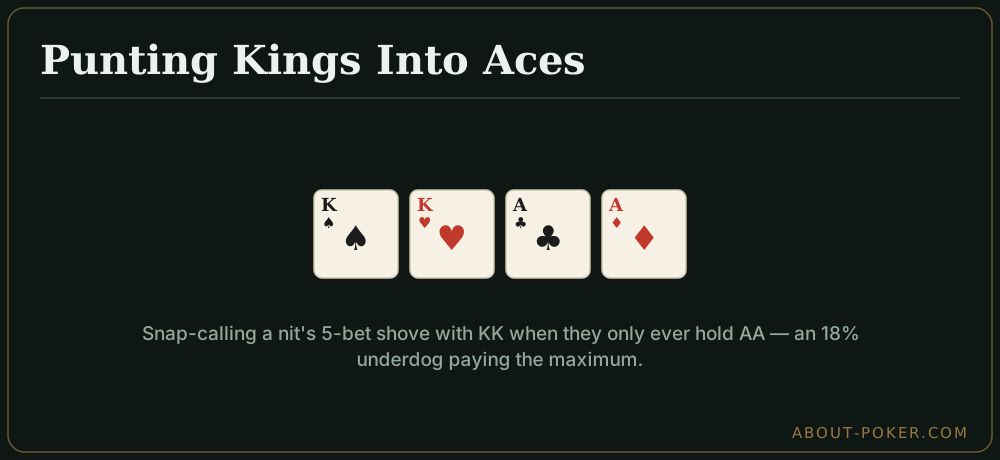
You hold Ks-Kh and open-raise. A tight player 3-bets, you 4-bet, and they shove all-in. You snap-call — and they turn over Ac-Ad. Kings are strong, but against a hand that has you crushed, you are only about 18 percent to win (aces beat kings roughly 82 percent of the time preflop). Sometimes stacking off with kings is unavoidable. But if this specific opponent only ever 5-bet shoves with aces, calling off 100 big blinds when you are an 18 percent underdog is a punt: you knew what they had and paid anyway.
Now flip it. You have 8h-8s on Kd-Qc-2h. A nit bets big on every street and you call down to the river, then call a shove. Your eights beat almost nothing that plays this way. Calling off a full stack with third-best hand against a line screaming value is a punt — you handed over the chips.
Why Players Punt
Punting is rarely about not knowing the math; it is about emotion overriding it. Tilt is the biggest culprit — after a bad beat, the urge to win it back “right now” leads to shoving marginal hands and calling off light. Boredom punts happen in long, card-dead sessions when a player forces action. Ego punts come from refusing to believe an opponent has the goods, so you pay off to prove you were not bluffed. In every case, the fix starts with recognizing the emotional trigger before the chips go in.
How to Avoid Punting Your Stack
The single best habit is planning the hand before you commit. Ask, before a big bet or call: If I get raised, what am I doing? What does this line represent? If you cannot answer, do not stack off. Respect strong, consistent aggression — most opponents, especially at lower stakes, do not fire multiple big bets without a hand. And guard the exits: if you feel the “let’s just gamble” itch, sit out or leave. A stack preserved is a stack you get to play with tomorrow.
Quick Checklist Before You Commit a Stack
- Do I have a plan if I get raised or shoved on?
- What hands is my opponent actually representing with this line?
- Am I ahead of enough of their range to justify the whole stack?
- Am I tilted, bored, or trying to prove a point right now?
Clear those four honestly and the ugly punts mostly vanish. The chips you keep by folding a punt are the cheapest chips you will ever win.
Frequently asked
What is a punt in poker?
A punt is throwing away chips — often an entire stack — on a clearly bad play. Punting usually means shoving or calling off with a hand that has almost no chance of being good, out of frustration, impatience, or a hopeless bluff.
What is the difference between a punt and a spew?
They overlap, but a punt is usually bigger and more terminal — it often means losing your whole stack in one reckless spot. Spew is the broader habit of leaking chips through bad plays; a punt is the single catastrophic version of it.
How do you avoid punting your stack?
Have a plan for each hand before you commit chips, respect strong lines from opponents, and step away when you feel tilt. Most punts come from turning a made hand into a bluff, calling off drawing near dead, or shoving out of frustration.