What Is Equity Denial in Poker?
Equity denial means betting to make opponents fold hands that could improve and beat you. Learn how it works, when to use it, and a worked example.
On this page · 6 sections
Equity denial is one of the most useful ideas in modern poker, and it explains why strong players bet hands you might be tempted to check. In plain terms, equity denial means betting to make your opponent fold a hand that could have improved and beaten you. When they fold their draw or their two overcards, the chance those cards would have won is gone — and that saved equity is now yours. You did not just win a pot; you took away outs that might have cost you later.
The core idea
Every hand in poker has some equity: a percentage chance to win by the river. When your opponent folds, their equity does not vanish into thin air — it transfers to you, because now you win 100 percent of the pot. If they were going to catch up 30 percent of the time and you force a fold, you have “denied” them that 30 percent.
This is why checking is not always safe. If you check and let a weak hand see a free card, you are giving away equity you could have taken. A bet that folds out live hands protects the pot you are winning right now. That is the whole point of equity denial: charge the draws, fold the overcards, and stop giving free cards to hands that can outdraw you.
Equity denial versus value betting
The two overlap but are not identical. A pure value bet wants to be called by worse hands — that is where the profit comes from. An equity-denial bet is happy to get called too, but its extra reward comes from the folds: every time a flush draw or a pair of overcards folds, you have protected your lead.
In practice most good bets do both jobs at once. When you bet top pair or an overpair on a wet board, worse pairs may call (value) while draws either pay you or fold and surrender their outs (denial). Recognizing both roles helps you size correctly: on draw-heavy boards you can bet a little larger, because charging and folding draws is worth more than usual.
A worked example
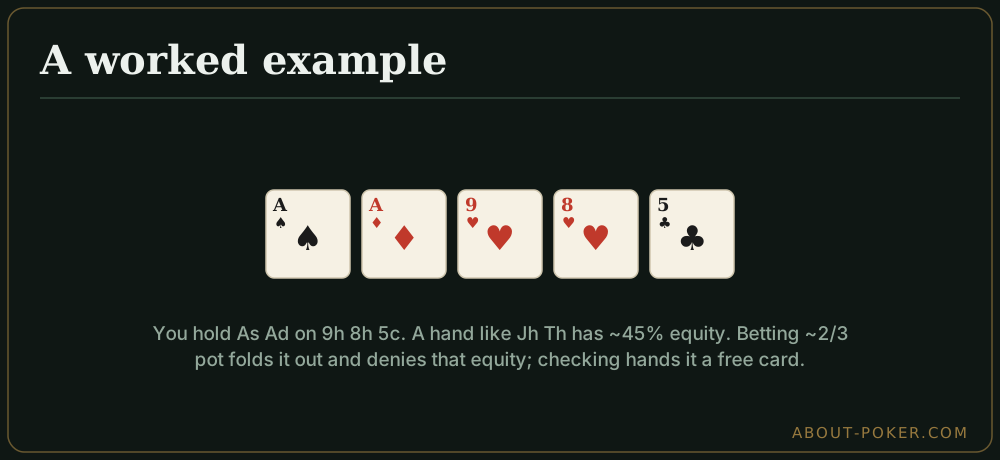
You hold A♠ A♦ on a flop of 9♥ 8♥ 5♣. You have an overpair, but the board is soaking wet. Your opponent could have hands like J♥ T♥ (a flush draw plus a straight draw with big equity), 7-6 (an open-ended straight draw), or two overcards to a smaller pair.
If you check, you hand those draws a free card. A hand like J♥ T♥ has roughly 45 percent equity against your aces on that flop — nearly a coin flip. If you bet two-thirds of the pot and they fold, you deny all of that. Even if some draws call, you have made them pay, which is exactly what you want. Checking to “keep the pot small” here would be a mistake, because it gives away enormous equity for free.
When equity denial matters most
It matters most on wet, connected, two-tone boards where the hands that fold still had real chances to win. On a board like Q♥ J♥ 8♠, betting your top pair denies a mountain of draw equity. It matters least on dry boards like K♣ 7♦ 2♠, where the hands that fold — say, ace-high or a random gutshot — had almost no equity to begin with. That is why players often check dry boards and bet wet ones with the same made hand: the denial value is completely different.
Position and stack depth
Position changes the picture. Out of position you cannot control the last card, so denying equity with a bet is more urgent — checking lets your opponent take a free card and realize their equity in full. In position you can sometimes check back safely, because you get to see their action first. Deep stacks also raise the stakes of denial, since more money can go in on later streets if a draw completes.
Common mistakes
The most common error is checking strong-but-vulnerable hands “to trap.” Traps are fine on dry boards, but on wet boards a slow-play often just donates equity to live draws. Another mistake is under-betting: a tiny bet fails to charge draws enough to deny their equity. Finally, do not confuse equity denial with pure bluffing — you are usually betting a real hand and also being rewarded when weaker hands fold. Get the sizing right on wet boards and equity denial becomes one of the quietest, most reliable sources of profit in your game.
Frequently asked
What is equity denial in poker?
Equity denial is betting so that an opponent folds a hand that had a real chance to improve and beat you. By making them fold their outs, you keep the equity that would otherwise have belonged to them.
Is equity denial the same as a value bet?
Not exactly. A pure value bet wants a call from worse hands. An equity-denial bet is happy to be called but especially wants folds from hands with outs, like straight and flush draws or two overcards.
When is equity denial most important?
On wet, draw-heavy boards where your opponent's folding range still has significant equity. It matters less on dry boards where the hands that fold had almost no chance to catch up anyway.