What Is Seat Change in Poker?
A seat change lets you move to an open seat at your table. Learn the seat change button, why position on a fish matters, and the etiquette of moving seats.
On this page · 6 sections
A seat change is when you move from your current chair to a different open seat at the same poker table. In a live cardroom you do not just hop over — you ask for a “seat change button,” which reserves your right to the next seat that opens. The whole point is position: where you sit relative to the loose money at the table quietly decides how profitable your session will be.
New players almost never think about it. Experienced players think about it constantly. Once you understand why, you will start scanning for the best open seat the moment you sit down.
How the seat change button works
When you want a different seat, you tell the dealer or floorperson, “Seat change, please.” They place a small marker — the seat change button — in front of you. It works like a reservation. When any seat at that table opens (a player busts, leaves, or moves), the person holding the seat change button gets first claim on it, ahead of anyone waiting to be seated from the list.
If more than one player wants to move, the buttons are honored in the order they were requested. The first person to ask gets first pick. Because of that ordering, savvy players ask for a seat change early — even speculatively — so they are near the front of the queue when a good seat frees up.
Why position drives every seat change
Poker is a game of information, and position is the biggest information advantage there is. You want to act after your opponents so you see what they do before you decide. That means:
- Sit to the left of loose, aggressive players. You act after them, so their raises and bets happen in front of you and you can react instead of guessing.
- Sit to the left of the big stack and the fish. Having position on the weak, deep money lets you extract value and avoid getting trapped.
- Put the tight, tricky players on your right too when you can, for the same reason.
Being on the button is the best seat every single hand; a seat change is how you approximate that edge permanently by controlling who acts before you.
A worked example
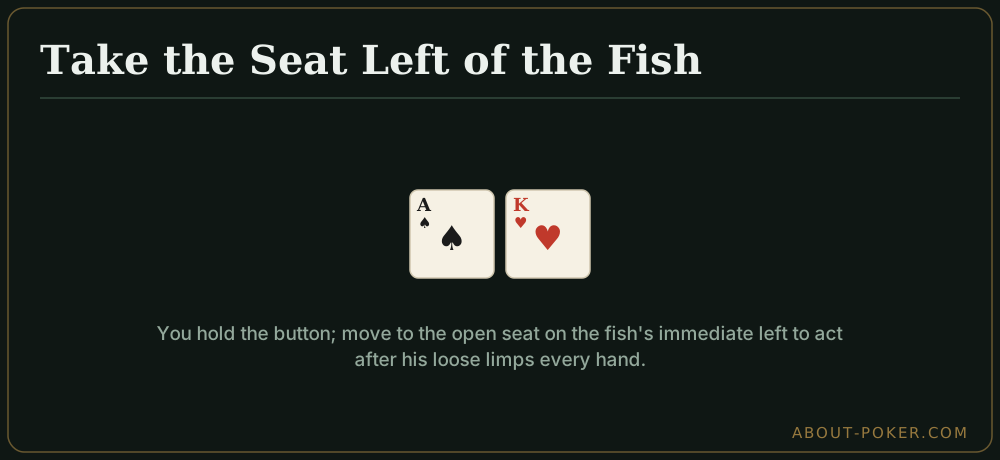
You buy into a 1/2 no-limit game. Two seats to your right sits a player splashing chips around — limping every hand, calling too wide, and stacking off light. He is the biggest fish at the table and he has 600 in front of him.
The problem: he acts after you. When he is on your left, he gets to see your action first and squeeze or trap you all night. So you ask the dealer for a seat change and take the button.
Ten minutes later, the seat directly to the fish’s left opens up. You hold the seat change button, so it is yours. You move. Now every hand, the fish acts before you. You see his loose limps and light raises before you commit a chip, and you can isolate him in position with a wide value range. That single move — one seat to the left of the loosest player — is often worth more than any strategy tweak you could make sitting where you started.
Seat change vs. must-move and table change
Do not confuse a seat change with related terms:
- A seat change keeps you at the same table; you just move chairs.
- A must-move is a feeder table where you are required to move to the main game when a seat opens there — you do not choose it.
- A table change or table transfer moves you to a completely different table of the same game, usually off a waiting list.
All three are about where you sit, but only the seat change is fully your choice and fully about optimizing position within your current game.
Etiquette and common mistakes
- Ask early, not just when the perfect seat opens. Buttons are honored in request order. If you wait until you see the ideal seat free up, someone who asked earlier may grab it first.
- Do not stall the game. Move your chips promptly and neatly when your seat comes free. Slow-rolling a seat change annoys the dealer and the table.
- Do not seat-change purely out of superstition. Moving because you “ran bad” in a chair changes nothing about your expected value. Move for position and stack advantage, not luck.
- Watch the dynamic, not just the player. The best seat can shift as players bust and new ones arrive. Reassess who the loose money is after every few orbits.
Quick checklist for using a seat change
- Identify the loosest, deepest, or most aggressive players at the table.
- Find the open or soon-to-open seat directly to their left.
- Ask the dealer for a seat change button early to hold your place in line.
- When the seat opens, move promptly and quietly.
- Reassess after busts and new arrivals — the ideal seat is a moving target.
Master this and you will win money before a single card is dealt, simply by choosing where you sit.
Frequently asked
What is a seat change in poker?
A seat change is when a player moves from their current chair to a different open seat at the same table. In a live cardroom you request it by asking for a 'seat change button,' which reserves the next seat that opens up. Players move seats to get better position on weak or loose opponents.
How does the seat change button work?
You tell the dealer or floor you want a seat change and they place a seat change button in front of you. When a seat opens at that table, whoever holds the button gets first right to it, ahead of any new player on the waiting list. If two people want the same seat, the earliest requester wins.
Why do poker players change seats?
The main reason is position. Players want to sit to the left of loose or aggressive opponents so they act after them on every street, and to the left of a big stack or a weak player so they control the money. Moving one or two seats can be worth a lot over a long session.