What Is Showdown Value in Poker?
Showdown value is a hand that can win by checking to showdown but is too weak to bet for value. Learn when to check it down and when to bluff instead.
On this page · 7 sections
Showdown value is one of the most useful ideas for cutting your losses and squeezing out small pots. A hand has showdown value when it can win at showdown often enough to be worth checking down, but is too weak to profitably bet for value. In plain terms: it beats bluffs and missed draws, but it loses to anything strong enough to call a bet.
The core idea
A value bet works only when worse hands call you. A hand with showdown value fails that test. If you bet, the hands worse than yours fold and the hands better than yours call or raise. You end up folding out everything you beat and getting called only by everything that beats you. That is the opposite of what you want.
So instead of betting, you check and take the hand to showdown for free. Your third pair or ace-high does not need to make money by betting. It makes money simply by being the best hand often enough when nobody else has anything.
A worked example
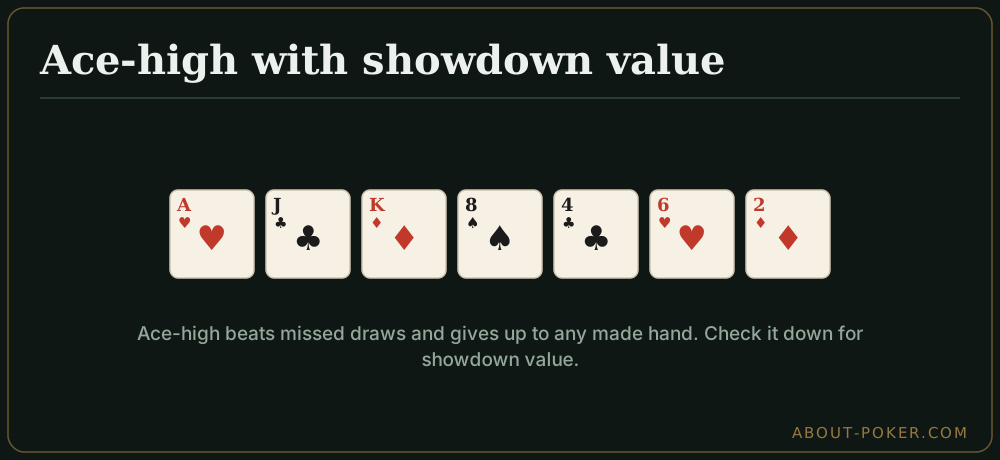
You hold Ah-Jc on a board of Kd-8s-4c-6h-2d. You checked the turn and reached the river. There were no completed draws and your opponent has been passive. Your ace-high beats a missed flush draw, a busted straight draw, and any random Q-high or lower.
If you bet, a king or an eight will call and beat you, while all the busted draws fold. You gain nothing and risk a raise. If you check, you win any pot where your opponent gives up with air, which on this runout is a big chunk of their range. Ace-high here is a textbook showdown-value hand: check, showdown, collect.
Showdown value versus a bluff-catcher
These two terms overlap but are not identical. A bluff-catcher is a hand you use to call a bet, beating bluffs while losing to value. A showdown-value hand is one you want to get to showdown cheaply, usually by checking rather than by calling a big bet. The same holding can be both depending on the action. Second pair can be a showdown-value check when it is your turn to act, and a bluff-catcher when a small bet is fired into you.
The key question is always the same: against the range that would put money in, does my hand win or lose? If it mostly loses to bets and mostly beats checks, its value lives at showdown, not in a bet.
When to give up the showdown and bluff instead
Sometimes a marginal made hand is worth more as a bluff than as a check-down. This happens when your hand blocks the hands you beat anyway and unblocks the hands you can fold out. If your weak made hand can only beat busted draws and those draws will fold to a bet, you are not giving up much by turning it into a bluff, and you gain the fold equity.
For example, holding a low pair that also holds a key blocker to the nut flush can be a better turn or river bluff than a check, because you rarely improve and your check-down rarely wins against a strong range. Recognizing when a hand has too little showdown value to bother protecting is just as important as recognizing when it has enough.
Position changes everything
In position, showdown value is easy to realize. You see your opponent check, you check back, and you go to showdown for zero chips. This is why hands with marginal showdown value prefer to check back the river in position rather than bet.
Out of position it is harder. If you check, your opponent can bet and price you off your showdown value, forcing a tough fold or a thin call. This is why out of position you sometimes bet small (a “protection” or “thin value” bet) or check-call rather than check-fold. Your positional disadvantage means you cannot always guarantee a free trip to showdown.
Common mistakes with showdown value
- Betting it anyway. The single most common leak. New players feel they “have something,” so they bet middle pair on the river and get called only by better. Let it check down.
- Folding it to a tiny bet. If ace-high beats a big portion of the betting range and the price is cheap, folding a real bluff-catcher throws away its showdown value.
- Bluffing hands that still have value. If your hand beats a meaningful slice of hands that would call a bet, do not blow it up as a bluff. Only convert to a bluff when the showdown value is nearly zero.
Quick checklist
Before you act with a marginal made hand on a later street, ask:
- Do worse hands call a bet? If no, do not bet for value.
- Do I beat the hands that would check back or give up? If yes, I have showdown value.
- Can I realize showdown value by checking? In position, almost always. Out of position, only if villain checks too.
- Is my showdown value so low that a bluff earns more? If yes, consider betting as a bluff instead.
Master this one concept and you will stop spewing chips into pots you were already winning, and start banking small showdowns that add up over a long session.
Frequently asked
What does showdown value mean in poker?
Showdown value means your hand is strong enough to win at showdown a fair amount of the time, but not strong enough to bet for value. You get to showdown cheaply by checking rather than betting.
Should you bet a hand with showdown value?
Usually no. If worse hands won't call and better hands won't fold, betting only turns a likely winner into a coin flip. Check it down and let it win unimproved unless you can turn it into a bluff profitably.
What is an example of a showdown value hand?
Second or third pair on the river, or ace-high on a dry board, often has showdown value. It beats missed draws and bluffs but loses to any made hand that would call a bet.