What Is Live Blind in Poker?
A live blind is a forced bet that still counts toward your call and lets you act again preflop. Here's how live blinds, options, and straddles really work.
On this page · 6 sections
A live blind is a forced bet that both counts toward the amount you owe for the round and keeps your action alive, meaning you get another chance to act when the betting comes back around preflop. The most familiar live blind is the big blind, but the term also covers straddles and other posted bets that grant the poster extra action.
The word “live” is doing the heavy lifting here. It tells you two things at once: the chips are working as a real wager, and the person who posted them has not yet used up their turn. That distinction changes how a hand plays out, so it is worth understanding precisely.
What “live” actually means
When chips are live, they belong to you until you commit them to a bet. A live blind is money you have posted, but it still buys you the right to act again. If the action limps around the table and nobody raises, the big blind can either check and see the flop for free or raise — this is the famous “big blind option.”
Contrast that with a dead blind. A dead blind is money that goes straight into the pot and does not count as part of your wager. You get no extra action for posting it. Dead blinds usually appear when a player misses their blinds, leaves the table, and comes back: the room makes them post a dead small blind as a catch-up penalty before they can be dealt in again.
A worked example
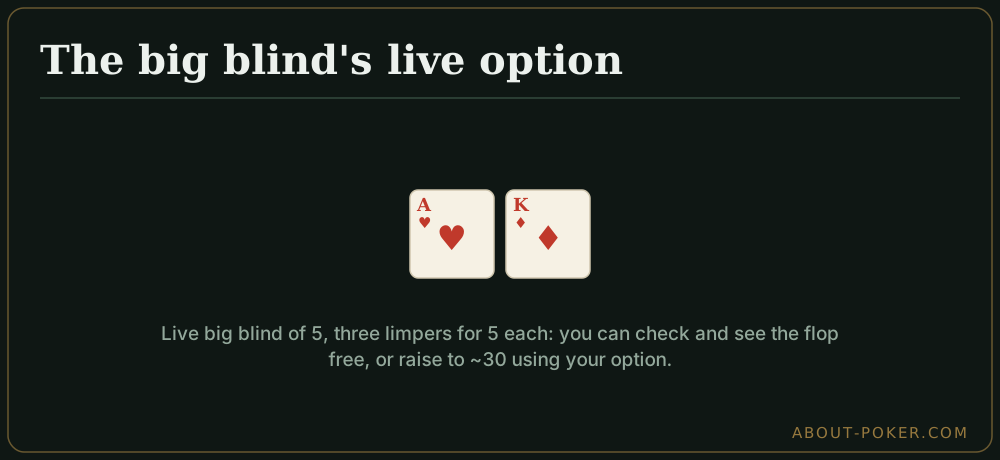
You are in a 2/5 no-limit cash game sitting in the big blind for 5. Three players limp in for 5 each, and everyone else folds. The action reaches you.
Because your big blind is live, you are not forced to just check. You can:
- Check and see the flop four-way for free, since your 5 already matches the limps, or
- Raise — say to 30 total — turning your blind into an attack. This is sometimes called “raising your option.”
If instead a player had raised to 20 before the action reached you, your live 5 counts toward the call. You would only need to add 15 more to continue, not the full 20. That is the “counts toward your bet” half of being live in action.
Straddles are live blinds too
A straddle is a voluntary live blind, usually posted by the player under the gun for twice the big blind. Because it is live, the straddler acts last preflop and can re-raise when the action returns, exactly like the big blind gets its option. That last-to-act privilege is the whole point of a straddle: you buy the button-like advantage of acting after everyone else before the flop.
Some rooms allow re-straddles and Mississippi straddles. In every case, the key test for whether a posted bet is a live blind is the same: does it count toward your wager, and does it give you another turn? If yes on both, it is live.
Live blinds versus limping
Do not confuse a live blind with an open limp. A limp is a voluntary call of the big blind by a player in position to fold or raise. A live blind is a forced post that you were required to make because of where the button sits. The limper chose to put money in; the blind had no choice. The similarity is that both leave chips in front of a player who may still get to act, but the reason those chips are there is completely different.
Common mistakes
- Forgetting your option. New players in the big blind often check on autopilot when limped to. Raising a strong hand here is frequently the better play — you are last to act preflop and have a range advantage over limpers.
- Treating a dead blind as live. If you post a dead small blind after missing blinds, that money is gone; it does not reduce what you must call. Plan your continuation accordingly.
- Overvaluing the live-ness of a straddle. Acting last preflop is nice, but you are still first to act on every later street unless you are on the button. A straddle inflates variance and rarely shows a profit.
Quick checklist
Before you act on a posted blind, ask:
- Is this money counting toward my bet for the round? (Live blind: yes.)
- Do I still get to act when the action returns? (Live blind: yes.)
- Has anyone raised? If not, and I am the live blind, I hold the option to check or raise.
Answer those three and you will always know whether you are sitting behind a live blind, a dead blind, or a plain forced bet — and you will stop leaving free equity on the table by checking your option without thinking.
Frequently asked
What does live blind mean in poker?
A live blind is a forced bet that counts as part of your wager for the round, and it gives you the right to act again when the action returns to you preflop. Because the chips are 'live,' you can raise your own blind if no one else has raised.
Is the big blind a live blind?
Yes. The big blind is the classic live blind. It counts toward the price of seeing the flop, and if the action limps around, the big blind gets the 'option' to check or raise before the flop is dealt.
What is the difference between a live blind and a dead blind?
A live blind counts toward your bet and gives you further action, while a dead blind is pushed into the pot and does not count as a wager. Dead blinds most often appear as a penalty when you miss your blinds and return to the table.