What Is Tank Call in Poker?
A tank call means calling after a long, deliberate think. Learn what a tank call is in poker, what it reveals about a hand, and how to read one at the table.
On this page · 8 sections
A tank call is a call made after a long, deliberate period of thought, when a player sits “in the tank” turning the decision over before finally sliding in the chips. The phrase captures both the behavior and the mental state: the player is genuinely torn, and the delay is real, not staged. Understanding what a tank call means, and what it usually does not mean, helps you read opponents and control the story your own timing tells.
Where the term comes from
To “tank” in poker is to think for a long time. The image is of a person submerged in a tank, cut off, deep in concentration. When that long think ends in a call, it is a tank call. The length varies, but anything from around thirty seconds up to a minute or more of visible deliberation qualifies. The defining feature is that the player clearly agonized before deciding.
What a tank call usually means
The most reliable read is that a tank call represents a marginal, genuinely uncertain hand. Strong hands rarely require a long think to call. If someone flopped a set or turned the nuts, they either call instantly or raise. The hands that create real anguish are the middling ones: second pair, a weak top pair, an underpair, a busted draw that got there in a small way. These are classic bluff catchers, hands that beat bluffs but lose to value, which is exactly why the decision is hard.
So when an opponent tank calls, you can usually narrow their hand to that middle band. This matters on later streets, because you now know they probably do not hold a monster and can be pressured again.
Tank call versus snap call
The natural opposite is a snap call, an instant call made with no hesitation. A snap call signals certainty, usually a strong hand or a hand the player had already decided to call with before you even acted. A tank call signals the reverse: doubt. Reading the difference between a snap and a tank is one of the fastest live tells to learn, because timing is hard to fake convincingly under pressure.
A worked example
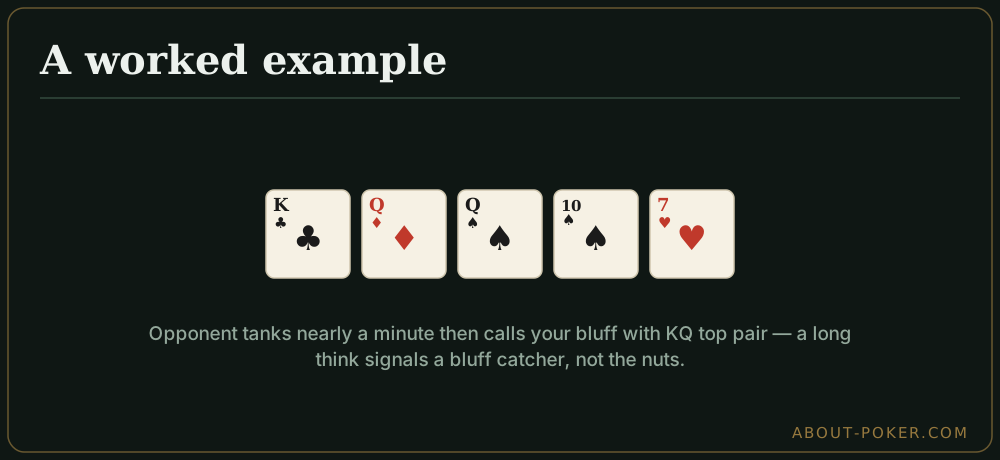
You bet the river as a bluff on a board of Qs Ts 7h 3d 2c with Ah 5h, holding nothing but ace high. Your opponent goes deep into the tank, staring at the board, counting chips, and after nearly a minute they call with Kc Qd, top pair.
That tank call tells the whole story. They were not sure whether you had a busted draw or a real hand, weighed the pot odds, and talked themselves into a call with a middling top pair. It confirms that a long think usually means a bluff catcher, not the nuts. If you had held the nuts and wanted a call, that same long deliberation would have been a welcome sight.
How a tank call can be a hero call
Sometimes a tank call is also a hero call, where a player makes a bold, read-based call with a weak hand because they are convinced their opponent is bluffing. The tank is the visible sign of the courage it took. Not every tank call is heroic, but many big hero calls arrive after a long think, because the player is building the confidence to trust their read.
Reading and controlling timing
Against observant opponents, be careful that your own timing does not leak information. If you only tank with tough decisions and snap with easy ones, sharp players will decode you. Many strong players deliberately take a consistent amount of time on most decisions to hide whether a spot is close. You do not need to be robotic, but avoid the obvious pattern of long thinks meaning weakness.
Also be aware of etiquette. Taking reasonable time is fine and expected, but chronic stalling is against the rules. Opponents can call the clock on you, after which you get a fixed count, usually around thirty seconds, to act or forfeit the hand.
Common mistakes
The biggest mistake is over-reading a single tank call as certain weakness and then bluffing into it again without a real plan. Some players tank with strong hands specifically to induce that assumption. Treat timing as one data point among many, weighted by how well you know the player. The second mistake is tanking so predictably that you become an open book yourself.
Quick checklist
- Did the call come after a long, genuine think? That usually means a bluff catcher.
- Instant call instead? That leans toward strength or a pre-decided call.
- Is this player self-aware enough to fake their timing?
- Am I giving away my own hand strength through predictable timing?
Frequently asked
What does a tank call mean in poker?
A tank call is a call made after a long, visible period of thought, often 30 seconds or more. The player is 'in the tank,' weighing whether to call, before finally putting the chips in. It usually signals a genuinely close decision.
What does a tank call tell you about a hand?
A tank call typically means the player holds a marginal hand that beats bluffs but loses to value, so they are unsure. It rarely represents the nuts, since a monster would usually call quickly or raise instead.
Is tanking allowed in poker?
Yes, taking time to think is a normal part of poker, but excessive stalling is against the rules in most cardrooms. Players can call a clock on someone who tanks unreasonably long, after which a time limit applies.