What Is Value Cut in Poker?
A value cut is when you bet for value but only get called by better hands, costing yourself money. Learn what causes it and how to avoid getting value cut.
On this page · 6 sections
Value cutting yourself is the frustrating mistake of betting a hand you think is good, only to get called by hands that beat you while every worse hand folds. You aimed for value and instead you cut yourself off from it, losing chips on a bet that was supposed to make chips. The term is almost always used self-critically: “I value cut myself on the river.”
What actually goes wrong
A real value bet needs one thing: worse hands must call. When you bet a medium-strength hand and only stronger hands continue, the whole logic collapses. The weak hands you beat fold, so you win nothing extra from them. The strong hands that beat you call, so you lose an extra bet. You would have been better off checking and getting to showdown for free.
The trap is that the hand feels strong enough to bet. Two pair, a decent top pair, or a straight on a scary board can all look like value while actually being firmly in the “check it down” category against a range that only continues with better.
A worked example
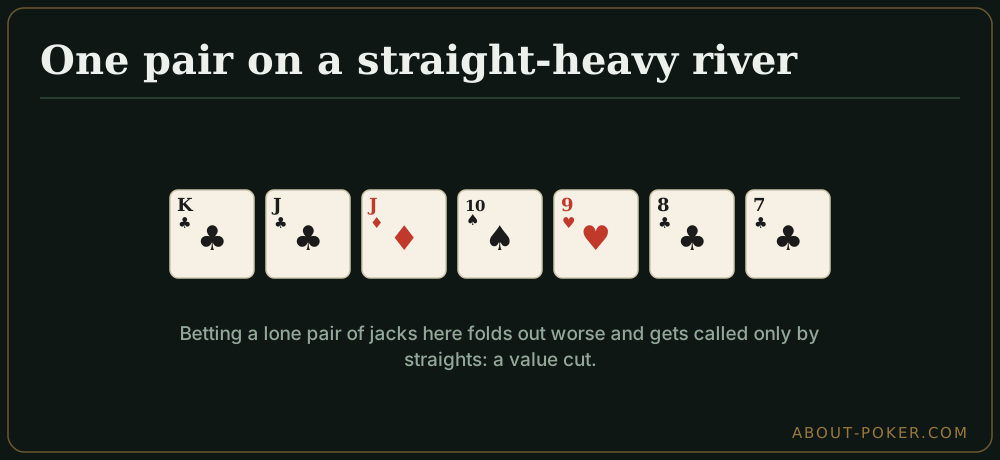
You hold Kc-Jc on a final board of Jd-Ts-9h-8c-7c. You made a pair of jacks, but the board runs out to a possible straight in nearly every direction: any queen makes Broadway, any six makes a straight, and lower straights are everywhere. You bet the river for “value” with your one pair.
Who calls? Almost no worse hand. A missed draw folds. A weaker pair folds. The only hands that call are the many straights and better this board makes. You have value cut yourself completely: you fold out everything you beat and get called only by the nuts and near-nuts. On a coordinated board like this, one pair belongs on the check-down, not in a value bet.
Value cut versus value town
These sound similar and are often confused. Getting to value town means you extracted maximum value, betting big and getting paid by worse. A value cut is the opposite failure: you tried for value and instead paid off a better hand. Value town is the goal; value cut is the punishment for misjudging your relative hand strength.
The single question to ask
Before every river value bet, ask: What worse hand calls me here? Name it out loud if you have to.
- If you can name several worse hands that call, bet for value. That is a real value bet.
- If you can only name hands that beat you, you are about to value cut yourself. Check instead.
- If the answer is “maybe one or two thin holdings,” size down. A smaller bet lets thinner worse hands call while limiting your loss when you run into better.
This one habit prevents the majority of value cuts. Betting is only correct when worse hands can pay you.
How board texture drives value cuts
Value cuts explode on connected, coordinated boards. When the runout completes many straights and flushes, your medium-strength hands drop in relative value even though their absolute strength is unchanged. Top pair on Ac-7h-2d is a fine value bet; top pair on Jd-Ts-9h-8c-7c is a value cut waiting to happen.
Dry, disconnected boards are the opposite. On A-7-2 rainbow, your top pair and even second pair get called by many worse aces, worse pairs, and stubborn ace-highs. The same absolute hand is a clean value bet on one board and a value cut on another. Always read the board before deciding whether your hand is really ahead of the calling range.
How to stop value cutting yourself
- Check marginal hands on scary rivers. If the board completes obvious draws and your hand is one pair, checking usually beats betting.
- Size to your target. Want thin value from weak pairs? Bet small so they can call. A big bet only gets called by strong hands and turns thin value into a value cut.
- Respect passive calls and raises. If a passive player suddenly calls or raises your “value” bet, you were probably value cut. Fold quickly to further aggression.
- Track your relative strength, not absolute. A straight can be the nuts on one board and a value cut on another. Judge your hand against villain’s range, not against a chart of hand rankings.
Avoiding value cuts is unglamorous but hugely profitable. Every bet you do not make into a better hand is chips saved, and over thousands of rivers those saved bets are worth as much as your biggest bluffs.
Frequently asked
What does value cut mean in poker?
A value cut happens when you make a value bet but only worse hands fold and only better hands call, so you lose money on a hand you intended to bet for profit. You cut yourself off from the value you were trying to get.
How do you avoid getting value cut?
Before betting the river for value, ask whether any worse hand can call. If only better hands continue, check instead and take it to showdown. Sizing down or checking marginal hands prevents value cuts.
Is value cutting the same as value betting?
No. A value bet gets called by worse hands and profits. A value cut is a failed value bet where you only get called by better hands, turning an intended profit into a loss.