What Is Value Target in Poker?
Your value target is the range of worse hands you expect to call your bet. Learn what a value target is in poker and how to size bets around the hands you beat.
On this page · 8 sections
A value target is the set of worse hands you expect to call when you make a value bet. Before you bet a strong hand, you should always be able to answer one question: which hands worse than mine are going to pay me off? That group of hands is your value target. If you cannot name it, you probably should not be betting for value at all. Thinking in terms of value targets transforms betting from a habit into a plan.
The core concept
A value bet only makes money when hands worse than yours call. The hands that do the calling are your target. Naming them forces you to check your own logic: are there really enough worse hands, and will they actually call the size you choose? A bet with a clear, wide value target is a great bet. A bet with a thin or empty value target is often a mistake dressed up as aggression.
Identify the target before you bet
Good players work backward. They picture the opponent’s calling range, then subtract the hands that beat them, and what remains is the value target. If that remaining group is large and likely to call, fire away. If it is tiny, reconsider. This habit prevents the classic error of betting a decent hand into a range that only continues with better, which is not value at all.
A worked example
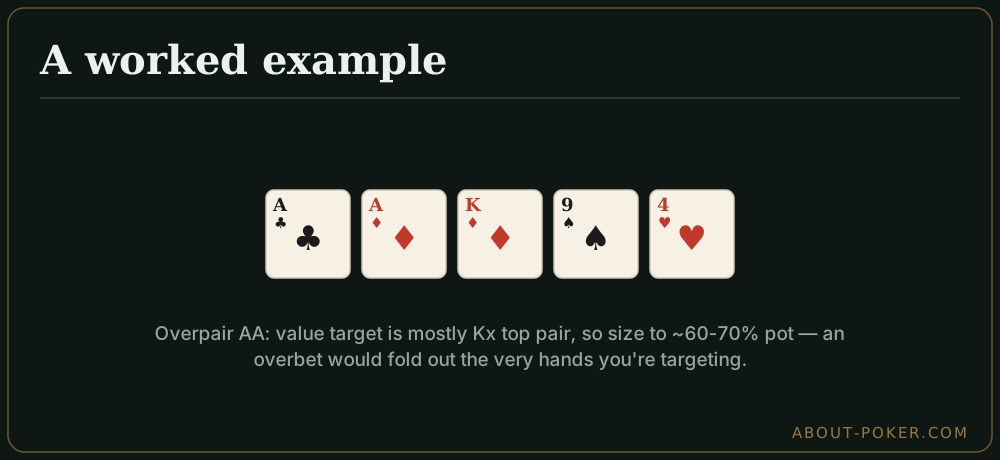
You hold Ac Ad on a final board of Kd 9s 4h 7c 2d. The pot is 80 and you are deciding on a river bet. Your opponent has called flop and turn.
Name your value target. Hands worse than your overpair that might still call a river bet include Kx (top pair, likely the biggest chunk), pocket pairs like TT and JJ that beat nothing but call out of stubbornness, and maybe a busted draw that pays a small bet. That is your value target: mostly Kx, plus a few weaker pairs. Sets and two pair beat you, but you decided they would have raised earlier, so they are a small part of the range.
Because your primary target is top pair, you size to what top pair will call. A bet around 60 to 70 percent of the pot gets called by most Kx, while a huge overbet would fold out the very hands you are targeting. The value target dictates the size.
Sizing around the target
Bet sizing is really a question about your value target. If the worse hands are fragile, medium-strength holdings that call small and fold to big bets, keep the size modest so they stay in. If your target includes strong second-best hands, like a flush when you hold a full house, size up because those hands will call almost anything. Always ask what your target can tolerate before choosing a number.
When the target disappears
Sometimes a scare card arrives and your value target evaporates. If the board pairs or a flush completes, the worse hands that would have called now fold, because they too are afraid. When your target shrinks to nothing, betting for value stops making sense. This is closely tied to a value cut, where you deliberately check back to avoid betting into a range that no longer contains callers you beat.
Getting greedy: value town
The opposite error is dragging an opponent to value town, betting so relentlessly that you only get called by better hands. If you keep firing after your value target has folded and only stronger hands remain, you are no longer value betting; you are paying off the very hands you should have been targeting. Knowing when your target has run out is as important as knowing when it is rich.
Common mistakes
The most frequent mistake is betting strong-looking hands with no target in mind, then feeling surprised when only better hands call. The second is picking a size that folds out the target, either by overbetting fragile hands or under-betting a range full of sticky callers. Both stem from failing to name the worse hands you are trying to get money from before the chips go in.
Quick checklist
- Which specific worse hands will call this bet? That is my value target.
- Is the target large enough to justify betting rather than checking?
- Does my bet size keep the target in the pot, or scare it away?
- Has a scare card wiped out my target and turned this into a check?
Frequently asked
What does value target mean in poker?
Your value target is the specific set of weaker hands you expect to call your value bet. Before betting for value you should be able to name the worse hands that will pay you off, because if none exist, the bet is not actually a value bet.
How does the value target affect bet sizing?
You size a value bet to extract the most from your target range. If your target is made up of medium-strength hands that will call small, bet smaller; if your target includes strong second-best hands that will call big, size up.
What if I have no value target?
If no worse hands can realistically call, you have no value target and should either check or turn your hand into a bluff. Betting a hand that only gets called by better is a classic mistake that just loses chips.