What Is Way Ahead Way Behind in Poker?
Way ahead / way behind describes spots where you are either crushing an opponent or drawing thin. Learn why you check these hands instead of betting.
On this page · 6 sections
Way ahead / way behind (often shortened to WA/WB) describes a very specific kind of poker spot: your hand is almost always either crushing the hands your opponent would continue with, or crushed by them, with almost nothing in the middle. Recognizing these spots is one of the biggest jumps between a player who bets on autopilot and one who thinks about what a bet actually accomplishes.
The Core Idea
Every time you bet for value, you are hoping a worse hand calls. Every time you bet, you also risk being called by a better one. In a normal spot there is a healthy mix of both — worse hands that pay you off and better hands you fold out or lose to. In a WA/WB spot that mix collapses. The only hands that call your bet are the ones that already beat you, and the hands you beat simply fold. So a bet gains nothing when you are ahead and costs you money when you are behind.
That is the whole logic behind checking these hands. You are not being passive out of fear — you are being passive because betting is mathematically pointless. When you are way ahead, you keep worse hands in by checking. When you are way behind, you keep the pot small so a river call is cheap. Checking is the move that wins in both halves of the “way ahead / way behind” label.
A Worked Example
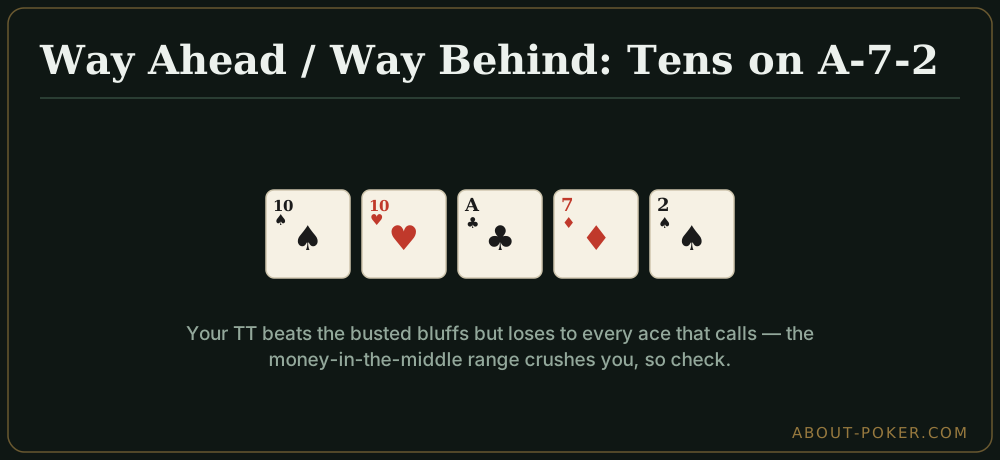
You raise with pocket tens and get one caller. The flop comes A-7-2 rainbow. You fire a continuation bet and get called. The turn is a 4.
Now ask what a second bet does. Villain’s calling range is loaded with aces — A-K, A-Q, A-J, A-T. Those hands crush your tens and are never folding. The hands you beat, like a busted K-Q or a small pair, will just fold to more pressure. So a turn bet is only called by hands that beat you. You are way ahead of the folders and way behind the callers. The correct play is to check, let a worse hand keep bluffing or catch up to a second pair, and reevaluate on the river. Your tens now function much like a bluff catcher.
Way Ahead vs Way Behind Is About Ranges
The label is not about your single hand against a single hand — it is about your hand against the opponent’s entire range. Tens are not “weak,” they are simply stuck between two clusters of the villain’s holdings. When those two clusters have a big gap and few hands land in between, you have a WA/WB situation. When the opponent’s range is more continuous — full of second pairs, weak top pairs, and draws that will call a bet with worse — you no longer have WA/WB, and value betting becomes correct again.
This is why the same hand can be a clear bet on one board and a clear check on another. On a dry ace-high board your medium pair is WA/WB. On a 9-6-3 board that same pair beats most of the villain’s continuing range, so you should bet for value.
Pot Control Is the Default Response
The natural answer to a WA/WB spot is pot control: keep the pot small so that being way behind costs little and being way ahead still lets you get to showdown. By checking, you cap your losses when beaten and preserve your ability to call one bet with confidence. You give up a small amount of value from the rare worse hand that might have paid you, but you avoid the far larger cost of building a big pot with a hand that can only win a small one.
A useful rule of thumb: if the only hands that call two barrels beat you, do not fire two barrels. Check, control the pot, and let your hand realize its showdown value instead of turning it into a bluff or a spew.
Common Mistakes
The first mistake is value betting a WA/WB hand into a range that only calls with better. Beginners see “top-ish pair” or “an overpair to the board texture” and bet reflexively, then complain about running into a better hand every time — when the structure of the spot guaranteed it.
The second mistake is the opposite: folding a WA/WB hand that should have been a cheap call. Because you are way ahead of the villain’s bluffs, your hand is often a fine bluff catcher for one bet. Checking and calling once is usually right; check-folding throws away the half of the range you beat.
The third mistake is ignoring board changes. A card that lets more of the villain’s range improve — or lets you get called by worse — can flip a WA/WB spot into a value spot or a fold. Reevaluate street by street.
Quick Checklist
- Does the villain’s calling range split into “hands that crush me” and “hands I crush” with little in between? If yes, you are likely in a WA/WB spot.
- Would a value bet only be called by hands that beat me? If yes, check.
- Am I ahead of the villain’s bluffs and worse value? If yes, plan to check and call one bet, not fold.
- Has the board changed the ranges? Recompute every street rather than committing to a plan.
Master WA/WB and you stop bleeding chips into pots you can only win small and can lose big. It is the discipline of betting when a bet does work and checking when it does not.
Frequently asked
What does way ahead way behind mean in poker?
It describes a situation where your hand is almost always either far ahead of the hands your opponent would call a bet with, or far behind them, with very little in between. Because betting only gets called by the hands that beat you, checking is usually the better play.
Why do you check in way ahead way behind spots?
When you are way ahead, worse hands rarely call a bet, so you win no extra value. When you are way behind, you are drawing to only a few outs. Checking keeps the pot small, protects your stack, and lets you call one more street cheaply.
What is an example of a way ahead way behind hand?
Holding a medium pocket pair like tens on an ace-high board is a classic case. You are way ahead of unpaired hands that will fold to a bet and way behind any ace that will call, so betting mostly loses value or builds a pot you cannot win.