What Is Value Town in Poker?
Value town is where you get paid off by worse hands over and over. Learn the slang, how thin value betting works, and how to send an opponent there.
On this page · 7 sections
“Value town” is poker slang for the happy place where you bet a strong hand for value street after street and keep getting paid off by worse hands. When someone says they “took him to value town,” they mean they extracted the maximum — usually three streets of betting — from an opponent who could not stop calling. It is one of the most satisfying phrases in the game, and it hides a real, learnable skill.
Where the Term Comes From
The image is a road trip: flop, turn, and river are the three stops, and at each one your opponent hands over more chips. “All aboard to value town” is a table joke, but the underlying idea is dead serious. Every extra bet a worse hand calls is pure profit, and stacking those bets together is how big winners separate themselves from break-even players.
Value town is the sunny flip side of a bluff catcher. Your opponent thinks they are catching a bluff; you actually have it. They keep paying, and you keep collecting.
A Worked Example
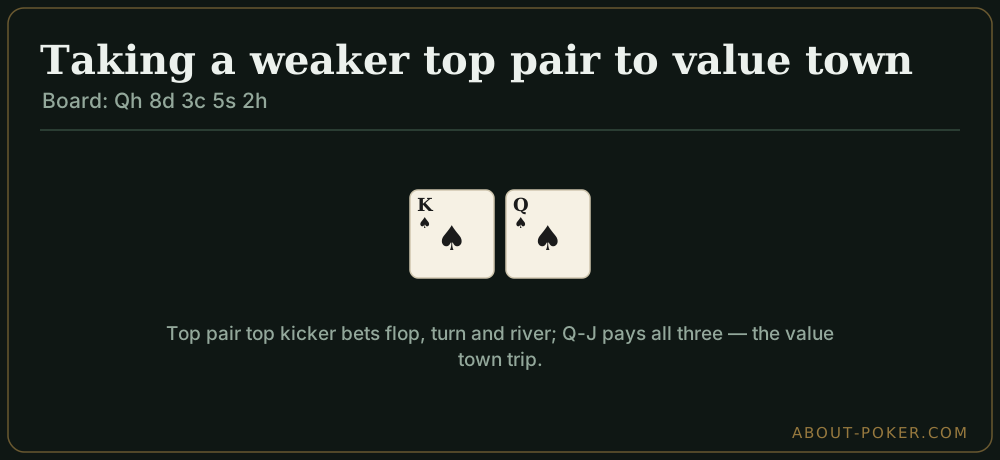
You raise with Ks Qs and get one caller. The flop comes Qh 8d 3c. You have top pair, top kicker. You bet, they call. Turn is the 5s — no change. You bet again, they call. River is the 2h, a total blank. You bet a third time and they call with Qd Jd.
You just visited value town. You had the best hand the whole way, and your opponent’s weaker top pair paid off all three streets. Against a player who folds Q-J on the turn, you would have won less — value town is only open when the opponent is willing to travel with you.
The Skill: Thin Value
Big pairs and sets get value easily. The real edge is in thin value — betting a hand that is only a little better than what will call. Suppose on that same board you held Q-9 instead of K-Q. Should you fire the river? If your opponent will call with Q-x weaker than yours (Q-7, Q-6, pocket pairs below queens turned into bluff catchers), then yes — a thin value bet still shows a profit even though you get raised or called by better sometimes.
The rule of thumb: bet for value on the river when more than half the hands that call you are worse than yours. If you get called by better more often than worse, you are the one being taken to value town. Learn the mechanics in our guide to value betting.
Who Ends Up in Value Town
Certain opponents practically live there:
- Calling stations who pay off with any pair and never fold second-best hands.
- Recreational players — the classic fish — who call to “keep you honest.”
- Sticky bluff catchers who correctly suspect bluffs but do not adjust when you rarely bluff.
Against these players, widen your value range. Bet hands you would normally check, size up when they show they will pay, and forget about balance — exploit the leak while it is there.
Sizing to Maximize the Trip
Value town lives and dies on bet sizing. Against a station, bigger is usually better because they call regardless. Against a thinking player, you tailor the size to the exact hands you want to call. A common mistake is betting small “so they call,” which leaves money on the table against someone who was calling a bigger bet anyway.
Consider a $50 pot on the river with a hand that beats most of the caller’s range. Betting $25 when they would have called $50 costs you $25 of pure value every time they hold a worse hand. Multiply that across a session and value town starts looking like value city.
Common Mistakes
Confusing value town with hero calling. Value town is about betting your good hands, not about talking yourself into calls with weak ones. Keep the two ideas separate.
Betting into a range that has you beat. If the only hands that call your river bet are better than yours, you are not going to value town — you are the passenger. Check and hope to see a cheap showdown instead.
Missing thin value out of fear. New players check too many rivers because they worry about being raised. Most opponents raise far less than they should, so a well-chosen thin value bet is often free money.
Quick Checklist
- Do more than half the hands that call beat mine? If no, bet for value.
- Is this opponent the kind who cannot fold? Widen and size up.
- Am I sizing to the weaker hands’ calling threshold, not just “small so they call”?
- Could I get three streets, not just one? Plan the trip on the flop.
Do that consistently and you will be the tour guide, not the tourist.
Frequently asked
What does value town mean in poker?
Value town is slang for a spot where you keep betting for value and keep getting called by worse hands, extracting the maximum. Sending an opponent to value town means you value bet all three streets and they pay you off with a second-best hand.
Is value town a good or bad thing?
It is great when you are the one collecting the value and bad when you are the one paying it off. The phrase is usually said with a grin about a station opponent who cannot fold, or about a hand where you extracted three big bets.
How do I take someone to value town?
Bet a strong-but-not-nutted hand on every street against an opponent who calls too much, sizing to what their weaker hands will pay. The skill is finding thin value bets that get called by second-best hands while avoiding hands that only call when they beat you.