What Is Bluff Catcher in Poker?
A bluff catcher is a hand that only beats bluffs. Learn what qualifies, when to call, and the pot-odds math that turns a marginal hand into a profitable call.
On this page · 6 sections
A bluff catcher is a hand that can only win the pot by beating a bluff. It is too weak to bet for value and too strong to fold on principle — so its entire job is to look up your opponent’s bluffs while losing to everything they bet for value. Understanding bluff catchers is one of the biggest steps a player takes from “I have a pair, I call” to actually thinking about ranges.
The Core Definition
Picture the river. Your opponent bets. Now split their range into two buckets: hands that beat you (their value bets) and hands that lose to you (their bluffs). If your hand beats none of their value bets but beats all of their bluffs, you are holding a pure bluff catcher.
The key insight is that against a bluff catcher, every value hand your opponent holds is a hand you lose to. You are not calling to win against a worse made hand — there are none. You are calling purely to catch the times your opponent has nothing. That is a completely different decision from calling a value bet with a hand that beats part of their range.
A Worked Example
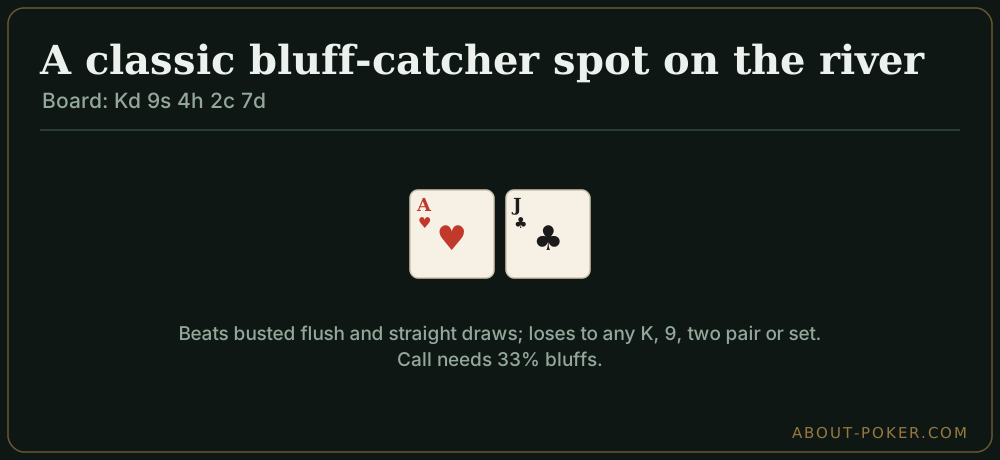
You hold Ah Jc on a final board of Kd 9s 4h 2c 7d. You called a raise preflop and checked the turn. On the river your opponent fires a pot-sized bet of $100 into a $100 pot.
Your ace-high — or even a pair of jacks if you had one — beats a busted flush draw or a missed straight draw. It loses to any king, any nine, any two pair, any set. There is no worse made hand that would bet this size into you. So your hand is a bluff catcher: it beats bluffs and nothing else.
The math is clean. You must call $100 to win $200, so you need to be good 33% of the time (100 ÷ 300). If your opponent is bluffing more than a third of the time here, calling is profitable. If they are the kind of player who only bets the river with real hands, you fold and save the chips.
Pot Odds Decide Everything
Because a bluff catcher never beats value, the decision reduces to one comparison: the price you are being laid versus how often the opponent is bluffing.
- Half-pot bet: you need to be right 25% of the time.
- Pot-sized bet: you need to be right 33% of the time.
- Overbet (1.5x pot): you need to be right 37.5% of the time.
The bigger the bet, the more bluffs the opponent needs for your call to break even. This connects directly to minimum defense frequency: a balanced opponent will size their bets so the correct bluffing frequency matches these numbers, leaving you exactly indifferent.
Not All Bluff Catchers Are Equal
Two bluff catchers can beat the same value hands but differ in one crucial way: blockers. Suppose the missed draw on that board was a flush. If your ace is the same suit as the flush draw, you hold a card your opponent needs to have been drawing — so they can hold fewer busted flushes, which means fewer bluffs, which makes your call worse. Conversely, if you block their value hands, calling gets better.
A good habit is to ask, when choosing between two hands of identical showdown value, “which one blocks more of their bluffs?” Keep the one that blocks the fewest bluffs (so more bluffs remain in their range) and fold the one that blocks bluffs. This is why an ace-high bluff catcher and a small-pair bluff catcher are not interchangeable even when they beat the same value range.
Common Mistakes
Calling every time you have a pair. A pair feels like a hand, but if it beats zero value bets, it is only ever a bluff catcher. Whether to call is a pure frequency question, not a “but I have a pair” question.
Folding good bluff catchers against aggressive players. Loose, aggressive opponents bluff far more than a third of the time on many rivers. Against them, mediocre bluff catchers become mandatory calls. Read more about the range concept in what is a bluff.
Raising a bluff catcher. By definition it beats no value hands, so raising can only fold out the bluffs you beat and get called by the value hands that beat you. Turning a bluff catcher into a bluff-raise is a different, more advanced play — do not confuse the two.
Quick Checklist
Before you call with a suspected bluff catcher, run through this:
- Does my hand beat any hand my opponent bets for value? If yes, it is a value call, not a bluff catch.
- What price am I getting, and what bluff frequency does that require?
- Does this specific opponent bluff more or less than that number here?
- Do my cards block their bluffs or their value?
If the answers line up — cheap price, bluff-happy opponent, no bluff blockers — the bluff catch is an easy, profitable call. If not, let it go and wait for a better spot.
Frequently asked
What makes a hand a bluff catcher?
A bluff catcher is a hand that beats your opponent's bluffs but loses to every hand they would bet for value. Middle pair or a weak top pair facing a big river bet is the classic example. It has no value bet of its own — it can only call or fold.
Should I always call with a bluff catcher?
No. Call only when the pot odds you are getting are better than the share of the time your opponent is bluffing. If you need to be right 33% of the time and the opponent bluffs less than that, folding is correct.
Is top pair a bluff catcher?
It depends on the action. A strong top pair is often a value hand you would bet yourself. A weak top pair against heavy aggression on a scary board frequently degrades into a pure bluff catcher because it beats nothing your opponent bets for value.