A9 vs KJ: Preflop Equity
A9 is about a 57% favorite over KJ all-in preflop — the ace outranks both of KJ's cards, but a weak nine kicker keeps it far from a lock. Here are the exact numbers.
On this page · 6 sections
You look down at A♠ 9♦ and it goes all-in against K♣ J♥. Your first instinct might be that ace-nine is trash and you’re behind — but you’re actually the favorite. A9 is about a 57% favorite over KJ, KJ around 43%. The reason is the single most important idea in preflop card-versus-card math: when nobody holds a pair, the highest card usually wins, and an ace beats everything.
The headline equity
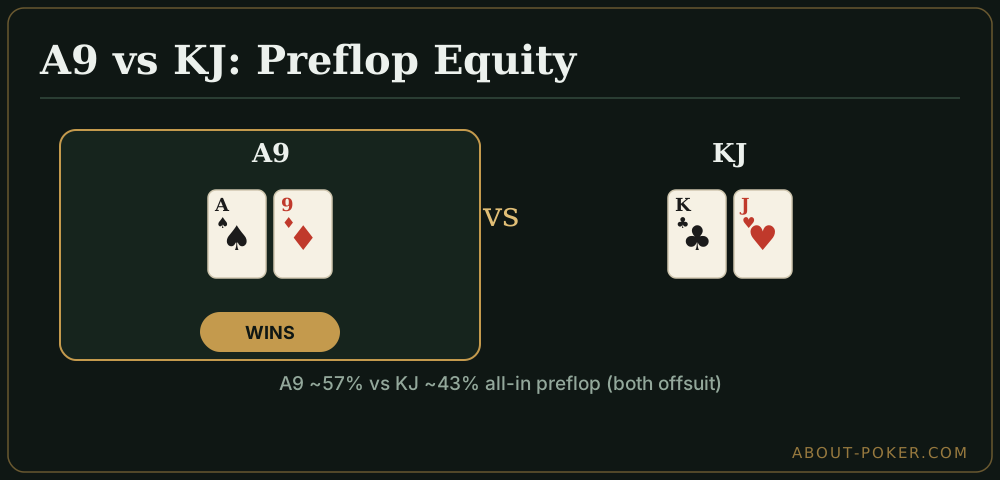
All-in preflop, A9 is roughly a 57% favorite over KJ when both hands are offsuit, with KJ winning about 43%. Suiting either hand shifts the number a point or two, but ace-high stays in front.
| Matchup | A9 equity | KJ equity |
|---|---|---|
| A9 vs KJ (both offsuit) | ~57% | ~43% |
| A9 vs KJ (both suited) | ~56% | ~44% |
| A9s vs KJo | ~59% | ~41% |
The anchor to remember: two overcards versus two overcards, with one side holding the top card of the whole matchup, runs a bit better than 57/43. It’s a favorite, not a flip, and definitely not a fold-worthy dog. This is the same family of spots covered in preflop all-in odds.
Where A9’s edge comes from
Neither hand begins with a pair, so both are drawing to catch a card. The question is which card matters. A9 has the ace — the highest rank in the deck — so any ace on the board almost always wins the pot outright for A9. KJ can’t beat a pair of aces with a pair of kings or jacks.
KJ, for its part, has two cards that both outrank A9’s nine. So there are more board cards that pair KJ favorably than pair A9’s kicker. That partially offsets the ace advantage, which is exactly why this is closer than a dominating spot. But the ace is doing heavy lifting: it’s live for the full five community cards, and it’s the trump card whenever it appears.
Think of it as one great card and one weak card (A9) against two decent cards (KJ). The one great card wins the argument, but the weak nine keeps A9 from running away with it.
A worked example on a real board
Say the flop comes A♥ 7♣ 2♦. A9 now holds top pair with a nine kicker, and KJ has completely missed — no pair, no straight draw, essentially six clean outs at best (three kings, three jacks). A9 is now around 90% to win. That’s the good scenario, and it happens roughly every third flop because there are three aces left for A9 to pair.
Now flip it. The flop comes K♠ J♦ 4♣. KJ has flopped top two pair and is a massive favorite — A9 is drawing thin, needing running aces or a runner-runner straight. A9 is down to about 5%. This is the disaster case for A9.
Most flops are neither. On a blank board like Q♦ 8♠ 3♥, both hands still have all their overcards live, and the equity stays close to the preflop 57/43. Averaged across every possible board, the ace’s extra reach is what pushes A9 ahead. If you want to sharpen how you count these improvement chances, the poker outs guide walks through it.
How it compares to nearby matchups
It helps to slot A9 vs KJ next to its neighbors so the 57% number feels right:
- AK vs KJ — AK dominates (shares the king, has the better kicker plus the ace) and runs near 70/30. That’s real domination.
- A9 vs KJ — one top card, weak kicker: only 57/43.
- AT vs KQ — similar structure but a slightly better kicker for the ace side, roughly 58/42.
- 99 vs KJ — now a pair versus two overcards, the classic coinflip near 54/46 for the pair.
The pattern: an ace with a bad kicker against two big cards is a modest favorite, not a crusher. The gap grows when your kicker also outranks the opponent’s cards, and shrinks toward a flip when the opponent has connected, high, or suited cards with straight and flush upside.
Common mistakes players make here
The biggest error is folding A9 too readily in a spot where you’re getting a coinflip-or-better price. If you’re all-in preflop and know you’re up against roughly KJ, you’re ahead — this is a call in most tournament and cash all-in situations where the pot is already large.
The second mistake is overvaluing A9 after the flop when the ace doesn’t come. Preflop you’re 57%, but on a king-high or queen-high board with no ace, your equity can flip below 50%. The preflop favorite is not the flop favorite once the board runs out unfavorably. Equity is a starting point, not a promise — see what is equity in poker for why the two differ.
A third trap is assuming suit matters more than it does. Making A9 suited adds only about a point of equity. The ace-high edge dwarfs the flush upside in this particular matchup.
Quick checklist for A9 vs KJ spots
- Are you all-in and think you’re against KJ-type hands? You’re ~57%. That’s a call at nearly any pot-odds price.
- Did the flop bring an ace? You jump to roughly 90% — bet for value.
- Did the flop bring a king or jack with no ace? Reassess hard; you may now be the underdog.
- Is the money going in preflop? Take the flip-plus. Turning down a 57% edge in a big pot is a slow way to lose.
The one-line takeaway: A9 vs KJ is about 57/43, a genuine favorite powered entirely by the ace, but kept honest by that weak nine kicker.
Frequently asked
What are the odds of A9 vs KJ preflop?
A9 is roughly a 57% favorite over KJ all-in preflop when both are offsuit, with KJ winning about 43%. The ace is the highest card in the matchup, which tips a two-overcards-versus-two-overcards spot in A9's favor.
Why is A9 favored over KJ if the nine is so weak?
Neither hand starts with a pair, so the winner usually pairs the highest live card. A9's ace outranks both the king and the jack, so whenever an ace pairs, A9 is almost certainly ahead. That single top card is worth more than KJ's two connected high cards.
Is A9 vs KJ a coinflip?
Close to one, but not quite. At roughly 57/43 it is a modest favorite rather than a true 50/50 race. The nine's weak kicker and KJ's extra big card and straight potential keep the gap smaller than in a spot like AK vs KJ.
Does suitedness change A9 vs KJ much?
Only slightly. A suited hand picks up a couple of points of flush equity. If both are suited the matchup stays near 56/44 in A9's favor; the ace-high edge remains the dominant factor.