Balanced Ranges Explained for Beginners
A balanced range mixes value hands and bluffs so opponents can't exploit you. Learn what range balancing means and see a simple river example.
On this page · 7 sections
A balanced range is a betting range that an opponent cannot beat with a simple counter-strategy. If they always call, they run into your value hands. If they always fold, your bluffs win. If they try something in between, it doesn’t help either. Balance is what makes a good player frustrating to face: nothing you do against them seems to work.
For a beginner, balance matters mostly as a shield. You don’t need to be perfectly balanced to win, but understanding it tells you why one-note strategies — always bet value, always bluff the missed draw — get punished by anyone paying attention.
Value and bluffs, mixed on purpose
A balanced betting range has two kinds of hands: value hands you want called by worse, and bluffs you want to make better hands fold. The trick is combining them so your opponent can’t tell which is which and can’t respond correctly to both.
Imagine you only ever bet the river with the nuts. A sharp opponent notices and folds everything but their own strong hands, so your value bets win almost nothing. Now imagine you only bluff. They call every time and stack you. A balanced range sits between these traps: enough value that calling is dangerous, enough bluffs that folding is dangerous.
The two sides work in tandem. Your bluffs make your value bets pay, and your value bets make your bluffs credible. This partnership is why solid players treat value betting and bluffing as one combined plan rather than separate decisions.
The ratio is set by bet size
You cannot just eyeball “some value, some bluffs.” The right mix is a number, and bet size fixes it. On the river, the bluff fraction of a balanced polarized range is:
bluff fraction = bet ÷ (bet + pot)
- Pot-sized bet: bluff fraction = 1 ÷ 2 = 50%, a 1:1 value-to-bluff mix.
- Half-pot bet: bluff fraction = 0.5 ÷ 1.5 ≈ 33%, a 2:1 value-heavy mix.
- Two-thirds-pot bet: bluff fraction ≈ 40%, roughly 3:2 value-heavy.
This is the same math laid out in full on the bluff-to-value ratio page. Balance on the betting side and minimum defense frequency on the defending side are two halves of the same equilibrium.
A worked river example
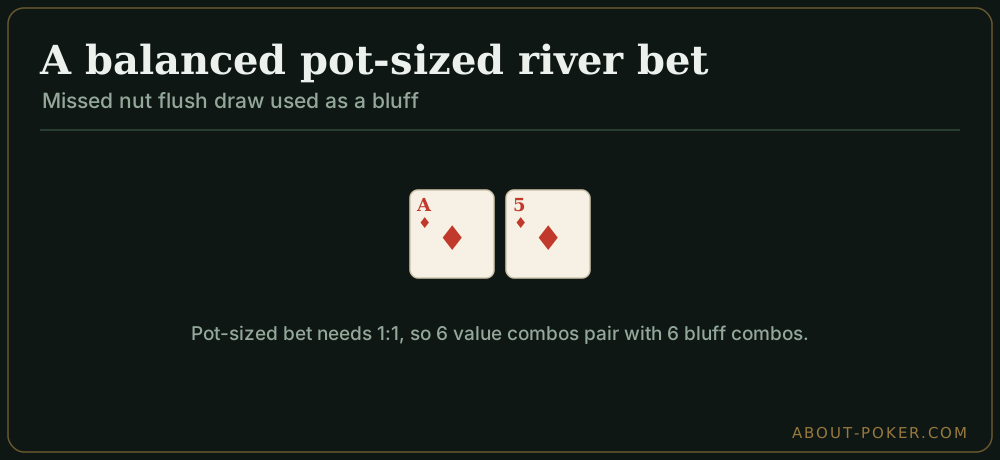
The pot is $100 and you decide to bet $100 (pot-sized) on a river. A pot-sized bet calls for a 1:1 value-to-bluff ratio, so for every value combo you bet, you should include one bluff combo.
Say your genuine value hands here are 6 combinations of a made straight and top two pair. To stay balanced, you add 6 combinations of bluffs — ideally hands with no showdown value, like missed flush draws. Now your opponent faces a coin flip: your betting range is half value, half bluff. Their bluff-catcher is exactly indifferent — calling and folding both break even — so they can’t exploit you no matter what they choose.
If instead you bet those 6 value combos with only 2 bluff combos, you are too value-heavy: a smart opponent folds all their bluff-catchers and you lose the bluff-earnings you should have collected. Bet 6 value with 12 bluffs and you are too bluff-heavy: they call everything and your bluffs bleed chips. The 6-and-6 mix is the balanced answer for a pot-sized bet.
How balance changes across the streets
River balance is the clean case because there are no more cards to come — the math is exact and your range is either good enough or it isn’t. On the flop and turn, balance is looser, because your bluffs still have equity. A flop bet with a flush draw isn’t a pure bluff: it can improve to the best hand, so it counts as a semi-bluff and you’re allowed far more of them than the river ratio suggests.
Practically, this means your earlier-street betting ranges are much wider and more bluff-heavy than a river range, because many of those “bluffs” will turn into value by the river. As cards peel off, you tighten: hands that missed get dropped or turned into pure bluffs, and hands that hit graduate to value. By the river your range has naturally polarized into the strong-and-nothing split that the bet-over-pot-plus-bet formula assumes. A common beginner error is applying the strict river ratio on the flop and checking back too many good semi-bluffs — you’d be leaving fold equity and future value on the table.
Where balance breaks down at the table
Perfect balance assumes an opponent who notices your frequencies and adjusts. Most live and low-stakes opponents don’t. Against them, three practical adjustments matter more than any exact ratio:
- Multiway pots destroy the simple math. The bet-over-pot-plus-bet ratio is a heads-up result. With two or more callers behind you, someone almost always has a real hand, so bluffs need to work far less often — cut them hard and bet value bigger.
- You can’t always find enough bluffs. Balance requires natural bluff candidates — busted draws, blockers, hands with no showdown value. On a dry board where you have very few missed draws, you simply can’t hit the ideal ratio, and forcing bluffs from your showdown-value hands is worse than under-bluffing.
- Bet sizing is your balance lever. If you have too many value hands and too few bluffs, bet smaller (a smaller bet demands fewer bluffs). If you’re bluff-rich, bet bigger. Choosing size to match the hands you actually hold is how strong players stay balanced without memorizing tables.
A short balance checklist
Before you fire a river bet, run these four quick checks:
- Am I polarized? A balanced bet is strong hands plus bluffs, not medium hands. Medium hands usually check and bluff-catch instead of bet.
- What ratio does my size demand? Pot bet is 1:1, half-pot is 2:1 value-heavy, over-bet needs even more bluffs.
- Do I have the bluffs to back it? Count your natural bluff candidates. If you’re short, size down or check.
- Is my opponent even paying attention? If they over-fold, bluff more than balance says. If they never fold, drop bluffs and bet value only.
Balance versus exploitation
Balance is a defensive equilibrium — it guarantees you can’t be beaten, but it doesn’t maximize against a weak player. Most opponents are unbalanced, and the biggest profits come from exploiting their specific leaks: bluffing more against someone who folds too much, value betting thinner against someone who calls too much.
The right way to use balance as a beginner: make it your default so you stop being an easy target, then deliberately break from it when an opponent shows you a clear, repeatable mistake. Balance keeps you safe; exploitation makes you money.
Frequently asked
What is a balanced range in poker?
A balanced range is a betting range that contains the right mix of value hands and bluffs, so an opponent cannot profitably respond in any single way. If they always call they run into value; if they always fold they get bluffed.
Why does balance matter?
Balance makes you hard to exploit. An unbalanced player who only bets value can be folded to, and one who bluffs too much can be called down. A balanced range removes those easy counter-strategies and forces opponents to guess.
What is the correct value-to-bluff ratio?
It depends on bet size. On the river, the bluff fraction of a balanced polarized range equals bet divided by (bet plus pot). A pot-sized bet allows a 1:1 value-to-bluff mix; a half-pot bet allows roughly 2:1 value-heavy.
Should beginners try to be balanced?
Balance is a strong default, but against weak players, exploiting their mistakes earns more than perfect balance. Learn balance to stop being exploited, then deviate on purpose when an opponent shows a clear, repeatable leak.