Odds of a Preflop Cooler
A preflop cooler like aces versus kings is rare — roughly 1 in 22,000 hands for that exact matchup at a full table. Here are the real cooler odds explained.
On this page · 7 sections
A preflop cooler — two strong hands colliding so that a stack goes in almost by force — is far rarer than it feels. Aces versus kings between two specific players heads-up is about 1 in 45,000 hands, and at a full nine-handed table someone will hold aces while another player holds kings roughly once every 22,000 deals. Coolers stick in memory because they are painful, not because they happen often. Here is the real math.
What a cooler actually is
A cooler is a hand where both players hold strong cards and the chips go in with neither making a mistake. The purest preflop example is aces against kings: the kings are a monster, get it all-in, and run into the one hand that crushes them. Other coolers include kings versus queens, queens versus jacks, and set-over-set, though the last is a postflop event. The common thread is that correct play still loses a full stack.
The aces versus kings math
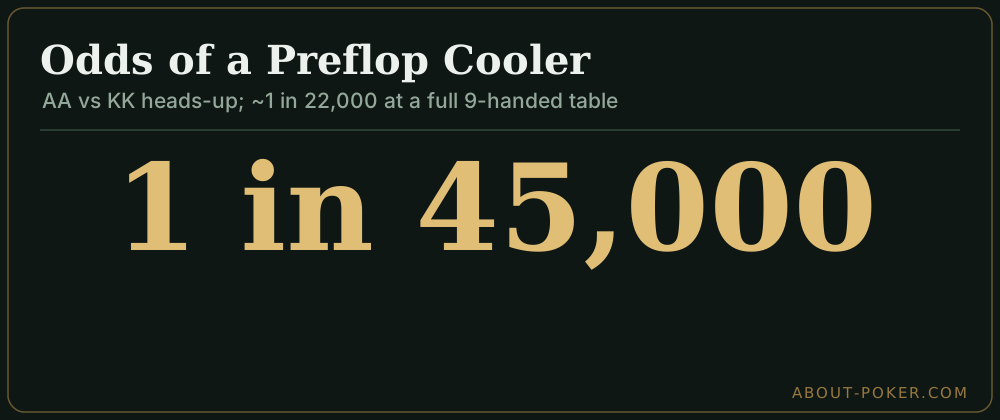
Start with being dealt a specific pair. There are 6 combinations of aces out of 1,326 possible starting hands, so you get aces about 1 in 221. The same is true for kings. For two specific players to hold aces and kings on the same deal, you multiply the conditional probabilities: given one player has aces, the chance a specific second player has kings from the remaining cards is about 6 in 1,225. That puts the exact heads-up collision at roughly 1 in 45,000.
The full derivation, including the equity once the cards are in, lives at odds of aces vs kings preflop. And when the cooler does happen, the aces win about 82% of the time — the classic figure detailed at aa vs kk preflop odds equity.
Why it feels more common at a full table
At a nine-handed table there are many more pairs of players who could be the two combatants. If you hold kings, any of the other eight players could be holding the aces. Summing across all those opportunities, the “aces out there somewhere versus your kings” event is roughly 1 in 22,000 per deal at a full table — about twice as frequent as the strict heads-up number, because there are more chances for the collision to occur.
This is the same combinatorial reasoning used throughout poker combinatorics: more players means more combinations, which means rare events show up more often across the table even though each individual pairing stays rare.
A worked example
You are dealt K♠K♦ under the gun and raise. It folds to the big blind, who three-bets. You four-bet, they shove, you call — and they table A♣A♥. You are drawing to about 18% equity. How unlucky was this specific sequence? Being dealt kings was 1 in 221. Facing a single specific opponent who happens to hold aces was about 6 in 1,225, or 1 in 204. Multiply and you are near 1 in 45,000 for that exact confrontation. It happens, but if you play 30 hands an hour, you would expect it roughly once every 1,500 hours heads-up. It only feels routine because losing a stack with kings is unforgettable.
Coolers you cannot fold
The strategic point of cooler math is acceptance. When you get kings all-in against aces, you did not misplay — you ran into the top 0.5% of the deck. The correct response to a preflop cooler is almost always to get the money in with the second-best big pair, because folding kings preflop to avoid the rare cooler costs you far more against the many worse hands people shove.
The one adjustment worth making is at extreme depths against very tight opponents. If a player who never bluffs jams a fourth bet all-in for 300 big blinds, kings can occasionally be a fold. But in normal games, get it in and accept the variance.
Common mistakes about coolers
The first mistake is over-adjusting. Folding strong hands because a cooler “might” be there bleeds value against the vast majority of worse holdings you actually face.
The second mistake is tilting. A cooler is not a leak; it is variance. Treating it like a mistake leads to bad decisions on the next hands.
The third mistake is misjudging frequency. Coolers feel constant but are genuinely rare, as the numbers above show. Keeping the real odds in mind keeps your emotions and your bankroll steady.
Quick reference
- Being dealt a specific pair (AA or KK): about 1 in 221.
- Aces versus kings, two specific players heads-up: about 1 in 45,000.
- Someone holds aces while another holds kings at a full 9-handed table: about 1 in 22,000.
- Aces’ equity when the cooler hits: about 82%.
Preflop coolers are rare, unavoidable, and part of the game. Know the numbers, get the money in with your big pairs, and do not let the occasional collision change sound strategy.
Frequently asked
What are the odds of a preflop cooler?
It depends on which cooler. Two specific players being dealt aces versus kings heads-up is about 1 in 45,000. At a full nine-handed table, someone holding aces and someone else holding kings on the same deal happens roughly once every 22,000 hands. Coolers feel common because they are memorable, not because they are frequent.
What counts as a preflop cooler?
A cooler is a hand where two players both have strong holdings and the money goes in almost unavoidably. Classic preflop coolers are aces versus kings, kings versus queens, and any big pair versus a slightly smaller big pair. The defining feature is that both players play correctly and one still loses a full stack.
How often do you get aces against kings?
Being dealt aces yourself is about 1 in 221. Having a specific opponent hold kings at the same time pushes the combined odds to roughly 1 in 45,000 heads-up. It happens more often at a full table because there are more opponents who could be holding the kings.