Odds of a Suited Ace Flopping a Flush
A suited ace flops the nut flush just 0.84% of the time — about 1 in 118. The real value is the flush draw and the ace-blocker. Full math inside.
On this page · 7 sections
Suited aces — A5s, AJs, ATs and the rest — are among the most playable hands in Hold’em, and it’s tempting to imagine them dropping nut flushes all over the place. The reality is that flopping the flush is rare. The value lives elsewhere: in the draw, the nut potential, and the blocker.
The headline number
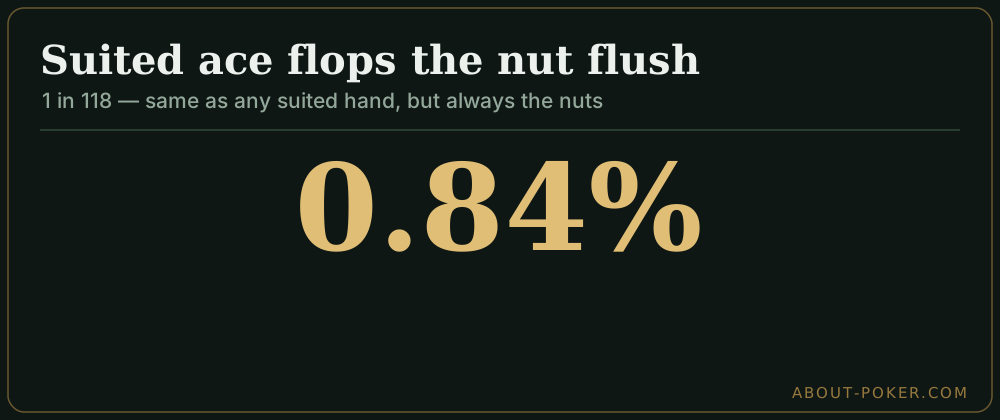
A suited ace flops a flush exactly as often as any two suited cards: 0.84%, or about 1 in 118. The rank of your cards has no effect on how the suits land — the deck doesn’t know you hold an ace.
For all three flop cards to be your suit, the math is (11 ÷ 50) × (10 ÷ 49) × (9 ÷ 48) ≈ 0.84%. That matches the general odds of flopping a flush. So no, your A♠K♠ is not more likely to flop a flush than 7♠2♠ — it just makes a much better one.
What actually makes it special: the nut
When a suited ace does make a flush, it’s the nut flush — the best possible flush, unbeatable by any other. That’s the real edge. A player holding a king-high or queen-high flush is at constant risk of running into someone higher; the ace-high flush never has that problem.
This matters most on the more common outcome: flopping a flush draw, which happens about 11% of the time, or roughly 1 in 9. With a suited ace that’s a nut-flush draw — 9 outs to the best hand, worth about 35% to complete by the river (see flush draw odds). You can bet and raise it aggressively because when it gets there, you’re never second-best.
The blocker effect
Holding the A♠ means no opponent can hold the A♠. That single fact is powerful: your opponent cannot have the nut flush or the nut-flush draw in spades. This blocker property is why suited aces make premium semi-bluffs.
When the board is two-tone and you hold the bare A♠, you can barrel credibly — you block the strongest flush hands your opponent could call or raise with, so your bluffs get through more often, and your value hands get paid because opponents can’t have the nut blocker themselves.
A worked example
You raise A♣T♣ and get called. The flop is K♣8♣3♦. You’ve flopped the nut-flush draw: two clubs plus the A♣, 9 clubs left, roughly 35% to complete by the river, about 4-to-1 against.
This is a hand you want to play fast. You have 9 clean outs to the unbeatable flush, plus an ace overcard and backdoor Broadway potential. You can semi-bluff raise or barrel with confidence, because even when called you have strong equity, and when your flush completes no one can beat it. Compare this to holding 8♣7♣ on the same flop: same 9 outs, but now a bigger flush can crush you, so it plays far more cautiously.
The full outcome distribution
To keep expectations honest, here’s roughly what happens when you take a suited ace to the flop, purely on the flush dimension:
- Flops the flush outright: about 0.84%, or 1 in 118.
- Flops a flush draw (two more of the suit): about 11%, or 1 in 9.
- Flops a backdoor flush draw (one more of the suit): about 42%.
- No suit help on the flop: about 46%.
So nearly nine times in ten your suited ace is not even on a flush draw after the flop. That’s the reality check: the hand’s playability comes mostly from the ace itself — top pair, top kicker potential — with the flush as a lucrative but infrequent bonus. When the flush draw does arrive, though, the nut quality and the blocker turn it into one of the most profitable holdings in the deck.
Common mistakes
The first is expecting the flush to arrive often. At 1 in 118 to flop, and 1 in 9 to flop the draw, most of the time your suited ace is just ace-high or a weak pair. Don’t overplay it as though the nut flush is coming — its baseline value is modest.
The second is neglecting the blocker in your bluffing decisions. Players hold the A♠ on a spade-heavy board and then check-fold, wasting the single best card to bluff with. If you’re going to fire, the hands that block the nuts are the ones to fire with.
Quick checklist
- A suited ace flops a flush just 0.84% of the time — 1 in 118, same as any suited hand.
- It flops a flush draw about 11% of the time (1 in 9) — a nut-flush draw.
- The ace guarantees any flush you make is the nut flush.
- The ace-blocker removes your opponent’s nut flush and nut-flush draw.
- Prefer suited aces as semi-bluffs and barrels on two-tone boards.
Frequently asked
What are the odds of a suited ace flopping a flush?
About 0.84%, or roughly 1 in 118. That's identical to any two suited cards flopping a flush, because the math only cares about the suit, not the rank. What makes a suited ace special is that when it flops or completes a flush, it's the nut flush.
How often does a suited ace flop a flush draw?
About 11%, or roughly 1 in 9. Flopping exactly two more of your suit (a four-card flush draw) is far more common than flopping the full flush, and with a suited ace it's a nut-flush draw worth up to 9 outs to the best possible hand.
Why are suited aces so valuable?
Two reasons beyond the flush odds: any flush you make is the nut flush, so you never lose to a bigger one, and the ace acts as a blocker, meaning your opponent literally cannot hold the nut flush or the nut-flush draw. That blocker makes suited aces excellent bluffing and semi-bluffing hands.