Bluff vs Give Up
When to fire another bluff and when to just give up. Learn how blockers, board runout, and opponent tendencies decide whether a bet or a check makes more money.
On this page · 6 sections
Every bluff eventually reaches a fork: fire again, or check and give up. Getting this decision right is one of the biggest edges in postflop play, because a bad bluff loses the whole pot plus your bet, while a good give-up saves money you were about to set on fire. The question “bluff vs give up” is really a question about whether one more bet folds out enough better hands to show a profit.
The core question: does the bet fold out better hands?
A bluff is only a bluff if it makes a better hand fold. If your opponent’s range on this runout is full of hands that will call, betting is just burning chips. So before you fire, ask three things: Does my hand have any equity if called? Do I hold blockers to their continuing range? And does the board favor my range or theirs?
If the answer to all three is no, give up. Checking keeps the pot small and lets your weak hand realize whatever tiny equity it has, sometimes winning at showdown against an even weaker holding. A bluff with zero equity and no blockers is the worst possible turn or river action.
A worked example on a bricked turn
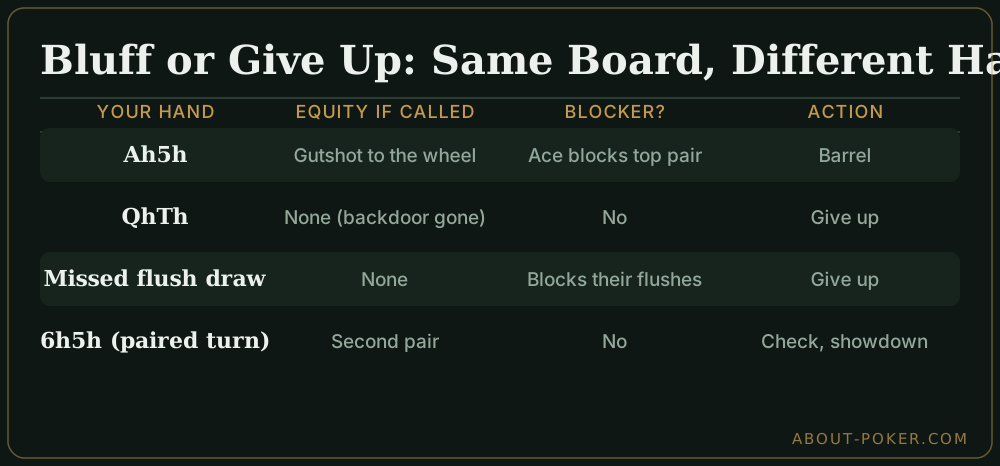
You raise the button with 9h8h, the big blind calls, and the flop comes Kc7d4s. You c-bet a third of the pot with your backdoor stuff and get called. The turn is the 2c, a total brick.
Now compare two hands you might hold here. With Qh Th you have two overcards and a backdoor gutshot that no longer connects; you have basically no equity and no blockers to the king. That is a give-up. But with Ah 5h you hold an ace blocker to the top of villain’s calling range and a gutshot to the wheel that a 3 completes. That hand still barrels: it folds out weak kings and second pairs, and it can improve. Same board, opposite decisions, driven entirely by equity and blockers. For more on which turns keep the pressure on, see our guide to double and triple barreling.
How board runout changes the answer
The turn and river card matter enormously. Cards that favor your range are green lights to keep bluffing; cards that smash your opponent’s calling range are red lights to shut down.
If you raised preflop and hold the range advantage, an overcard to the flop (say a turned ace on a K72 board) is a great barreling card because you can credibly have it and your opponent usually can’t. But a card that pairs the board, completes an obvious draw, or brings the exact rank your opponent was calling with should slow you down. The classic mistake is auto-firing a second barrel on a scare card that actually helped villain more than you.
Common mistakes that cost money
The most expensive bluffing error is barreling out of frustration. You built the pot, you feel committed, so you fire again with a hand that has no way to win except a fold that isn’t coming. This is spew, not strategy. A close second is giving up too early with hands that hold real equity or blockers, letting opponents realize their equity for free.
Another leak is ignoring your opponent’s type. A calling station will not fold, so bluffs against them are wasted no matter how good the board looks; against them you check your air and value bet thinner. A tight, fit-or-fold player folds far more, so your marginal bluffs and give-up candidates become clear barrels. Reading the human is as important as reading the board, a theme we develop in pot control in poker.
Turning give-ups into better bluffs
Not every weak hand is a pure give-up. Sometimes the right move is to check now and bluff later, or to pick the hands within your give-up region that carry the best blockers. When you must choose which busted draws to keep firing, prefer the ones that block your opponent’s nutted hands and unblock their folds. Hands that can no longer win at showdown make the best bluffs; hands that can still win a checkdown make the best give-ups. This mirrors the logic in turning made hands into bluffs.
A quick decision checklist
Before you fire another bluff, run this list. First, would a fold from a better hand actually happen given this opponent? Second, do I hold a blocker to their strongest continues? Third, does this runout favor my range or theirs? Fourth, if I get called, do I have any equity or a plan for the next street? Fifth, is my give-up hand better off checking to win at showdown?
If you can answer yes to the first three, bet. If your hand still has showdown value and the bluff folds out nothing worse, check and give up. The discipline to give up when the math says give up is what separates winning players from those who talk themselves into one bet too many. When you check back and take a small pot with the best of a weak bunch, that is a win, not a missed opportunity.
Frequently asked
How do I know when to give up on a bluff?
Give up when your hand has no equity, no useful blockers, and the runout favors your opponent's calling range more than your betting range. If a value bet on the next street would be too thin and your bluffs would only fold out hands you already beat, checking is better than firing again.
Should I always double barrel my flop bluffs?
No. A flop c-bet works as a wide range play, but the turn should narrow to bluffs that pick up equity or block your opponent's continues. Firing every flop bluff on blank turns burns money against players who don't overfold.
Do blockers really matter for bluffing?
Yes. Holding a card that removes your opponent's strongest continuing hands (like an ace blocker to the nut flush or top pair) makes your bluffs get through more often, which is exactly what turns a marginal give-up into a profitable barrel.