Reading Overbets
How to read an overbet: what it polarizes to, why the sizing demands a nutted defense, the pot odds it lays, and how to pick bluff-catchers by blockers.
On this page · 7 sections
An overbet — a bet larger than the pot — is the most polarizing action in poker. Nobody risks that many chips with a medium hand, so an overbet is nearly always the nuts or near-nuts for value and complete air as a bluff, with almost nothing in the middle. Reading one is really two questions: does this player have the range to overbet credibly, and given the terrible price, which of my hands are strong enough to catch? Answer both and you’ll neither pay off the nuts nor fold the best hand to a bluff that the size was designed to scare you into releasing.
Why the size forces polarization
The mechanics are simple. A big bet needs to win often to profit as a bluff, and it needs to be called by worse to profit as value — and a medium hand can do neither at an overbet size. So the range self-selects to the extremes: hands that want maximum value and hands that want maximum fold equity. That’s the definition of a polarized range, pushed to its limit. The practical upshot: when you face an overbet, don’t imagine the bettor has a “decent” hand. They almost never do. They have a monster or a whiff, and your job is to weigh the two.
The pot odds are worse
Overbets lay you a bad price, and you have to respect the math. The break-even formula against a bet is bet ÷ (pot + 2 × bet). Against a pot-sized bet you need to win 33% of the time; against a 150%-pot overbet you need about 37.5%; against a 2x-pot overbet you need 40%. The bigger the bet, the more of the range must be value before calling loses money — but also the more bluff combos the bettor needs to stay balanced. A balanced overbettor at 150% pot must bluff about 37.5% of the time, so their range is roughly 62% value, 38% bluff. If they hit that, calling with a hand that beats their bluffs is a coin-flip you should take when your bluff-catcher is clean.
A worked example
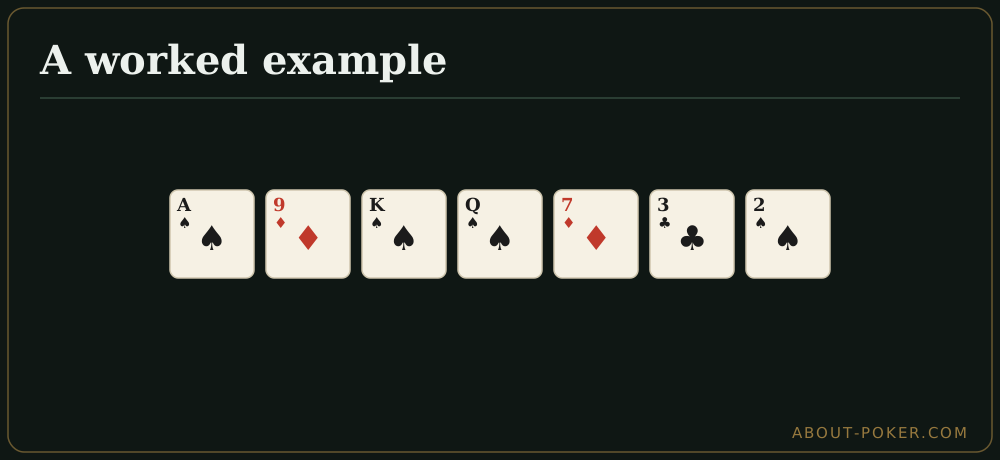
The board runs out K♠ Q♠ 7♦ 3♣ 2♠, a flush completed on the river. You hold A♠ 9♦ — the nut-flush blocker with the ace of spades, but no actual flush and only a busted overcard hand for showdown. Villain overbets 150% pot into you. Read the range: value is made flushes (KsXs, QsXs, spade combos) and maybe a slim set count; bluffs are busted straight draws (JT, T9 offsuit that picked up nothing) and missed broadway. Now the blockers do the work — this is using blockers to read hands in action. Your A♠ removes the nut flush and a big share of his best value combos, shrinking his value count sharply. It also does not block his busted straight-draw bluffs, so his air is fully available to be caught. A hand with almost no showdown value becomes a good bluff-catcher purely because of what it removes: you block his value and unblock his bluffs. Against a balanced overbettor, this is a call; against a station who overbets only flushes, you fold even the A♠.
Whose range can even overbet
Before you agonize over bluff-catchers, ask whether the bettor’s range supports an overbet at all. Overbets are credible when the bettor’s range is uncapped and yours is capped. If you took a passive line that screams “I have a medium hand,” a strong player can overbet you polarized because they can credibly hold the nuts and you can’t. But if the action means you are the one who could have the nuts, an overbet from the other player is far less credible and often more bluff-heavy than they intend. The line the bet comes on — who showed strength, who could have the top of the range — tells you whether the overbet is a legitimate polarized bet or a spot where the bettor simply can’t have enough value. The offensive side of this is covered in overbetting the river.
Picking bluff-catchers by blockers
Since an overbet is a value-or-air proposition, your bluff-catcher selection is almost entirely about blockers. Prefer hands that block the bettor’s value combos — the ace of the flush suit, a card that makes their sets or straights less likely — and that leave their bluffs fully available. Downgrade hands that block their bluffs (you want those hands to still be in their range to call). Two holdings with identical showdown value can be a snap-call and a snap-fold against the same overbet, decided entirely by what each one removes. When in doubt, hold up your hand and ask: does this card make his nuts less likely, or his bluffs less likely?
Common mistakes
The classic error is folding everything but the nuts, which hands a balanced overbet automatic profit — you must catch some bluffs. The mirror error is hero-calling with a hand that blocks the bluffs and unblocks the value, which is exactly backward. A third leak is ignoring the price: calling a 2x-pot overbet needs 40% equity, and a marginal bluff-catcher rarely clears that bar even against a bluff-happy player. And the biggest strategic miss is not asking whether the overbettor’s range is even capable of the nuts — against a range that structurally can’t have value, the correct read is that the overbet is mostly air.
A quick checklist
Facing an overbet, run four questions. Is the bettor’s range uncapped enough to credibly hold the nuts here? What price am I getting — how much equity do I need? Split the range into value and bluff combos, respecting how few value hands a blocker might leave. And does my exact hand block their value while unblocking their bluffs? Answer those and the scariest bet in poker becomes a clean, countable decision.
Frequently asked
What does an overbet usually represent?
An overbet is highly polarized: the nuts or near-nuts for value, and complete air as bluffs, with almost nothing in between. The oversized bet is designed to maximize value from the top of the range and apply maximum pressure with bluffs.
How often do you have to be right to call an overbet?
More often than against a normal bet, because the price is worse. Against a 150% pot overbet you must win about 37.5% of the time to break even — pot odds are the bet divided by (pot + two times the bet). Bigger bets demand a stronger bluff-catcher.
Should you fold everything but the nuts to an overbet?
No. Overbets are polarized, so a balanced overbettor has bluffs you must catch. Defend with the strongest bluff-catchers that block the opponent's value and unblock their bluffs, and fold the weak ones. Blanket folding lets a balanced overbet auto-profit.
Why do players overbet?
To get maximum value with the nuts on boards where the opponent's range is capped, and to generate maximum fold equity when bluffing. Overbets work best when your range is uncapped and the opponent's range is not, so you can credibly rep the very top.