Overbetting the River
An overbet is a bet larger than the pot. Learn when to overbet the river for value or as a bluff, correct sizing, and a worked polarized example.
On this page · 6 sections
An overbet is a bet larger than the pot — 150 into a 100 pot, or even 2x pot when stacks allow. On the river it is one of the most powerful and misunderstood tools in no-limit hold’em. Used correctly, an overbet squeezes out value your opponent would never pay against a normal-sized bet, and it turns marginal bluffs into pot-winning threats. Used carelessly, it just sets your money on fire. The key is understanding that an overbet is not a bigger version of a value bet — it is a fundamentally different, highly polarized action that only works against a specific kind of opponent range.
What an overbet actually is
Standard river bets sit between a third of the pot and full pot. An overbet steps past that: any wager larger than the current pot. Because you are risking more chips to win the same pot, the math shifts. If you bet full pot as a bluff, your opponent needs to fold half the time for it to break even. Overbet 2x pot and they only need to fold two-thirds of the time — a higher bar, but one that is often cleared when your line looks strong and their hand is mediocre.
That risk-reward tradeoff is why overbets belong to polarized ranges. You are threatening to be either the nuts or nothing, forcing your opponent to make a hero call with a bluff-catcher or fold what is often the best hand at showdown.
When the board and ranges allow it
The single most important condition is a capped opponent range. If your opponent cannot credibly hold the strongest hands on the board, they have no comfortable calling range against a huge bet. That happens when they took a passive line — flatting the flop and turn instead of raising — or when the runout hits cards that connect with your range far more than theirs.
Overbets shine on runouts where you hold nut hands your opponent almost never has: an ace-high board where you can have the sets and two pairs from your betting range, or a completed straight or flush that your line represents and their capped range does not. Contrast that with a wet, coordinated board where your opponent could easily have made a strong hand — there, a normal-sized value bet is safer.
A worked example
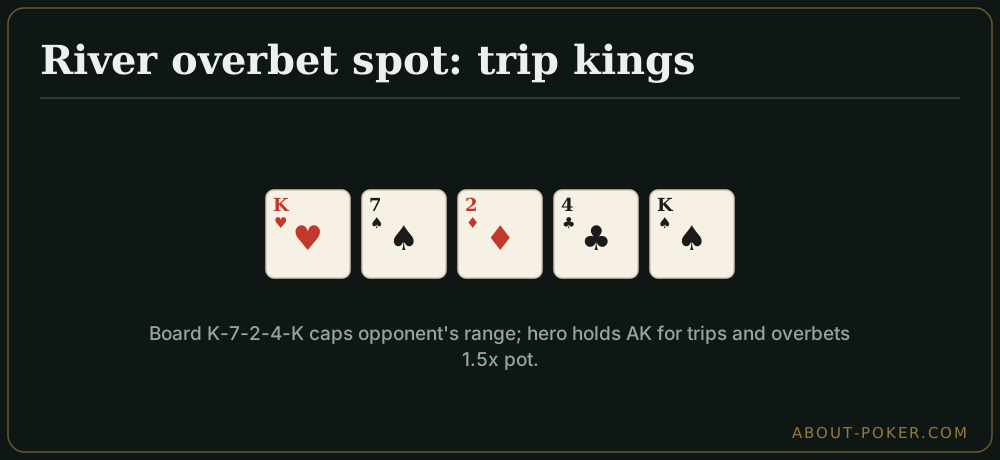
You raise from the button with A-K offsuit and the big blind calls. Flop comes K-7-2 rainbow. You c-bet, they call. Turn is a 4, you bet again, they call. River is another K, giving you trip kings with the top kicker.
The board is K-7-2-4-K. Your opponent’s range is now heavily capped — a hand like K-Q or K-J would rarely have called two barrels on this dry board, and they have no straights or flushes possible. Meanwhile your range contains all the full houses and trips. This is a textbook overbet spot. You fire 1.5x pot. Your opponent, holding something like 7-6 for a pair of sevens or A-4 for two pair, is now in a miserable spot: they can only beat a bluff, and the huge sizing screams strength. You get called by worse pairs that convince themselves you are bluffing, and you fold out the hands that would have checked back.
The same sizing lets you bluff a hand like Q-J that missed everything, because your opponent cannot tell the two apart.
Balancing value and bluffs
An overbet that only ever shows up with the nuts gets exploited fast — observant players simply fold everything. To keep it working you need bluffs mixed in, and the best bluffs carry blockers to the hands your opponent would call with. On the K-7-2-4-K board, bluffing with a hand containing an ace or a king reduces the combinations of trips and top pair your opponent can hold, making their call less likely.
A healthy river overbetting range is roughly balanced so your opponent is indifferent between calling and folding their bluff-catchers. In practice, weight it toward value in live low-stakes games where players call too much, and add more bluffs against thinking regulars who over-fold to big sizings.
Common mistakes
- Overbetting a merged range. Betting huge with a medium-strength hand like top pair, weak kicker only isolates you against better hands. Overbets are for the top and bottom of your range, not the middle.
- Overbetting into an uncapped opponent. If your opponent raised the turn or the board smashes their range, they can call comfortably with strong hands. Save the overbet for capped opponents.
- No bluffs. A value-only overbetting range prints money for one hand, then never gets paid again.
- Ignoring stack depth. Overbets require chips behind. If the geometry does not allow a large river bet after normal-sized flop and turn bets, plan your sizing on earlier streets.
A quick checklist
Before you overbet the river, run through this:
- Is my opponent’s range capped — do they rarely have the nuts?
- Does the runout favor my range more than theirs?
- Am I polarized — nuts or air, not a medium hand?
- If bluffing, do I hold blockers to their calls?
- Is there enough behind, or did I plan the river sizing earlier?
Clear all five and the overbet becomes one of the highest-EV plays available. Miss even one and a standard bet is usually the disciplined choice. Overbetting is not about bravado — it is about recognizing the rare spots where the math and the ranges line up, then pressing your edge hard.
Frequently asked
What is an overbet in poker?
An overbet is any bet larger than the size of the pot — for example, betting 150 into a 100 pot. On the river, overbets are used to apply maximum pressure with a polarized range of very strong hands and bluffs.
When should you overbet the river?
Overbet the river when your range is polarized and your opponent's range is capped — meaning they rarely hold the strongest hands. This lets you extract maximum value from the nuts and generate maximum fold equity when bluffing.
How big should a river overbet be?
Common river overbet sizes run from about 1.25x the pot up to 2x the pot or larger. Bigger sizings demand a more polarized range and stronger blockers, because you are risking more to win the same pot.