Playing a Draw on the Turn
On the turn a draw has only one card to come, so the math tightens. Learn one-card odds, implied odds, when to semi-bluff, and a worked turn hand.
On this page · 6 sections
The turn is where drawing hands get expensive. On the flop, a draw has two cards to come and plenty of equity; on the turn, only one card remains, so the same draw hits far less often. Players who don’t adjust to that shift bleed chips by calling turn bets at bad prices. Play the turn well and you’ll fold your marginal draws, semi-bluff your good ones, and call only when the math genuinely works.
One card to come changes everything
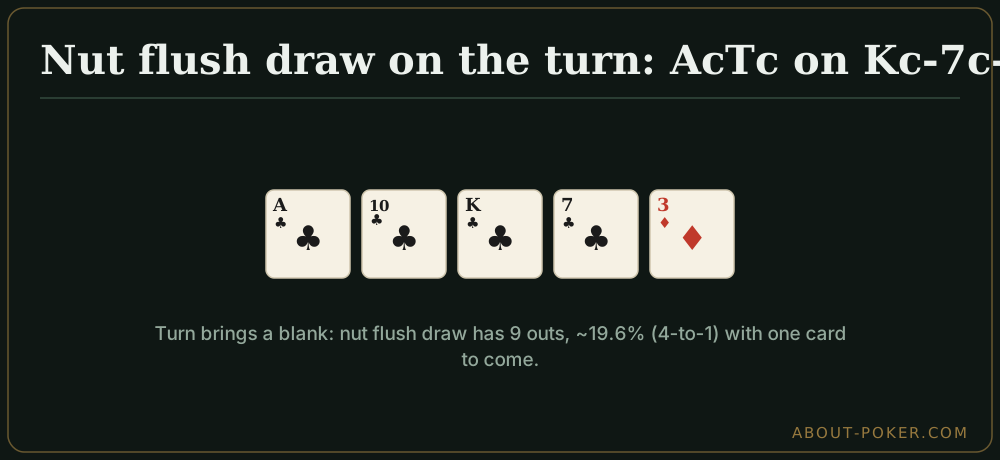
The core adjustment is simple: with one card left, every draw is worth about half what it was on the flop. Use the rule of two — multiply your outs by two for a rough percentage.
- Flush draw (9 outs): about 19.6%, roughly 4-to-1 against.
- Open-ended straight draw (8 outs): about 17.4%, roughly 4.75-to-1.
- Gutshot (4 outs): about 8.7%, roughly 10.5-to-1.
Compare that to the flop, where a flush draw is about 36% with two cards to come. The equity nearly halves. That is why a call that was easy on the flop can be a clear fold on the turn if the price doesn’t improve. For the broader draw framework, see playing draws postflop, and for turn-specific strategy see how to play the turn.
Pot odds and implied odds
To call a turn bet with a draw, compare your chance of hitting to the price you’re being laid. If a nine-out flush draw is 4-to-1 against, you need better than 4-to-1 pot odds to call profitably on immediate odds alone. If the pot is 100 and your opponent bets 100, you’re getting 2-to-1 to call — not enough by direct odds.
That’s where implied odds come in: the extra chips you expect to win on the river when you complete. If you’re confident of getting paid a big river bet when your flush comes, those future chips can bridge the gap. But be honest — implied odds shrink when the draw is obvious (a third flush card scares opponents) or when stacks are shallow and there’s little left to win.
Semi-bluffing on the turn
Because raw equity is lower, a turn semi-bluff leans harder on fold equity than a flop one. That’s not a reason to stop bluffing — it’s a reason to be selective. Pick turns where your story is believable: a scare card that hits your perceived range, a board where your opponent’s range is capped, and a hand that has both drawing equity and some backup, like a flush draw with an overcard or a gutshot.
Betting a good draw also lets you avoid tough spots. Semi-bluffing takes the initiative, denies your opponent a free river, and sets up a river barrel if you miss. Combined with sensible pot control on your medium hands, aggressive turn play with your best draws keeps your range balanced and hard to exploit.
When to give up
Sometimes the right play is to check and fold. If you hold a bare gutshot with no fold equity against a station, chasing 10.5-to-1 for a fraction of that price is a straightforward loss. Discount dirty outs — cards that complete your draw but may lose to a bigger draw or fill an opponent’s hand — and fold when neither pot odds nor implied odds justify continuing. Discipline here is a big long-term edge.
A worked hand
You call a raise on the button with the ace and ten of clubs. The flop is king-seven-three with two clubs, giving you the nut flush draw. Your opponent c-bets, you call. The turn is the four of spades — a blank. Now you have one card to come: nine outs, about 19.6% to hit, roughly 4-to-1 against.
Your opponent bets 75 into a pot of 100. You’re getting 175-to-75, about 2.3-to-1 — not enough on direct odds for a 4-to-1 shot. But you hold the nut flush draw, stacks are deep, and you expect a big payoff if a club comes. With strong implied odds, calling is defensible. Alternatively, you can raise as a semi-bluff: you have real equity plus fold equity, and if called you still have your draw.
If the river is a club, you make the nut flush and bet for value, collecting the implied-odds payoff that justified the call. If it bricks, you fold to further aggression, having taken a mathematically sound gamble. That’s turn draw play in a nutshell — respect the one-card math, and let pot odds, implied odds, and fold equity decide the line.
Quick checklist
- Use the rule of two: outs times two for one-card odds.
- A flush draw is only about 20% on the turn, not the 36% it was on the flop.
- Call only when direct pot odds or strong implied odds cover the price.
- Semi-bluff selectively; turn bluffs rely more on fold equity than flop bluffs.
- Fold bare, low-out draws with no implied odds and no fold equity.
Frequently asked
How do draw odds change on the turn?
On the turn there is only one card left to come, so a draw hits far less often than it did on the flop. A nine-out flush draw is about 36% by the river from the flop but only about 20% on a single card from the turn. That single-street math is why turn calls need better pot odds or strong implied odds.
What are the odds of hitting a flush draw on the river?
About 19.6% — roughly 4-to-1 against — to complete a nine-out flush draw with one card to come. An eight-out straight draw is about 17.4%, and a gutshot with four outs is about 8.7%. Use the rule of two: outs times two gives the approximate percentage for one card.
Should you semi-bluff a draw on the turn?
Often yes, but be more selective than on the flop. With only one card to come your raw equity is lower, so a turn semi-bluff relies more heavily on fold equity. Choose turns where your line is credible and your opponent can fold, and prefer draws that also have overcard or backdoor equity.
When should you just call with a draw on the turn?
Call when the direct pot odds justify chasing one card or when implied odds — the extra money you expect to win if you hit — make up the difference. If neither the immediate price nor the future payoff covers your roughly 4-to-1 or 5-to-1 shot, folding is correct.