Playing a Double Gutshot
A double gutshot has eight outs like an open-ender but is far more disguised. Learn the outs, odds, when to semi-bluff, and a worked hand with real numbers.
On this page · 6 sections
A double gutshot is one of poker’s best-disguised hands. On the surface it looks like a weak inside straight draw, but it can complete from two separate gaps, giving it eight clean outs — the same as an open-ended straight draw. The difference is that almost nobody sees it coming. That combination of solid equity and near-invisibility makes the double gutshot, or “double belly buster,” a premium semi-bluffing hand.
What a double gutshot actually is
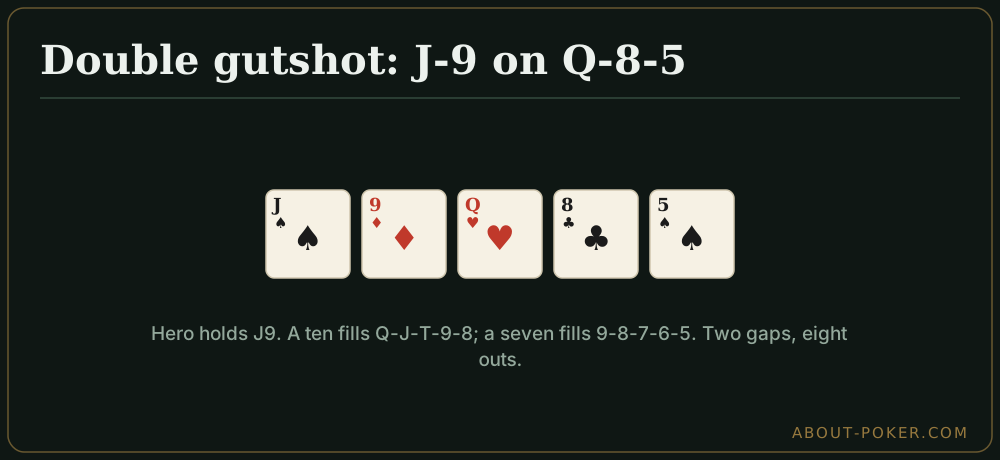
A single gutshot needs one specific rank to fill an inside hole in your straight, and there are four cards of that rank, so it is four outs. A double gutshot is two of those inside draws at once, hitting from two different ranks that don’t overlap. Four outs plus four outs equals eight outs.
Here is the classic shape. You hold J-9 and the flop comes Q-8-5. You make a straight with a ten (fills Q-J-10-9-8) and you also make a straight with a seven (fills 9-8-7-6-5). Two separate gaps, two ranks, eight outs. Compare that to an open-ender like J-10 on a Q-8-x board — same eight outs, but the open-ender is obvious while the double gutshot hides in plain sight. For the broader framework on draw play, see playing draws postflop.
The odds you need to know
With eight outs on the flop, the math is the same as any eight-out draw:
- Turn only: about 17% (roughly 4.9-to-1 against).
- By the river (two cards to come): about 32% (roughly 2.1-to-1 against).
A quick shortcut is the rule of four and two: multiply outs by four with two cards to come, by two with one card to come. Eight outs gives about 32% flop-to-river and about 16% on a single street. Those numbers tell you when a call is priced correctly and how much fold equity you need to make a semi-bluff work.
Semi-bluff and stay disguised
The great strength of the double gutshot is deception, so play it in a way that keeps opponents guessing. Betting or raising with it — semi-bluffing — gives you two ways to win: fold equity now and eight outs when called. Because the draw is hidden, opponents call your bets with weaker holdings and then pay you off when you complete, and they also fold more often because they can’t put you on a specific hand.
This makes the double gutshot an excellent candidate for the same aggressive lines you’d use with an open-ended straight draw: c-bets in position, check-raises when the board favors your range, and turn barrels. The key is to bet with the intent of representing a strong made hand while your actual equity backs up the aggression.
How board texture changes the plan
Not every double gutshot is worth playing fast. On a wet, coordinated board where a flush or higher straight is possible, some of your outs may complete a hand that still loses, and opponents defend wider. On a drier board your straight will usually be the nuts when it arrives, and your fold equity is higher because opponents have fewer strong holdings. Reading these spots is core skill — see wet vs dry board texture.
Position matters too. In position you control the pot, can take free cards when you miss, and extract more when you hit. Out of position, lean toward check-raising rather than leading, since it lets you realize equity without bloating the pot when your opponent has you beat.
A worked hand
You raise on the button with 9-7 suited and the big blind calls. The flop is J-8-5 rainbow, giving you a double gutshot: a ten makes J-10-9-8-7 and a six makes 9-8-7-6-5 — eight outs, well hidden. Your opponent checks.
You c-bet two-thirds pot. With eight outs you have about 32% equity to the river, and your bet also folds out ace-high and weak backdoor hands. The big blind calls. The turn is the 2 of clubs, a total blank. You bet again, roughly two-thirds pot. Your line looks like a strong jack or an overpair, and your opponent can’t rule out that you already have a made hand.
If a ten or a six comes on the river, you make a straight almost nobody expects and can bet for maximum value. If you miss, you can still consider a final bluff on scare cards. The disguise is what turns eight outs into real, repeatable profit.
A quick checklist
- Confirm you truly have two gaps, not one — count both ranks and verify eight outs.
- Prefer semi-bluffing in position; check-raise out of position rather than leading.
- On dry boards, apply maximum pressure — your fold equity and disguise are highest.
- On wet boards, discount outs that make second-best hands and slow down.
- When you complete, bet for value — opponents rarely see the straight coming.
Frequently asked
What is a double gutshot in poker?
A double gutshot, also called a double belly buster, is a hand that can complete a straight with either of two different inside cards. Because it fills from two separate gaps, it makes eight outs total — the same count as an open-ended straight draw — but it is much harder for opponents to read.
How many outs does a double gutshot have?
Eight outs. Each gutshot is four outs, and a double gutshot has two non-overlapping gaps, so 4 plus 4 equals 8. That is roughly 17% to hit on the turn and about 32% to hit by the river from the flop.
Is a double gutshot as good as an open-ender?
In raw equity, yes — both have eight outs. But the double gutshot is stronger in practice because it is disguised. Opponents rarely put you on the straight, so you get paid more when you hit and your semi-bluffs generate more fold equity.
Should you semi-bluff a double gutshot?
Usually yes, especially in position on a board where you can represent value. With eight outs you have real equity when called, and the hidden nature of the draw means opponents fold more often and pay off more when you complete it.