Playing a Flush Draw on a Paired Board
A flush draw on a paired board is worth less than it looks. Learn how the pair discounts your outs, when to semi-bluff, and when to shut down with a worked example.
On this page · 6 sections
A flush draw feels like a premium hand — nine clean outs, roughly a third of the deck helping you by the river. But the moment the board is paired, that draw quietly loses value. The flush you’re chasing is no longer guaranteed to be the best hand, and the same pair that scares your opponents can cost you a stack when you hit. Playing a flush draw on a paired board is about respecting that hidden discount while still using the board’s texture to your advantage.
Why a paired board discounts your draw
On an unpaired two-tone board, hitting your flush usually gives you a hand near the top of the range. On a paired board, a full house is always available to anyone holding trips, and if the board pairs again you can be drawing to a flush that’s already dead to quads or a boat.
Concretely, your nine flush outs still hit about 35% of the time by the river from the flop (roughly 19% on the turn card alone, about 4-to-1 against on one street). What changes is not the odds of making the flush — it’s the odds that the flush is good. Against a range that includes trips, your implied odds shrink because your biggest paydays are exactly the spots where your opponent has filled up. This is the same reasoning behind cautious lines in c-betting paired boards: pairs interact with ranges in ways that reward the player who accounts for full houses early.
Fold equity goes up, showdown value goes down
Here’s the compensating factor. Paired boards are scary for everyone. When you bet or raise, you credibly represent trips, a full house, or a strong overpair — hands your opponent can’t easily beat. That means your fold equity as a semi-bluffer is often higher than on a clean board.
So the trade is real: you win more pots without showdown, but the pots you win at showdown pay less because opponents fold their weak stuff and only continue with hands that can cooler your flush. The practical adjustment is to lean toward the semi-bluff (betting or raising the draw) and away from passive calls that only get paid off when you’re beat. This mirrors the aggression-first approach in playing draws postflop.
A worked example
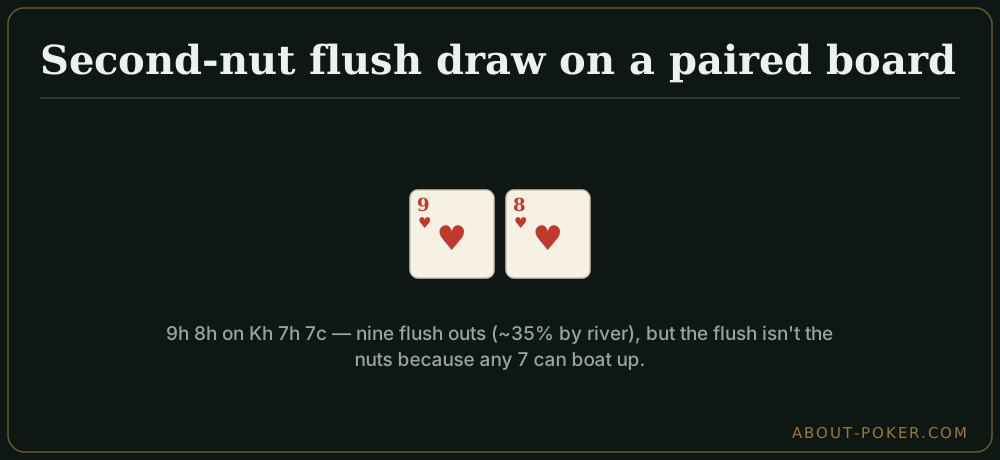
You call a button open from the big blind with 9♥ 8♥. The flop comes K♥ 7♥ 7♣ — a paired board and you hold the second-nut flush draw. Your opponent continuation-bets two-thirds pot.
You have nine flush outs (about 35% by the river) plus backdoor straight equity. Crucially, a check-raise here represents the whole board: trips (any 7), a boat (K7), and a big king. Very few of your opponent’s c-bet hands can call a check-raise comfortably — an unimproved king hates it. So you check-raise as a semi-bluff. When called, you still have roughly a third of the deck to make the flush, and you have blockers to none of the trips they’d continue with. If they jam over your raise on this paired board, though, believe them: your flush draw is now often drawing to a hand that’s already a full house or set, and you should fold rather than stack off light.
Position changes the math
In position, a flush draw on a paired board is far easier. You can take a free card by checking behind, you can bet for fold equity when checked to, and you control the size of the pot you build. Out of position you lose all of that, so your paired-board draws lean harder on the check-raise and on giving up when you miss. The out-of-position framework in playing a flush draw out of position applies directly: weaponize the check-raise, avoid weak leads, and don’t pay to realize equity you can’t cleanly cash.
Common mistakes
The biggest error is treating the flush as the nuts. Players hit their flush on a paired board, fire big, get raised, and can’t fold — walking into a full house they should have seen coming. Size your value bets so you can fold to a raise if the board has obvious boat combos.
The second mistake is calling passively with the draw. On a paired, scary board, a pure call denies you all the fold equity the texture hands you. If your hand is worth continuing, it’s often worth continuing aggressively.
The third mistake is ignoring how many trips combos exist. A board like 7♥ 7♣ leaves two 7s in the deck; a board that pairs a card lots of players hold (like tens or jacks) leaves more likely trips in your opponent’s range. Discount harder when the paired card is one your opponent’s range hits often.
Quick checklist
Before you commit chips with a flush draw on a paired board, run through this: Do I have fold equity here, or is my opponent a station? How many trips and boat combos can beat my eventual flush? Am I in position to take a free card, or must I use the check-raise? And critically — if I hit the flush and get raised, can I fold? If the honest answer to that last one is no, tighten your value sizing now.
Frequently asked
Is a flush draw still good on a paired board?
It still has nine outs to the flush, but the flush is no longer guaranteed to be the nuts because the board can pair into a full house or quads. On paired boards, the range of hands that already beat your eventual flush is wider, so you should discount your implied odds and be more careful stacking off.
Should you semi-bluff a flush draw on a paired board?
Yes, but selectively. Fold equity is higher because opponents fear the pair-improving hands and trips you can represent, but you win less often at showdown when called. Semi-bluff when you have extra equity or strong blockers, and give up more against calling stations.
Can a flush lose on a paired board?
Absolutely. When the board is paired, any opponent holding trips can fill up to a full house on the turn or river, and sets or two pair may already be ahead of a draw. A completed flush on a paired board is strong but not the mortal nuts, so size and stack off with that in mind.