Playing a Combo Draw in a 3-Bet Pot
How to play a combo draw in a 3-bet pot: why the low SPR turns big draws into stack-off hands, when to shove, and a worked flush-plus-gutshot example.
On this page · 6 sections
A combo draw in a 3-bet pot is one of the most powerful hands in no-limit hold’em, even though you have made nothing yet. The reason is arithmetic. In a 3-bet pot the money already committed preflop shrinks the stack-to-pot ratio, so a hand with big equity is often worth getting all in immediately rather than trying to realize it street by street. Understanding why turns a scary spot into a clear, aggressive line.
Why the low SPR changes everything
Stack-to-pot ratio, or SPR, is the effective stack divided by the pot on the flop. In a single-raised pot the SPR is often 8 to 12; in a 3-bet pot it collapses to roughly 3 to 4 because so much money went in preflop. A low SPR means it takes fewer bets to get all the chips in, and it means your fold equity and your raw equity combine much more easily.
A combo draw such as a flush draw plus an open-ended straight draw can have 15 outs. A flush draw plus a gutshot is usually 12 clean outs. With two cards to come, 12 outs is about 45% equity against a single pair, and 15 outs is over 50%. When you already have close to a coin flip against your opponent’s likely holding, and you also get fold equity when you raise, committing your stack is straightforwardly profitable. This is the core idea behind playing draws in a 3-bet pot: the pot geometry rewards aggression.
A worked example
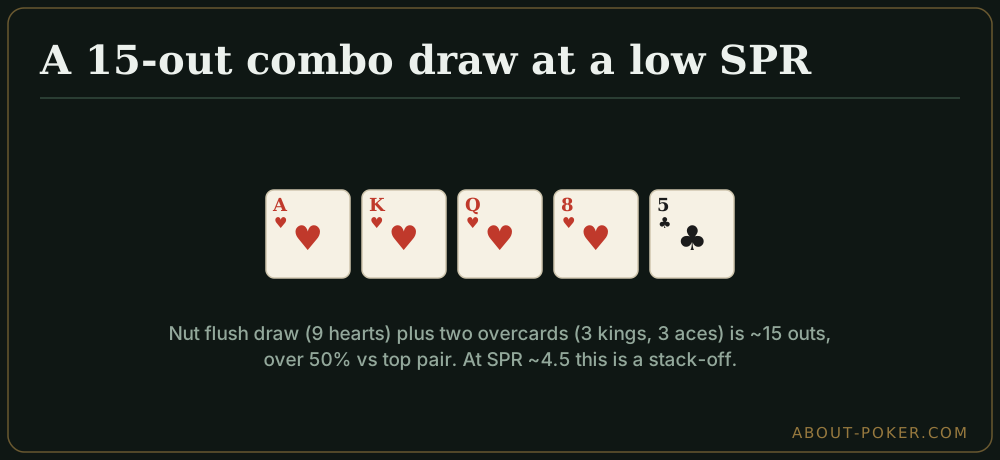
You 3-bet from the big blind with Ah Kh and the button calls. Effective stacks are 100 big blinds and the pot is 20 big blinds; the flop comes Qh 8h 5c. You have the nut flush draw and two overcards. Count the outs: 9 hearts give you the nut flush, and three remaining kings plus three remaining aces give you top pair. That is roughly 15 outs, or about 54% equity against a hand like Q-J.
With about 90 big blinds behind and a 20 big blind pot, your SPR is around 4.5. You bet 14, the button raises to 40, and now you can shove. Your raw equity alone is a coin flip against their value; add the times they fold worse queens, missed broadways, or their own draws, and jamming is clearly the highest-EV play. You are not gambling. You are getting money in with the equity lead plus fold equity.
Shove, raise, or call
The default with a strong combo draw at a low SPR is to build the pot, not flat it. Betting or raising gives you two ways to win: your opponent folds, or your draw gets there. Calling only leaves the “draw gets there” path and lets a good opponent barrel you off the hand on later streets. As the SPR gets even lower, commit more freely; as it climbs toward a single-raised-pot level, you can be more willing to call and see a cheap turn. The general principles are covered in playing combo draws, and they intensify in 3-bet pots.
There is a nuance about draw quality. The nut flush draw is far better than a low flush draw, because the low one can make your flush and still lose to a bigger one when the money goes in. Prioritize committing with nut and near-nut draws, and be more cautious stacking off with dominated draws on wet boards.
Common mistakes
- Playing it passively. Check-calling a monster draw in a 3-bet pot throws away fold equity and lets you get outplayed on the turn.
- Overvaluing weak draws. A baby flush draw plus a gutshot looks like a combo draw but can be reverse-dominated; be more selective about jamming it.
- Ignoring the SPR. Applying single-raised-pot instincts to a 3-bet pot leads to under-committing. Always check how few bets it takes to get all in.
- Forgetting position. Out of position you have less control, so you should lean even harder toward jamming rather than calling and getting barreled. See playing a flush draw out of position for the positional side of this.
Adjusting to opponents
Against a player who folds too much to raises, the fold-equity portion of your combo draw is worth even more, so lean toward raising and jamming. Against a calling station who never folds, your shove relies almost entirely on raw equity, which for a 15-out draw is still fine but for a 9-out draw is thin, so tighten up. Against very aggressive opponents who barrel relentlessly, a strong draw is a great hand to check-raise all in because it denies them the ability to keep firing.
Quick decision checklist
- Count your true outs and estimate equity: 12 outs is about 45%, 15 outs is over 50%.
- Measure the SPR; in 3-bet pots it is usually 3 to 4.
- Prefer raising or shoving over calling to capture fold equity.
- Prioritize nut and near-nut draws; be cautious with dominated ones.
- Adjust: jam more vs. folders and aggressors, tighten vs. stations.
Frequently asked
Should you stack off with a combo draw in a 3-bet pot?
Often yes. In a 3-bet pot the stack-to-pot ratio is low, usually around 3 to 4, and a big combo draw with 12 to 15 outs frequently has enough equity to get all in profitably as a semi-bluff plus fold equity. The lower the SPR, the more you lean toward committing.
How many outs does a flush plus gutshot have?
A flush draw is 9 outs and a gutshot straight draw adds 4 more, but one card usually overlaps, so a flush-plus-gutshot combo draw is typically 12 clean outs. Against one pair that is roughly 45% equity with two cards to come and about 48% if some overcards are also live.
Is it better to shove or call with a combo draw?
With a big draw at a low SPR, shoving or raising is usually superior to calling because you add fold equity to your raw equity. Calling passively lets you get bluffed off the hand and denies you the chance to win the pot immediately when your opponent folds.