Playing a Set on a Wet Board
A set is a monster, but wet boards can crack it. Learn how to fast-play sets, size for protection, and avoid slowplaying into disaster with a worked example.
On this page · 7 sections
Flopping a set is one of the best feelings in poker — a hidden monster that stacks overpairs and top pairs. But a set is only as safe as the board it lives on. On a dry, static flop you can afford to get tricky. On a wet board — one loaded with flush draws and straight draws — every free card is a chance for your set to get cracked. The single most important adjustment: stop slowplaying and start charging. On wet boards, a set is a fast-play hand.
Why wet boards change everything
A wet board is one where many draws are possible: two-tone or monotone flops, connected cards, or textures that give opponents flush and straight draws. On these boards, hands that are behind your set still have real equity. A single flush draw has roughly 35% equity to hit by the river; an open-ended straight draw has about 32%. Combo draws climb even higher. Give those hands a free card and you’re routinely handing away a pot you were winning on the flop.
That’s the core of playing sets for value on a wet texture: your job is to make the draws pay the maximum to continue, and to build a big pot while you’re the favorite. The dryer the board, the more you can slowplay. The wetter it is, the harder you fast-play.
Fast-play, don’t slowplay
Slowplaying a set means checking or calling to disguise your strength and induce action. It’s tempting because a set is so well hidden. But on a wet board it’s usually a mistake. Every check gives draws a free card, and every small bet gives them a cheap one. The value you gain from trapping is dwarfed by the pots you lose when the flush or straight arrives.
Instead, bet and raise. If you’re the preflop raiser, continuation-bet large on the wet flop. If you’re facing a bet, raising is often better than calling because it charges the draws immediately and starts building toward a stack-off. Reserve slowplaying for dry boards where nothing can catch up cheaply — on a wet board, aggression protects your equity.
Size up for protection and value
Sizing matters as much as the decision to bet. On wet boards, size large — around three-quarters of the pot or more, and on very draw-heavy textures a pot-sized bet or overbet is fine. Big sizing does two jobs at once: it charges the draws a bad price to continue, and it builds the pot so you can get stacks in by the river when you’re a huge favorite.
A common beginner error is betting small with a set to “keep them in.” Against draws, small bets are a gift — they let the draw continue profitably and outdraw you. Charge them properly. If they fold, great; you win the pot without risk. If they call a big bet, you’re getting maximum value while ahead. This is exactly why c-betting wet flops leans toward larger sizing.
A worked example
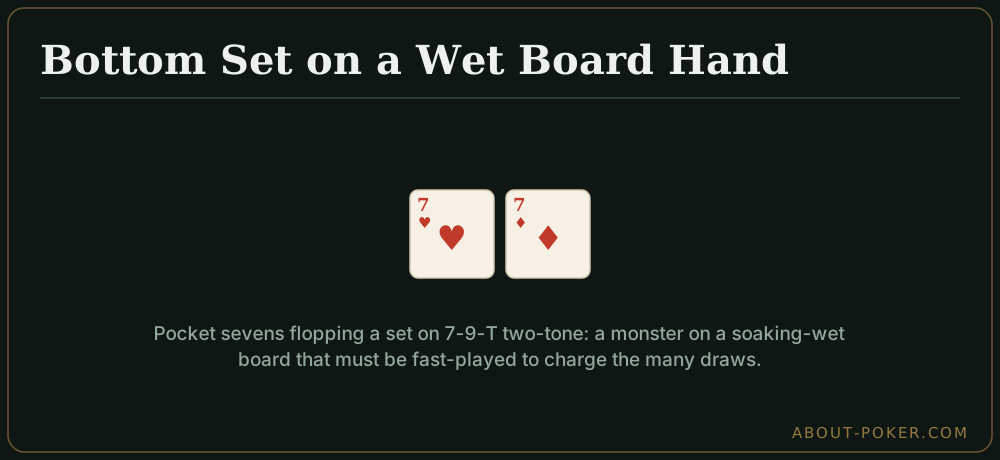
You call a raise from the big blind with 7♥ 7♦ and flop a set on 7♠ 9♠ T♥. This is a soaking-wet board: spade flush draws, plus every J-8, Q-8, 8-6, and J-Q makes or draws to a straight. You have the near-nuts, but you’re vulnerable to a lot of turn cards.
Do not slowplay. Lead out or check-raise big — this board is teeming with draws that will happily put money in. If the preflop raiser c-bets, raise to roughly 3x their bet. You want stacks in by the river, and you want every draw to pay a steep price now, before a spade or a straight card ruins your hand. Say the turn is the 2♣: keep betting large, because plenty of draws are still live. If a scary card like the 8♠ arrives (completing straights and the flush), slow down and reassess — but on most turns, keep charging.
Now compare a dry board: 7♠ 2♦ 2♣ with the same set. There, nothing can catch up cheaply, so you can slowplay to induce bluffs. The board texture, not the hand, dictates the speed.
When to slow down
Fast-playing doesn’t mean stacking off blind. If the wettest possible card completes obvious draws and your opponent suddenly ramps up the aggression, respect it — a lower set can lose to a straight, a flush, or a higher set. Pot control becomes relevant when the board pairs in a bad way or a four-card straight or flush appears. But these are exceptions. The default on a wet board is: bet big, raise draws off, and get the money in while you’re ahead.
Common mistakes
- Slowplaying to trap. On wet boards this hands free equity to draws and costs you stacks.
- Betting small. Small bets give draws a correct price to continue; size up to charge them.
- Auto-stacking on every runout. When the scariest card comes and aggression spikes, a lower set can be beaten — reassess.
- Playing every set the same. Dry boards allow slowplays; wet boards demand fast-play.
Quick checklist
- On wet boards, fast-play your set — bet and raise, don’t trap.
- Size large (three-quarters pot or more) to charge draws and build the pot.
- Aim to get stacks in by the river while you’re the big favorite.
- Slow down only when the scariest draw completes and aggression spikes.
- Save slowplaying for dry boards where nothing catches up cheaply.
Play your set fast on a wet board and you’ll win big pots instead of watching a monster get cracked by a card you gave away for free.
Frequently asked
Should you slowplay a set on a wet board?
No. On a wet, draw-heavy board you should fast-play your set — bet and raise to charge draws and build the pot while you're ahead. Slowplaying gives free or cheap cards to flush and straight draws that can crack you, costing far more than the value you'd gain by trapping.
How should you size a set bet on a wet board?
Bet large — around three-quarters of the pot or more. Bigger sizing charges draws the maximum price to continue, builds a pot you can stack off with, and denies opponents the cheap cards they need to outdraw your set.
Can a set get cracked?
Yes. A set can lose to a completed flush, a straight, a higher set, or a full house that comes in on a later card. On wet boards these draws are live, which is exactly why fast-playing to charge and fold them out is correct.