Playing a Naked Ace Blocker
A naked ace can block the nuts and make a great bluff. Learn when the ace-blocker bluff works, when it fails, and how to use it with a worked example.
On this page · 6 sections
Sometimes the best bluff isn’t the hand with the most equity — it’s the hand holding a single, powerful card that your opponent needs. A naked ace, especially the ace of the flush suit, is the classic example. It has almost no showdown value on its own, but it removes the exact combinations that could call you down. Playing a naked ace blocker is about turning that removal into fold equity, and knowing the spots where the trick simply doesn’t work.
The blocker logic
Every bluff is a story, and blockers make the story more believable by removing the counter-evidence from your opponent’s hand. Hold the A♠ on a board with three spades, and your opponent literally cannot have the nut flush — you’re holding the card that makes it. That means a big chunk of the hands that would snap-call your bluff are gone from their range.
This is the foundation laid out in blockers in poker: you’re not counting your own equity, you’re subtracting your opponent’s best hands. A naked ace is a great bluffing card precisely because it’s a terrible showdown hand (nothing to lose by betting) that blocks the nuts (everything to gain by representing them).
When the ace blocker bluff works
The bluff shines when three conditions line up. First, the ace has to block hands your opponent would actually continue with — the nut flush, top set of aces, or the nut straight where an ace is the top card. Second, your sizing has to be big enough to fold out the bluff-catchers you don’t block; a small bet lets everyone call, blocker or not. Third, your opponent must be capable of folding — blockers only matter if the folds happen.
This is why the ace blocker pairs so naturally with large sizing and overbetting the river: a polarizing overbet demands the near-nuts to call, and the ace in your hand has removed a slice of exactly those near-nuts from your opponent’s range. Big bet, blocked nuts, credible story.
A worked example
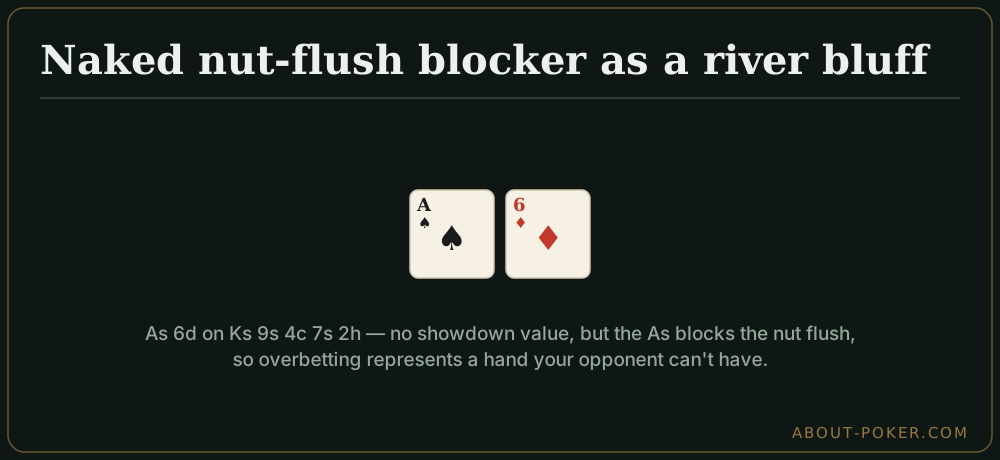
You reach the river holding A♠ 6♦ on a board of K♠ 9♠ 4♣ 7♠ 2♥. Three spades are out, the flush got there, and you have… a naked ace of spades. Your hand can’t beat a single pair at showdown — but you hold the A♠, so your opponent cannot have the nut flush.
You overbet the pot. The story is clean: you’re representing the nut flush, and your opponent, holding say the K♠ for a smaller flush or a set of kings, has to worry that you have the exact hand they can’t beat. Crucially, the one holding you fear — the nut flush — is impossible, because the A♠ is in your hand. Against a thinking opponent, this is a high-EV bluff. Now swap your hand to A♥ 6♦ on the same board: the ace no longer blocks the flush, the story loses its teeth, and the same overbet is far more likely to get looked up. Same “ace-high,” completely different bluff, because only one version blocks the nuts.
When it fails
The naked ace blocker collapses in a few predictable ways. Against calling stations, it’s nearly worthless — they call with any pair regardless of what you represent, so removing combos from a range they never fold changes nothing. Save the bluff for opponents who fold.
It also fails when the ace doesn’t block the relevant nuts. Holding the A♦ on a monotone spade board blocks nothing that matters; the ace has to be the ace of the suit or the ace that makes the nut straight. And it fails at small sizings — if opponents can call cheaply, they will, blocker or not. Blockers reduce combinations; they don’t manufacture fold equity out of a bet that’s too small to pressure anyone.
Finally, remember that a blocker is a supporting actor, not the whole plan. The reasoning connects to turning made hands into bluffs: you’re choosing bluffs by their blocker value and their lack of showdown value, not just betting any ace and hoping.
Common mistakes
The first mistake is bluffing the wrong ace — firing with an ace that doesn’t block the nuts and wondering why you keep getting called. Check that the ace removes the specific hands that beat your story.
The second is sizing too small. The ace-blocker bluff needs a big bet to fold out the bluff-catchers you don’t block; a half-pot stab gives everyone a cheap call.
The third is running it against stations. No amount of blockers folds out a player who was always calling. Pick opponents who respect big bets and can lay down strong hands.
Checklist for the ace blocker bluff
Before you fire: Does my ace block the actual nuts here — the right suit, the right straight? Is my bet big enough to fold out the bluff-catchers I don’t block? Can this specific opponent fold a strong hand? And do I have better showdown value that I’m giving up by bluffing? If the ace blocks the nuts, the sizing is large, and the opponent can fold, pull the trigger with confidence.
Frequently asked
What is a naked ace blocker?
A naked ace blocker is holding a single ace — often the ace of a flush suit — with no other value, so your hand is essentially a bluff. The ace 'blocks' the nut flush or the nut straight in your opponent's range, meaning they're less likely to hold the exact hand that would call your bluff. That blocker effect is what makes the bluff work.
When should you bluff with an ace blocker?
Bluff with an ace blocker when the ace removes a big chunk of your opponent's strongest calling hands and your bet is large enough to fold out their bluff-catchers. It works best on the river, on boards where the nut hand relies on that ace or ace-suit, and against thinking opponents who can actually fold strong hands.
Does the ace blocker bluff always work?
No. Against calling stations, blockers are nearly worthless because they call anyway regardless of what you represent. It also fails on boards where the ace doesn't block the relevant nuts, or when the pot is small enough that opponents can call cheaply. Blockers reduce combos, they don't guarantee folds.