Playing Ace-High on the River
Ace-high can win a big pot at showdown if you play it right. Learn when to check it down, when to turn it into a bluff, and when to fold on the river.
On this page · 6 sections
Ace-high on the river is one of the most misread hands in no-limit hold’em. Beginners fold it reflexively; overaggressive players fire big bluffs with it and get looked up. The reality sits in between. Ace-high is a genuine showdown hand — it beats every missed draw, king-high, and worse ace-high — but it almost never improves and rarely wins a bet. The whole game is getting it to showdown for as little money as possible, or converting it into a bluff when its blockers do the heavy lifting.
Ace-high is a showdown hand, not a betting hand
The first rule: do not bet ace-high for value on the river. Think about what calls you. Any hand that pays off a bet beats you, and every hand you beat — busted flush draws, bottom-pair hands that give up, king-high — will fold to a bet. So betting turns a hand with real showdown value into a pure bluff. If you want to win with ace-high, the plan is almost always to check and show it down.
That means river ace-high wants a passive line. If you were the aggressor earlier and your hand devolved into ace-high, checking behind (in position) or check-calling a small bet (out of position) keeps the pot small and lets you scoop up all those missed draws at showdown. This ties directly into sound river play: identify whether your hand is a value bet, a bluff, or a bluff-catcher, and ace-high is almost always the third.
A worked example
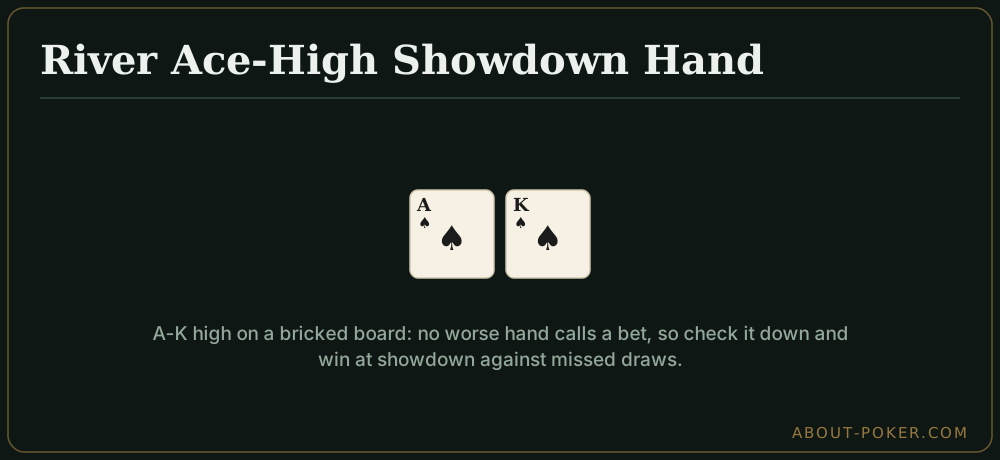
You raise from the cutoff with A-K offsuit and the big blind calls. Flop comes Q-8-3 rainbow. You continuation-bet, they call. Turn is a 5, you check back to control the pot. River is a 2, and now the board reads Q-8-3-5-2 with no flush. Your opponent checks.
You have ace-high, no pair. Should you bet? No. There is no worse hand that calls — a busted gutshot folds, second pair folds, and any queen was going to check-raise or lead. But your ace-high beats a huge chunk of the big blind’s range: all the hands that floated the flop with a draw and missed. Check behind, and you win a medium pot at showdown far more often than you’d win by betting. This is textbook showdown value management, the opposite of a value bet.
When ace-high becomes a bluff
The exception is when your ace-high has no showdown value against your opponent’s range but carries a powerful blocker. Suppose the board runs out to a four-flush or a scary straight, and your opponent has been check-calling the whole way. Against that made-hand range, your ace-high can’t win at showdown — so checking accomplishes nothing.
Here, an ace blocker matters. If the nut hand requires the ace of the flush suit and you hold it, betting big turns your dead hand into a credible bluff while removing the exact hands that would call. This is the essence of turning made hands into bluffs: when your equity is zero, blockers and fold equity are all you have. Just make sure the story is believable and your sizing is large enough to fold out marginal made hands.
How position changes everything
In position, ace-high is easy: you check behind and realize your showdown equity for free. That’s a major reason position is so valuable — you get to see a free showdown with a marginal hand instead of guessing whether to call.
Out of position, ace-high is harder. If you check, a competent opponent bets their whole range, and you’re stuck guessing. Against players who bluff too much, check-calling one small bet is fine — you beat their bluffs. Against tight opponents who only bet made hands, check-folding is correct because your ace-high never wins when called. Read the bettor before you read the board.
Reading the opponent and the runout
Two factors decide the call: how many busted draws are in their range, and how often this player bluffs. A board that had a lot of draws — like a two-tone flop that bricked — leaves your opponent with plenty of air, so ace-high is a fine bluff-catcher. A board where nothing missed (say a paired, low, static texture) means any river bet is more likely value.
Player type is the tiebreaker. Against a loose-aggressive regular who barrels rivers relentlessly, ace-high graduates from marginal to a snap-call. Against a nitty recreational player who never bluffs the river, fold and move on.
Quick checklist for river ace-high
- Default to checking: ace-high rarely gets called by worse.
- In position, check behind and take the free showdown.
- Out of position, call small bets against bluffers, fold big bets to tight players.
- Bluff only when you have no showdown value and a meaningful blocker.
- Weight your read: many busted draws plus a bluffy opponent equals a call.
- When nothing on the board missed, respect river aggression and let it go.
Play ace-high as what it is — a hand that wins small pots at showdown — and it quietly becomes one of your most profitable river holdings.
Frequently asked
Can you win with ace-high on the river?
Yes, ace-high often wins at showdown against missed draws and low ace-high hands. The trick is reaching showdown cheaply — usually by checking it down rather than betting, since betting folds out worse and gets called by better.
Should you bluff with ace-high on the river?
Sometimes. Ace-high with a strong ace blocker (like A-K on a board where the nut hands need an ace) makes a reasonable bluff because it blocks your opponent's value hands and has almost no showdown value against a betting range.
When should you fold ace-high on the river?
Fold ace-high when facing a large bet from a tight, value-heavy opponent, or when the runout completed obvious draws that your opponent was chasing. It has real value only when your opponent's range contains plenty of busted draws or weaker high-card hands.