Playing a Weak Flush on the River
How to play a weak flush on the river: when to thin value bet, when to check-call as a bluff catcher, and how to avoid stacking off to a bigger flush.
On this page · 7 sections
Making a flush on the river feels like a guaranteed win, but a weak flush is one of the most misplayed hands in no-limit hold’em. The problem is that flushes only really matter relative to each other. A low flush beats everything except a bigger flush, and against a betting or raising range, “a bigger flush” is exactly what you are worried about. Playing a weak flush well means squeezing thin value from worse hands while refusing to build a giant pot that only a better flush wants to play.
Understand what your flush beats and loses to
A flush beats straights, sets, two pair, and everything below, and it loses only to a higher flush, a full house, or quads. When the board is not paired, the full house is off the table, so your weak flush is behind exclusively to bigger flushes. That narrows the problem: the question is not “am I ahead of most hands,” it is “how often does my opponent have a flush that beats mine, and does their action tell me?”
Because so much of your hand’s value depends on that single comparison, your kicker within the flush is everything. A low flush with a small card of the suit is far more vulnerable than a flush headed by an ace or king of the suit. Holding a high card of the flush suit also acts as a blocker, removing some of the better flushes from your opponent’s range.
When to value bet a weak flush
The safest value spots come in position after your opponent has shown weakness. If a player checks the river on a completed flush board, they rarely have a big flush they are trapping with; more often they have a worse made hand, a busted draw, or a small pair. A modest value bet from your weak flush gets called by all of those. This is a genuine thin value spot: bet small, get called by worse, and do not risk much.
What you should almost never do is bet large or raise for value with a weak flush. A big bet or a raise folds out everything you beat and gets called only by the flushes that crush you. That is value-owning yourself in the purest sense.
A worked example
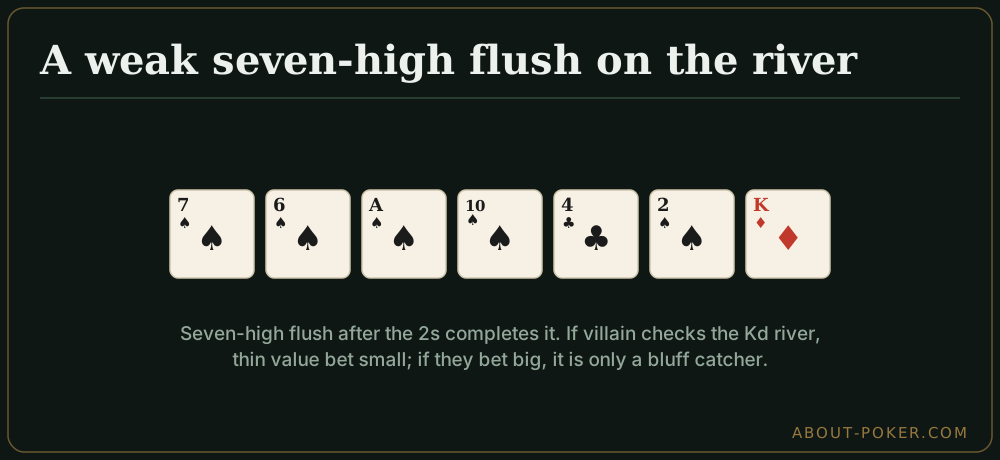
You call a raise on the button with 7s 6s. The flop is As Ts 4c, giving you a flush draw. You call a c-bet. The turn is the 2s, completing your flush; your opponent bets and you call, holding a seven-high flush. The river is the Kd, a blank. Your opponent checks.
Now think about their range. If they had the nut flush with the ace of spades, they would usually keep betting, not check. Their check-heavy river range is more like top pair, missed straight draws, and busted hands. A small value bet from your seven-high flush gets called by ace-x, king-x, and stubborn pairs. But if instead your opponent had led big on the river, you would be facing a range that contains many bigger flushes, and your seven-high hand becomes a marginal bluff catcher at best. Same cards, completely different plan based on the action. For the general framework, see how to play the river.
When a weak flush is a bluff catcher
Facing a bet on a flush board, your weak flush usually functions as a bluff catcher. It beats every bluff and every worse made hand but loses to bigger flushes. So you call to capture the bluffs and you do not raise, because raising only gets action from hands that beat you. Whether calling is correct depends on how many bigger flushes and how many bluffs the opponent has, which is the core of bluff catching the river. Against a big overbet on a flush board, be especially wary: overbets are heavily polarized to the nuts and pure air, and your medium flush loses to the nut side.
Common mistakes
- Raising for value. A weak flush raise chases away every worse hand and gets called only by better flushes.
- Overbetting. Same problem as raising; keep sizing small to keep worse hands in.
- Ignoring the suit ordering. A nine-high flush and a five-high flush play very differently against action; the lower it is, the more it is a bluff catcher rather than a value bet.
- Stacking off to obvious strength. When a passive player suddenly commits on a flush board, respect it; your low flush is frequently beaten.
Adjusting by opponent and position
Against a calling station, thin value bets with a weak flush print money because they call with worse made hands; just keep the sizing modest. Against an aggressive bluffer, lean toward check-calling so you capture their bluffs rather than betting and getting raised off your hand. In position you get to see their action and control sizing, which is ideal for a hand this size; out of position, prefer check-calling over leading so you do not build a pot a better flush wants.
Quick checklist for a weak flush river
- Identify how high your flush is; the lower it is, the more it is a bluff catcher.
- Value bet small, in position, after your opponent shows weakness.
- Never raise or overbet a weak flush for value.
- Facing a bet, call to catch bluffs but respect large sizing on flush boards.
- Use a high card of the suit as a blocker to read whether bigger flushes are likely.
Frequently asked
Should you value bet a weak flush on the river?
Sometimes, but carefully. A weak flush can value bet against a range full of worse made hands and busted draws, especially in position after showing weakness. But it should rarely bet big or raise, because a large bet mostly gets called by better flushes and folds out the worse hands you beat.
Is a weak flush a bluff catcher on the river?
Often yes. When you face a bet on a completed flush board, a small flush frequently beats bluffs and worse made hands but loses to any bigger flush. That makes it a classic bluff catcher: call to beat the bluffs, but do not raise into a range that has you dominated when it bets big.
How do I avoid losing my stack with a weak flush?
Control the pot size. Prefer checking and calling one bet over building a huge pot, avoid raising, and pay attention to whether the flush is the nut flush possibility. If a passive player suddenly bets or raises large on a flush board, your weak flush is often beaten.