Playing an Overpair Multiway
An overpair loses value in a multiway pot. Learn how to size down, when to pot control, and when to fold a big pair against multiple opponents with a worked example.
On this page · 6 sections
Pocket aces and kings feel unbeatable — right up until three players see a flop with you. An overpair is still just one pair, and one pair fares far worse against three ranges than against one. Playing an overpair multiway is a discipline problem as much as a strategy problem: the hand looks strong, so the instinct is to bet big and stack off, but the math says slow down, size down, and be willing to let go.
Why overpairs shed value multiway
Against a single opponent, a hand like Q♥ Q♠ is a favorite over most of their range. Against three opponents, you’re no longer beating “a range” — you have to beat all three, and the union of three ranges contains far more sets, two pairs, and strong draws.
The intuition: each extra player adds more combinations that can already be ahead of you or draw out on you. A set that appears in one opponent’s range a couple percent of the time becomes a meaningful threat when three players each carry that possibility. This is the central lesson of multiway pot strategy: hand values compress toward the nuts, and marginal-but-strong hands like overpairs drop several rungs.
Size down and bet for protection
Heads-up you might c-bet an overpair for two-thirds pot as clear value. Multiway, shrink it. A one-third to one-half pot bet still charges flush and straight draws, still denies free cards, and still extracts value from worse pairs — but it risks far less on the many runouts where you’re already behind.
Smaller sizing also lets you fold more comfortably to a raise. When you’ve only invested a third of the pot, giving up to a check-raise costs little; when you’ve bloated the pot with a big bet, you talk yourself into disastrous calls. Tight, deliberate sizing is how disciplined players keep their overpairs profitable in spots where reckless players donate stacks.
Lean on pot control
Not every overpair should bet multiway. On coordinated boards — anything with straights, flushes, or paired texture — checking your overpair to keep the pot small is frequently the highest-EV line. You keep worse hands in, you avoid getting raised off a hand with real showdown value, and you get to a cheaper showdown. This is textbook pot control: when your hand is good but fragile and the board is dangerous, the goal is to reach showdown affordably, not to build a monument.
A worked example
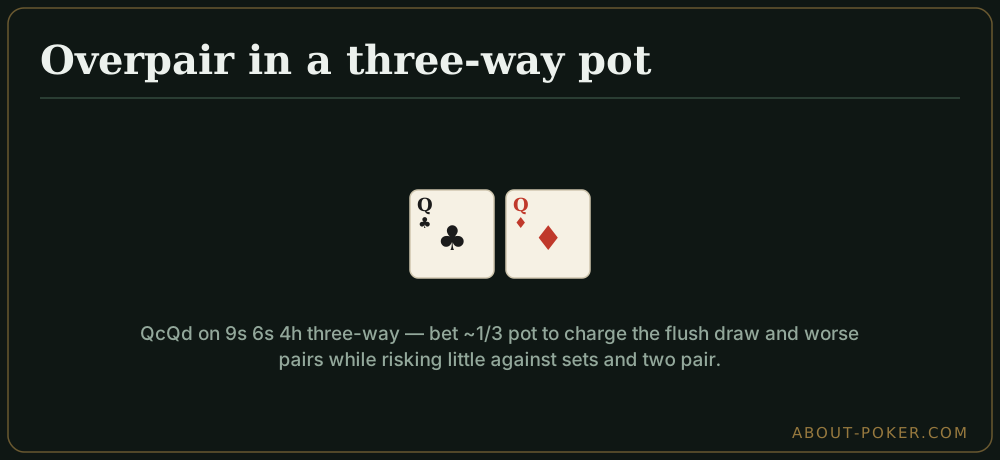
You raise Q♣ Q♦ from middle position. The cutoff and the big blind both call — three-way to the flop. The flop comes 9♠ 6♠ 4♥. You have an overpair, but it’s a middling board multiway: two spades bring a flush draw, and 9-high leaves plenty of straight and two-pair combos in two ranges.
Bet small — about a third of the pot. This charges the flush draw and worse pairs while keeping your risk low. Say the cutoff calls and the big blind folds; now the turn comes the K♠, completing the flush. This is a clean pot-control spot: check. You no longer beat a flush, you’re beaten by two pair and sets, and a bet only gets called by hands that have you crushed while folding out the few you still beat. Take the free showdown attempt and reevaluate on the river. If your single opponent bets big on that spade turn, an unimproved queen-pair is a comfortable fold.
When to fold outright
The clearest fold spots are when multiple opponents show strength. In a three-way pot, a bet and a raise in front of you almost always means your overpair is beat — one of those two hands has a set, two pair, or better. Continuing there is spewing chips into a hand you can’t beat. Fold and move on; you’ll play the next big pair heads-up soon enough.
Also fold on boards that hammer your opponents’ calling ranges. Low, connected flops (like 7-6-5 two-tone) smash the suited connectors and small pairs that flat preflop, and your overpair is often a coin flip or worse against a single semi-bluff — let alone two.
Checklist for overpairs multiway
Run these questions every time: How many players are in the pot, and how does the board hit their calling ranges? Can I size down to a third or half pot to control risk? Is this a bet board or a check-back-and-pot-control board? And if I face a raise — especially with more players still to act — can I fold my one pair? Answer honestly, and your overpairs will stop turning into your biggest losing hands.
Frequently asked
How do you play an overpair in a multiway pot?
Bet smaller and more selectively than you would heads-up. An overpair is a one-pair hand, and against multiple opponents the chance that someone has a set, two pair, or a strong draw rises sharply. Bet for protection and thin value on safe boards, but be ready to pot-control and fold on scary runouts.
Should you c-bet an overpair multiway?
Often yes, but with a smaller size — around a third to half pot rather than two-thirds or more. A smaller bet still charges draws and denies equity while risking less when you're already beaten. On wet or coordinated boards multiway, checking some overpairs is correct to control the pot.
When should you fold an overpair multiway?
Fold when you face significant aggression on a board that connects well with your opponents' calling ranges, especially when two or more players show strength. In a three-way pot, a raise and a call in front of you usually means at least one hand beats your overpair, and continuing turns your one pair into a big loser.