Playing Connected Flops
Connected flops like 9♠8♦7♣ hit the caller's range hard and demand bigger, more selective betting. Learn who has the advantage and how to size on wet boards.
On this page · 6 sections
Connected flops — middling cards in sequence like 9♠8♦7♣ or T♥9♣7♦ — are the opposite of the dry, disconnected boards where you can bet freely. These wet textures manufacture straights and straight draws in bulk, and crucially they land squarely in the range a caller shows up with. That means the range advantage the preflop raiser enjoys elsewhere shrinks or disappears, and your betting has to become bigger, more selective, and far more thoughtful.
Why Connected Boards Favor the Caller More
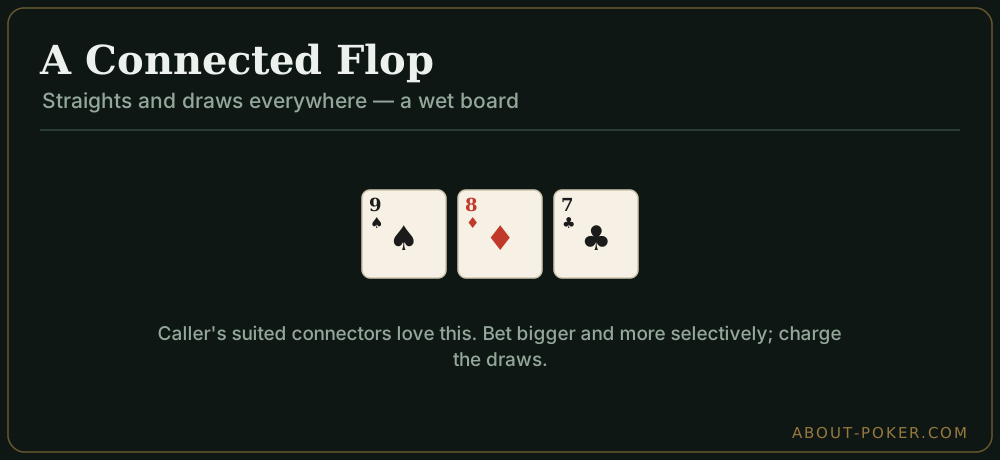
When you raise and get called, your opponent’s range is full of suited connectors, one-gappers, and small-to-medium pairs — exactly the hands that love a board like 9-8-7. They flop made straights, open-ended draws, and sets at a higher rate than usual, while your high-card-heavy raising range often arrives with two overcards and a backdoor draw. The equity gap narrows. If you are not sure how to compare this to a board like K♣7♦2♠, the wet vs dry board texture page lays out the contrast directly.
Because the caller connects well, you cannot machine-gun small c-bets across your whole range the way you would on a dry flop. Doing so bleeds chips to check-raises and floats. You have to earn your bets.
Bet Bigger, Bet Fewer Hands
The correct adjustment on a connected board is to polarize: bet a larger size — often two-thirds pot or more — with a tighter, stronger range, and check back a lot of your marginal hands. Larger sizings do real work here. They charge the many draws a proper price, they build the pot with your genuine value hands, and they generate fold equity that a tiny bet never could on such a wet surface. This is the same logic behind c-betting wet flops: the more draws exist, the more you want size and selection rather than frequency.
A Worked Example
You open A♦A♣ from middle position, the big blind calls, and the flop comes 9♠8♦7♣ — the classic nightmare for an overpair. You still have the best made hand, but the board could hardly be worse for you: any ten or six completes a straight, and countless turn cards give your opponent a hand that beats you or a draw that will draw out. This is a bet-big spot, not a bet-small one. Fire two-thirds to three-quarters pot to charge the draws and deny cheap equity.
If you get raised, respect it — on this texture a raise is often a made straight or a set, and your aces are frequently drawing thin. Contrast that with the same aces on 8♣5♦2♥, where you would bet small and rarely fear a check-raise. The board dictates the size.
Your Draws Are the Bread and Butter
The flip side of a scary board for made hands is that it is a paradise for draws — and you will hold plenty of them. Open-enders, combo draws, and pair-plus-draw hands all want to apply pressure as semi-bluffs, folding out equity and setting up profitable barrels when they hit. Play them aggressively but with a plan, as covered in playing draws postflop. A naked overcard-with-a-gutshot hand is a fine bet; a hand with no equity at all is a poor bluff on a board this wet, because your opponent folds so rarely.
Common Mistakes
The two classic errors are opposite sides of the same coin: over-betting weak hands into a range that loves the board, and under-betting real value out of misplaced fear. If you have the near-nuts on a connected board, get money in — the draw-heavy texture means you will get action from worse. And when you hold a marginal made hand like top pair, be willing to check it back for pot control rather than turning it into a bloated bluff-catcher.
Checklist for Connected Flops
- Recognize the caller’s range connects well; your range advantage shrinks or vanishes.
- Polarize: bet a larger size (two-thirds pot or more) with a tighter, stronger range.
- Check back marginal made hands for pot control instead of firing thin.
- Bet your draws aggressively as semi-bluffs, but avoid bluffing with zero equity.
- Respect check-raises — on wet boards they are far more often the real thing.
Frequently asked
What makes a flop connected?
A connected flop has cards close in rank that make straights and straight draws likely, such as 9♠8♦7♣ or T♥9♣7♦. These boards create dense draw structures and hit calling ranges that contain suited connectors and small pairs.
How should you c-bet a connected board?
Bet bigger and more selectively than on dry boards. Because the caller can have many straights and strong draws, you polarize toward strong hands and high-equity draws while checking more of your marginal holdings.
Who has the advantage on connected boards?
The advantage is more balanced than on high or dry boards. The caller's range of suited connectors and middling cards connects well with 9-8-7 type flops, so the preflop raiser cannot bet with impunity and must respect the caller's strength.