Playing Combo Draws
A combo draw pairs a flush and straight draw for huge equity. Learn the outs, when to semi-bluff or get it in, and a worked hand with real numbers.
On this page · 6 sections
A combo draw is a hand holding two draws at the same time — typically a flush draw plus a straight draw. Individually each draw is dangerous; together they stack into one of the most powerful hands in postflop poker. A big combo draw can hold more equity than top pair, which flips the usual logic: instead of playing scared, you play these hands like made hands, betting and raising aggressively because you’re often the favorite even when you haven’t made anything yet.
Why combo draws are so strong
The strength comes from stacked outs. A flush draw is nine outs. An open-ended straight draw is eight outs. Combine them — subtracting the cards that overlap — and you can have up to 15 outs. With 15 outs on the flop, you’re roughly 54% to improve by the river, which means against a made one-pair hand you’re actually the favorite. That single fact reshapes how you should play: you’re not hoping to hit, you’re betting a hand that’s ahead. For the general framework, see playing draws postflop.
Even smaller combo draws — a flush draw plus a gutshot, for 12 outs — sit around 45% by the river, close enough to a coin flip that aggression is correct. The extra outs also mean you’re rarely drawing dead and you have equity against a huge range of opponent holdings.
Semi-bluff, don’t slow-play
The mistake players make with big draws is checking to “see a free card.” With a combo draw that’s a leak. You want to semi-bluff: bet or raise, giving yourself two ways to win. Either your opponent folds now (fold equity), or they call and you hit one of your many outs (draw equity). Betting also builds the pot for the times you make your hand, and protects you from getting outdrawn by a hand that would have folded.
Because these draws have so much equity, they are also prime check-raise and all-in candidates. When you raise a c-bet with a 15-out combo draw and the money goes in, you’re often the favorite or close to it against the pair and two-pair hands that stack off. That combination of fold equity plus being ahead when called is what makes getting all in profitable. Board texture drives all of this — see wet vs dry board texture.
A worked hand
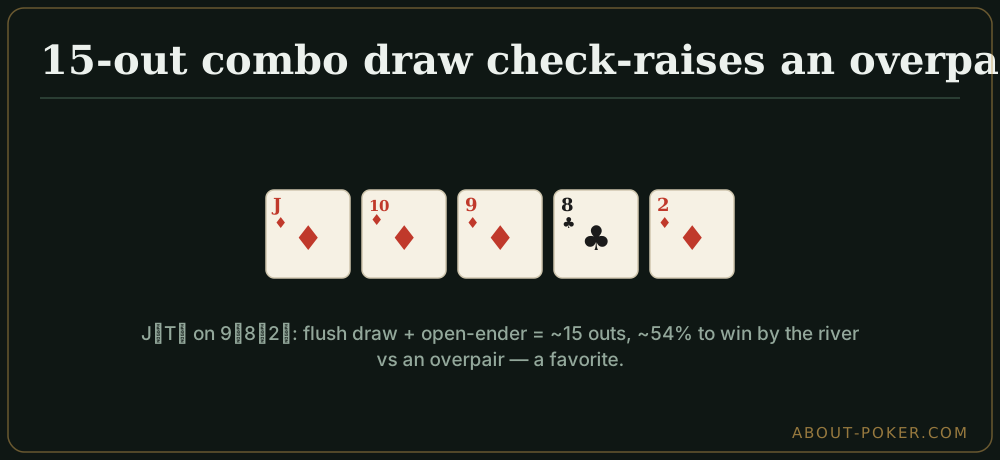
You call a button open from the big blind with J♦T♦. Flop comes 9♦8♣2♦. Look at what you have: a flush draw (any diamond, nine outs) plus an open-ended straight draw (any 7 or Q, eight outs). Two of the straight cards are also diamonds, so subtract the overlap — you have roughly 15 clean outs.
The button c-bets 50% pot. Rather than call passively, you check-raise. Against a hand like A♠A♥ — an overpair, a hand you’d normally fear — your 15-out combo draw is about 54% to win by the river. You are the favorite. So you raise, and if the button jams all in, you call comfortably: you have fold equity when they fold weaker hands, and when they call with the overpair, you’re a small favorite in the pot. Compare that to top pair, which would be a clear underdog in the same all-in. The combo draw plays like the strongest hand at the table even though it’s technically “just a draw.”
How it shifts by board and opponent
- Wet boards create combo draws but also give opponents strong hands and their own draws, so pot sizes balloon — expect stacks to go in.
- Against tight opponents, fold equity is high; semi-bluffing wins the pot outright often.
- Against stations who never fold, lean on the raw equity — you’ll get paid when you hit, so bet for value plus protection rather than expecting folds.
- Multiway, tighten up slightly: more players means more of your outs may be dead and your fold equity drops.
Common mistakes
- Checking to see a free card. You surrender fold equity and let opponents realize their own equity for free.
- Underestimating your equity. Players fold combo draws to raises, not realizing they’re the favorite. Know your out count.
- Ignoring dead outs. If an opponent could hold a higher flush draw or a set, some of your outs are tainted — count carefully.
- Playing them passively out of position. These are premium semi-bluffing hands; letting them play like weak draws wastes their power.
Combo-draw checklist
- How many clean outs do I actually have — 12, 15, more?
- Does that put my equity near or above 50% against likely made hands?
- Do I have fold equity, draw equity, or both?
- Should I bet, check-raise, or get it all in given stacks and opponent?
- Are any of my outs dead to a bigger draw or a set?
Treat a big combo draw like the monster it is. It bets, it raises, and it stacks off — because far more often than it looks, it’s already the best hand at the table. Aggression with these draws ties directly into continuation bet strategy when you’re the one applying pressure.
Frequently asked
What is a combo draw in poker?
A combo draw is a hand that has two draws at once — most often a flush draw combined with a straight draw. Because the outs stack, a combo draw can have 12 to 15 outs and often more equity than a made hand like top pair, making it a premium semi-bluffing hand.
How many outs does a combo draw have?
A flush draw and open-ended straight draw together can give up to 15 outs (9 flush + 8 straight, minus overlap). A common 15-out combo draw is roughly 54% to improve by the river against a made hand — a coin flip or better.
Should you semi-bluff or slow-play a combo draw?
Almost always semi-bluff. A combo draw has so much equity that betting or raising builds the pot for when you hit, applies fold equity now, and often makes getting all-in profitable even against a made hand. Slow-playing wastes its fold equity and protection.
Can you get all in with a combo draw?
Yes. With a big combo draw you often have more than 50% equity against one-pair and two-pair hands, so getting the money in on the flop or turn is frequently a profitable or break-even gamble with big upside — the definition of a great semi-bluff shove.