Playing Second Pair
Second pair is a bluff-catcher, not a value hand. Learn when to check-call, when to bet, and when to fold second pair with a worked hand example.
On this page · 6 sections
Second pair — pairing the second-highest card on the board, like K-9 on a Q-9-4 flop — is one of those hands that looks fine and plays awkwardly. It has real showdown value: it beats bluffs, ace-high, and worse pairs. But it’s dominated by top pair, overpairs, two pair, and sets. That split makes second pair a bluff-catcher, a hand whose job is to keep opponents honest and reach a cheap showdown, not to build a big pot. Bet it like a made hand and it becomes a steady leak.
What second pair actually beats
Be honest about your hand before you act. Second pair beats missed draws, ace-high, king-high, and any smaller pair. It loses to top pair, overpairs, two pair, and sets. So against a bluffing range your equity is solid, and against a value range it’s poor. That’s the textbook definition of a bluff-catcher: a hand you call with when opponents over-bluff, and fold when they only bet the goods. It behaves almost identically to middle pair, just one rung higher on the board.
Because your value is capped, betting second pair yourself usually backfires. If you bet, worse hands fold and better hands call or raise. The only hands paying you off are ones you already beat — and those would have bluffed or bet on their own. That’s why the default is to check and let opponents put money in with worse.
The check-call default
Second pair wants a passive, pot-controlling line. In position, you often check back to take a free showdown and avoid getting raised. Out of position, you check and call one or two reasonable bets, then reassess on the river. Keeping the pot small is the whole point — see pot control — because a bluff-catcher’s profit comes from many small showdowns, not big pots.
The mistake beginners make is treating second pair like it needs to “protect” itself with big bets. It rarely does. Most of the hands you’d fold out with a bet were going to lose to you at showdown anyway. Let them keep bluffing.
A worked example
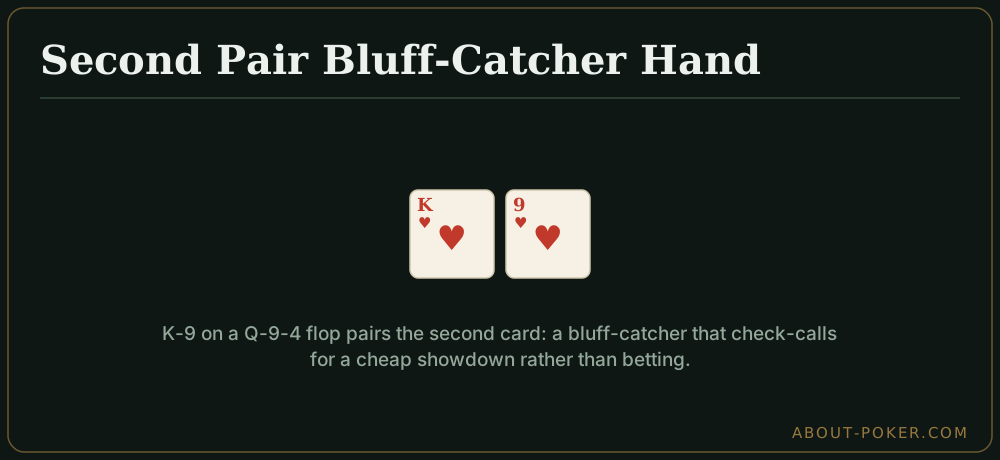
You call a button raise from the big blind with K♥ 9♥. Flop comes Q♠ 9♦ 4♣ — you have second pair with a decent kicker. You check, the button c-bets a third of the pot.
Call. You beat all the button’s air (missed overcards, backdoor draws), all the worse pairs, and you have a kicker that occasionally helps. Raising would fold out those worse hands and only get action from queens and better — exactly the hands that beat you. Now the turn is the 2♠. You check again. If the button fires a normal-sized second barrel, calling one more time is still fine against a wide, aggressive range: you’re catching bluffs.
River is the 7♦, and the button bets big. This is where you use your read. Against a loose player who barrels relentlessly, you call — your K-9 still beats a lot of busted draws. Against a tight player whose big river bet screams a queen or better, you fold. Your bluff-catcher’s value depends entirely on how many bluffs live in their range. This is the opposite of a value bet, where you want worse hands to call.
How position and opponent change the play
In position, second pair is easy: check back for a free showdown when you can, and call bets when the price is right. You get to control the pot naturally.
Out of position, it’s harder because you can’t check to guarantee a showdown — the aggressor bets and forces a decision. Against players who bluff too much, keep calling. Against nits who only bet made hands, fold earlier. The opponent, not the board, is usually the deciding factor with a bluff-catcher.
The board texture matters too. On a dynamic, draw-heavy board, a little more caution is warranted because your opponent has more credible value hands and you can get out-drawn. On a dry, static board, your second pair is more often the best hand and can call more comfortably.
Common mistakes
- Betting second pair for value. Worse folds, better calls. It earns almost nothing.
- Folding to every bet. Second pair beats a lot of bluffs; over-folding hands your opponents free money.
- Calling down against nits. When a tight player fires big on later streets, respect it and fold.
- Ignoring the kicker. A strong kicker (like K-9 vs 6-9) adds a few outs and marginal showdown value, but doesn’t turn a bluff-catcher into a value hand.
Quick checklist
- Treat second pair as a bluff-catcher, not a value hand.
- Default to check-call or check-back; keep the pot small.
- Call more against bluffers, fold more against tight, value-heavy players.
- Rarely bet — worse hands fold, better hands call.
- Let big river bets from nits go; catch the aggressive players.
Play second pair as what it is — a hand that wins small pots at showdown — and it quietly stays profitable instead of bleeding chips.
Frequently asked
What is second pair in poker?
Second pair means you've paired the second-highest card on the board — for example holding K-9 on a Q-9-4 flop pairs the nine, the second card. It beats bluffs and worse pairs but loses to top pair and better, which makes it a classic bluff-catcher.
Should you bet second pair?
Usually not for value. Betting second pair folds out worse hands and gets called by better, so it earns little. It plays best as a check-call or check-back that reaches a cheap showdown. Bet it only for thin value against very loose callers or as protection on draw-heavy boards.
When should you fold second pair?
Fold second pair to significant aggression from tight, value-heavy opponents, especially on later streets when the pot is large. It stays a bluff-catcher only while your opponent's range contains enough bluffs and worse pairs; once the betting says value, let it go.