Playing Sets for Value
A set is one of the best hands in poker — but only if you get paid. Learn how to size, when to fast-play, and when to slowplay for maximum value.
On this page · 6 sections
A set — three of a kind made from a pocket pair, like 7-7 on a 7-K-2 flop — is one of the most profitable hands in poker. It’s powerful and, crucially, hidden: opponents can’t see it coming, so they pay off with top pair, overpairs, and draws that they’d fold to a more obvious holding. But a set only earns its reputation if you extract the value. Miss a street of betting or slowplay the wrong board and you leave a full stack on the table. The default with a set is to fast-play and build the pot.
Fast-play is the default, not the exception
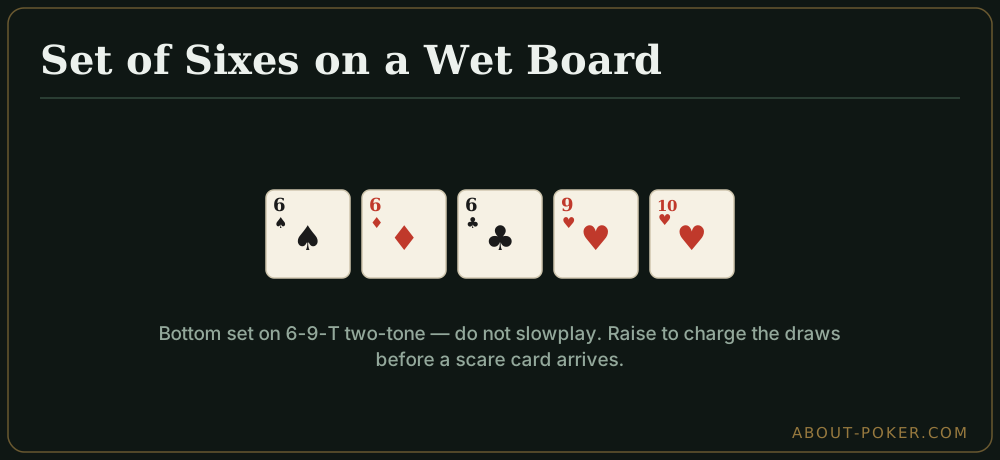
New players hear “slowplay your monsters” and check sets far too often. On most real boards that’s a mistake. When the board has any draws or high cards, you want money in now, while opponents have equity they’re willing to pay for and before a scary card kills the action.
Think about it from the opponent’s side. If you bet a wet board, they call with flush draws, straight draws, and pair-plus-draw combos — all hands drawing thin against your set. Every chip they put in is a mistake. If instead you check, you give them a free card that might complete their draw and either beat you or shut down the action. Charging draws is the whole point of value betting, and a set is the ideal hand to do it with.
Sizing to get stacks in
Because a set is so strong, your goal is often to get all the money in by the river. Work backwards: if you’re 100 big blinds deep, you generally can’t get stacks in with three small bets. Sizing up as the streets progress — say two-thirds pot on the flop, three-quarters on the turn, then a pot-sized shove on the river — geometrically grows the pot so the last bet is a natural all-in rather than an awkward tiny jam.
On dynamic boards you can size even larger, because your opponent’s draws and strong one-pair hands give them a reason to call big. Sets are one of the few hands where over-betting for value is frequently correct, since your range advantage and their inability to read your hand let you charge a premium.
A worked example
You call a raise from the big blind with pocket sixes. Flop comes 6-9-T with two hearts — a set of sixes on a wet, coordinated board. Villain, the preflop raiser, c-bets 60% pot. You have the near-nuts on a board loaded with draws. Do not slowplay here. Raise.
You check-raise to about 3x their bet. Villain, holding something like A-T (top pair) or a heart flush draw, calls. Turn is the 2 of clubs, no draw completed. Now you bet 75% pot; the flush and straight draws still call, and top pair often does too. River is an offsuit 3, all draws bricked. You shove. Villain, having invested three streets with top pair or a busted draw, frequently calls off. By fast-playing every street on a board where they had equity, you won a full stack. Had you checked the flop to “trap,” a heart on the turn could have killed your action or, worse, put you behind a made flush.
When slowplaying is actually right
Slowplaying a set is correct in a narrow set of spots, mostly on dry, disconnected boards where opponents have almost nothing. On a board like K-6-2 rainbow with you holding 2-2, betting often folds out everything — villain has no draw to protect against and no reason to continue without a king. Here, checking the flop to let them catch up, bluff, or improve to a second-best hand can earn more than a bet that takes the pot down immediately. This is the disciplined version of slowplaying: only when action-killing a hand outweighs the risk of giving a free card.
Common mistakes with sets
- Checking wet boards to trap. The most expensive error — you give free cards to draws that can beat you.
- Under-betting. Timid sizing leaves value on the table against hands ready to pay big.
- Slowplaying against fit-or-fold opponents. If they fold everything to a bet anyway, slowplaying just misses the one street they might have called.
- Panicking on scare cards. A third flush card or an obvious straight card should slow you down, but middle sets and bottom sets still beat most of an opponent’s range — don’t fold the best hand to a single blank-scare.
For the broader mechanics of playing three of a kind across board types, see playing sets postflop.
Quick checklist
Board has draws or high cards? Fast-play — bet and raise every street, size up. Board is dry and disconnected and villain likely has air? Consider one slowplayed street. Either way, plan the pot backwards from a river all-in so you never reach the river with an awkward stack-to-pot ratio. Sets make money by getting paid — your only real job is making sure the chips actually go in.
Frequently asked
What is a set in poker?
A set is three of a kind made by holding a pocket pair and hitting a third matching card on the board — for example, pocket sevens on a 7-K-2 flop. It's disguised and very strong, distinct from trips where two of the three cards are on the board.
Should you slowplay a set?
Usually not. On most boards, sets play best fast — bet and raise to build the pot and charge draws. Slowplaying is only correct on very dry boards where opponents have almost nothing to continue with and you need to let them catch up.
How do you get maximum value with a set?
Bet across all three streets on wet or dynamic boards, sizing up as the pot grows. Sets are hidden, so opponents pay off with top pair, overpairs, and draws. The main goal is to get stacks in before a scare card lets them off the hook.