Playing the River as the Preflop Raiser
As the preflop raiser, the river is where you cash in range advantage. Learn how to value bet, bluff, and size up on the river with a worked hand example.
On this page · 7 sections
By the river as the preflop raiser, you’ve been driving the hand. You raised preflop, likely continuation-bet the flop, maybe barreled the turn. Now comes the street where the money is decided. As the aggressor you usually hold a range advantage — more nutted hands than your opponent — and the river is where you convert that edge into chips. But it’s also where over-betting your marginal hands and under-bluffing quietly leak your profits. The skill is knowing which of three buckets your hand falls into: value, bluff, or check.
Your range advantage on the river
You raised preflop, so your range starts stronger. When the board runs out in a way that favors your range — high cards, dry textures, boards that connect with your opening hands — you keep that advantage all the way to the river. That’s what lets you bet big and often. Your opponent, who was calling and defending, holds a more capped range full of medium pairs and busted draws.
This advantage is the foundation of aggressor river play. When you have more nuts than your opponent, you get to polarize: bet your strong hands and best bluffs large, and check everything in between. That’s the core of polarized range poker, and the river is where it matters most because there are no more cards to change the picture.
Value betting: bet the hands worse hands call
Your first job is to get maximum value from your strong hands. A river value bet works when a worse hand calls often enough. So bet your sets, straights, two pair, and strong top pairs — and size up. Because ranges are defined by the river, your opponent is often calling with a bluff-catcher, and a large bet or overbet extracts far more than a timid half-pot stab.
Ask a simple question before every value bet: what worse hands call this? If plenty of second-best hands pay you off, bet big. If only better hands continue, you’re not value betting — you’re bloating the pot into a hand that beats you.
A worked example
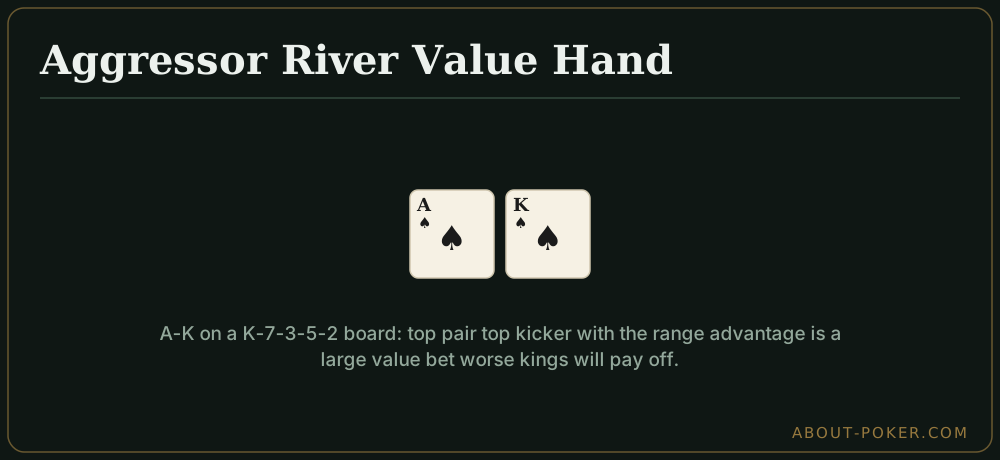
You open A♠ K♠ from the button, the big blind calls. Flop K♦ 7♣ 3♥ — you c-bet, they call. Turn 5♠ — you barrel again, they call. River is the 2♦, board K-7-3-5-2 rainbow. You have top pair, top kicker.
You have the range and nut advantage: you have all the sets, K-K, and A-K, while the big blind’s range is capped at worse kings, sevens, and busted draws. This is a clean value bet, and you should size it large — around 70-80% pot — because worse kings and pairs will pay you off and you have almost no showdown-value reason to check. If you’d been barreling with a busted flush draw instead, this same river is a perfect spot to fire a third bullet as a bluff, since your story is consistent — see triple barreling the river.
Bluffing: pick the right hands
A polarized river strategy needs bluffs to make your value bets get paid. Your best bluffs are the hands that missed but have blockers to your opponent’s calling range and no showdown value of their own — busted flush and straight draws, especially ones holding a card that blocks your opponent’s strongest hands.
Match your bluff sizing to your value sizing. If you overbet for value, overbet your bluffs too, or a thinking opponent will read your sizing tells. The number of bluffs you run should roughly balance your value bets relative to the size you choose — bigger bets need more bluffs to stay balanced, but against players who never fold, simply bluff less and value bet thinner.
When to check back
Not every hand wants to bet. Check back medium-strength hands with showdown value that can’t get called by worse and can’t fold out better. A marginal top pair after two streets of calling, or second pair that’s turned into a bluff-catcher, prefers to check and take a free showdown. Betting it just gets you raised or called by better. This mirror-images the aggressor’s version of river play: identify showdown value and protect it by checking.
Common mistakes
- Under-bluffing. Firing only value on the river lets observant opponents fold every bluff-catcher. Include busted draws with blockers.
- Betting too small for value. Defined ranges reward big bets. A timid half-pot bet leaves value on the table when your opponent will call larger.
- Value betting into a range that beats you. Always ask what worse hand calls.
- Betting medium hands. Marginal showdown value belongs in the check-back bucket, not the value or bluff bucket.
Quick checklist
- Sort every river hand into value, bluff, or check-back.
- Use your range advantage to bet big and polarize.
- Value bet large when worse hands call; size up as ranges get defined.
- Bluff busted draws with blockers, and match bluff sizing to value sizing.
- Check back medium hands with showdown value.
Play the river as the raiser this way and you’ll finally cash in the aggression you spent building the pot.
Frequently asked
How should the preflop raiser play the river?
As the preflop raiser you often hold a range and nut advantage, so the river is where you polarize: bet your strong value hands and your best bluffs, and check back marginal hands with showdown value. Size up on the river because ranges are defined and you can extract maximum value.
Should the preflop raiser bet big on the river?
Often yes. When you have the range advantage and the board favors your betting range, large bets and overbets extract the most value from the second-best hands your opponent is calling with. Match your bluff sizing to your value sizing so you stay balanced.
When should the preflop raiser check the river?
Check back medium-strength hands with showdown value that can't get called by worse and can't fold out better — like a marginal top pair after your opponent has called two streets. Checking realizes your showdown equity and controls the pot against a range that has caught up.