Semi-Bluffing a Flush Draw
A flush draw has nine outs and huge fold equity, making it a prime semi-bluff. Learn the math, when to bet, raise, or shove, and a worked hand.
On this page · 6 sections
The flush draw is the archetypal semi-bluff hand. It has nine clean outs, it’s easy to disguise, and it lets you win the pot two different ways — right now if your opponent folds, or later when the flush lands. Played passively, a flush draw only wins when it hits. Played aggressively, it prints money by adding fold equity on top of drawing equity. Learning to semi-bluff flush draws well is one of the highest-leverage skills in postflop poker.
The math behind the semi-bluff
A flush draw has nine outs — thirteen cards of the suit minus the four you can see. From the flop with two cards to come, that’s about 35% to complete (roughly 1.9-to-1 against). On the turn with one card to come, it falls to about 19.6% (roughly 4-to-1 against). Those are the raw numbers, but the semi-bluff’s real power is that you don’t need to hit to win.
The equation is simple: fold equity plus draw equity. Every time your opponent folds, you win the whole pot with a hand that would have lost at showdown. Every time they call, you still have 35% (or 20% on the turn) to make the best hand. Add just two overcards and your equity jumps toward 50%, turning a semi-bluff into a near coin flip even when called. For the general framework see playing draws postflop.
Betting in position
As the preflop raiser in position, your flush draws belong in your c-betting range. Betting builds the pot for when you hit, denies your opponent a free card that could beat you, and keeps your range balanced — your bluffs and value bets look identical. On dry-ish boards where opponents fold often, a smaller c-bet with your flush draws captures fold equity cheaply. On wetter boards, a larger bet leverages your strong equity and charges opponents to draw against you.
The nice thing about betting in position is control. If you get called and miss the turn, you can take a free card by checking back, or fire again on scare cards. That optionality makes the flush draw a low-risk, high-upside hand to lead with.
Check-raising out of position
Out of position, leading into an uncapped range is awkward. The stronger play with flush draws is usually the check-raise. You check, let your opponent c-bet, then raise. This applies maximum pressure, denies the free card you’d otherwise be giving up, and builds a big pot for the times your flush comes in. A nut flush draw is a premium check-raising hand because you have both fold equity and the best possible draw — see check-raising the flop for the mechanics.
Balance matters here. Check-raising only your made hands makes you readable, so mixing in flush draws as semi-bluffs keeps your check-raising range honest and hard to play against. When you get it in with the draw, you’re rarely in terrible shape.
Getting all in and stack depth
Can you shove a flush draw? Yes — with the right texture and extra equity. A bare nut flush draw is about 35% from the flop, so an all-in relies heavily on fold equity to profit. But a flush draw with two overcards, or a combo of flush plus straight draw, pushes past 50%, making a shove clearly correct because you’re a favorite even when called. Deeper stacks favor betting and calling to realize implied odds; shallower stacks favor getting it in while your fold equity is high. This plays out much like semi-bluffing a straight draw, only with the cleaner nine-out flush count.
A worked hand
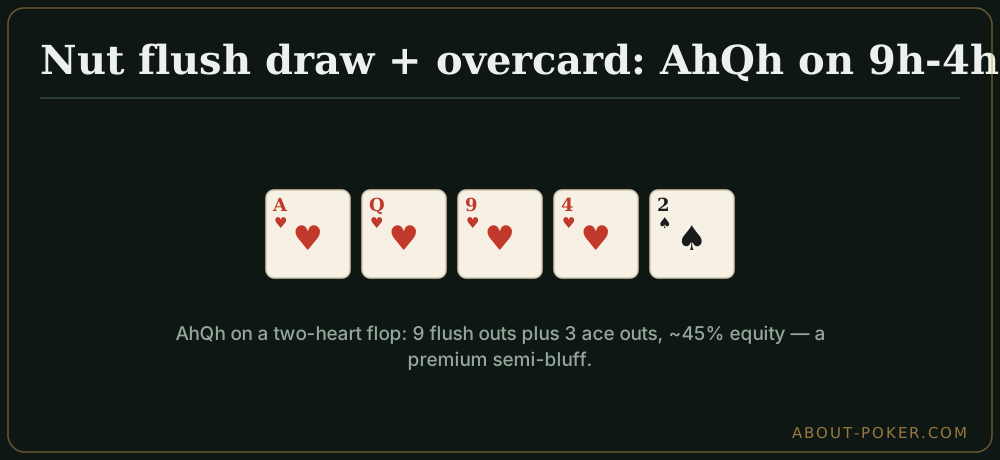
You raise on the cutoff with the ace and queen of hearts and the big blind calls. The flop is heart-nine-four with two hearts, giving you the nut flush draw plus an overcard ace. That’s nine flush outs plus three ace outs — around 45% equity against a made pair. The big blind checks.
You c-bet two-thirds pot. The big blind check-raises. With the nut flush draw and an overcard, you’re not folding a hand this strong. You can call to keep their range wide, or, given your near-coin-flip equity and fold equity, three-bet shove. If you shove and they fold, you win outright; if they call, you’re roughly a coin flip with the nut draw — a fine spot.
Say you call. The turn is a heart — you make the nut flush and now bet purely for value, collecting a big pot. Even on the turns you brick, you semi-bluffed a hand with real equity and plenty of fold equity, which is exactly why the flush draw is the semi-bluff every winning player leans on.
Quick checklist
- A flush draw is nine outs: about 35% from the flop, about 20% on the turn.
- Semi-bluff to win two ways — fold equity now, flush equity later.
- Bet flush draws in position; check-raise them out of position.
- Getting all in is best with a nut draw plus overcards, pushing equity toward 50%.
- Balance your betting and check-raising ranges so draws and value look identical.
Frequently asked
What is a semi-bluff with a flush draw?
A semi-bluff with a flush draw means betting or raising a hand that is not yet made but has nine outs to a flush. You win two ways: your opponent may fold now (fold equity), or they call and you complete your flush on a later street (draw equity). That dual threat makes the flush draw one of the best semi-bluffing hands.
How many outs and how much equity does a flush draw have?
A flush draw has nine outs. From the flop with two cards to come it is about 35% to complete, roughly 1.9-to-1 against. On the turn with one card to come it drops to about 19.6%, roughly 4-to-1 against. Add overcards or a straight draw and the equity climbs well past 50%.
Should you check-raise or bet a flush draw?
Both are correct depending on position and initiative. In position as the preflop raiser, betting your flush draws as part of your c-betting range works well. Out of position facing a bet, check-raising your flush draws applies pressure, denies free cards, and builds a pot for when you hit.
Can you get all in with just a flush draw?
You can, especially with a nut flush draw and extra equity like overcards. A bare flush draw has about 35% from the flop, so shoving relies heavily on fold equity to be profitable. With added outs pushing you toward 50%, getting it in becomes clearly correct.