Semi-Bluffing a Straight Draw
An open-ended straight draw has eight outs and strong fold equity, making it a top semi-bluff. Learn the odds, when to bet, raise, or shove, plus a worked hand.
On this page · 6 sections
The open-ended straight draw is a classic semi-bluff. With eight outs it has genuine equity, and because a completed straight is hard to see coming, it generates strong fold equity too. Play it passively and it only wins when it hits. Play it aggressively — betting and raising — and you add a second way to win the pot on top of your outs. Learning to semi-bluff straight draws turns a “wait and see” hand into a consistent source of profit.
The outs and the odds
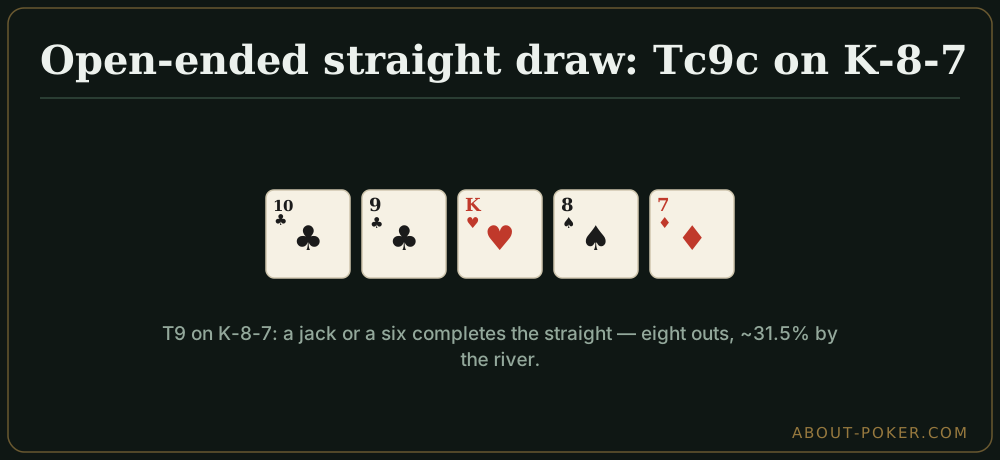
An open-ended straight draw has eight outs: two ranks complete your straight, and there are four cards of each rank. From the flop with two cards to come, that’s about 31.5% to make the straight by the river (roughly 2.2-to-1 against). On the turn with one card to come, it drops to about 17.4% (roughly 4.75-to-1 against).
Those raw numbers matter, but the semi-bluff’s power is that you don’t need to hit. Fold equity plus draw equity is the whole idea: when your opponent folds you scoop the pot with a hand that had nothing; when they call you still have eight outs. Add two overcards and your equity leaps toward 54%, making even a shove profitable. For the general framework see playing draws postflop, and for the nine-out cousin see semi-bluffing a flush draw.
Betting in position
In position as the preflop raiser, your straight draws belong in your c-betting range. Betting builds the pot for when you complete, denies free cards, and disguises your hand — bluffs and value bets look the same. On drier boards a small c-bet captures fold equity cheaply; on wetter boards a larger bet leverages your equity and charges opponents to draw.
Position gives you control. If you’re called and miss the turn, you can check back for a free card, or fire again on scare cards that hit your perceived range. That optionality makes the open-ender a comfortable, low-risk hand to bet aggressively.
Check-raising out of position
Out of position, leading into an uncapped range is awkward, so the stronger line with straight draws is usually the check-raise. Check, let your opponent c-bet, then raise. This maximizes pressure, denies the free card, and builds a pot for the times you hit. Mixing straight draws into your check-raising range keeps it balanced — if you only ever check-raised made hands, thinking opponents would fold everything but the nuts. See check-raising the flop for the mechanics.
The disguise helps here too. When a straight completes, opponents often fail to credit you with it, so your check-raise semi-bluffs get folds now and pay off later.
Getting all in and stack depth
A bare open-ender is about 31.5% from the flop, so an all-in relies mostly on fold equity to be profitable. That changes fast when you add equity: an open-ender with two overcards climbs to roughly 54%, and one paired with a flush draw becomes a monster combo draw that’s often a favorite. With those hands, getting the money in is clearly correct because you’re ahead when called. Deeper stacks reward betting and calling for implied odds; shorter stacks reward getting it in while fold equity is high.
A worked hand
You raise on the button with the ten and nine of clubs and the big blind calls. The flop is king-eight-seven rainbow, giving you an open-ended straight draw: a jack or a six makes your straight — eight outs, about 31.5% to hit by the river. The big blind checks.
You c-bet two-thirds pot to build the pot and apply pressure. The big blind check-raises. Given your eight outs plus backdoor potential, calling to see a turn is reasonable, and against an aggressive opponent a three-bet shove leans on fold equity. Say you call.
The turn is the six of hearts — you make a straight, the near nuts on this board. Now you’re value betting, collecting a big pot from top pair and two-pair hands that can’t fold. On the turns you miss, you still applied pressure with a hand that had real equity and a credible story. That balance of fold equity and drawing equity is exactly why the open-ended straight draw is a semi-bluff you should lean on.
Quick checklist
- An open-ender is eight outs: about 31.5% from the flop, about 17% on the turn.
- Semi-bluff to win two ways — fold equity now, straight equity later.
- Bet straight draws in position; check-raise them out of position.
- Getting all in is best with added overcards or a flush draw, pushing equity toward 54%.
- Balance your betting and check-raising ranges so draws and value look identical.
Frequently asked
What is a semi-bluff with a straight draw?
A semi-bluff with a straight draw means betting or raising an open-ended straight draw before it completes. You win two ways: your opponent folds now, or they call and you make your straight later. With eight outs the draw has real equity, so the bet is backed by both fold equity and drawing equity.
How many outs does an open-ended straight draw have?
Eight outs. There are two ranks that complete the straight and four cards of each rank, so 4 plus 4 equals 8. From the flop that is about 31.5% to hit by the river, roughly 2.2-to-1 against; on the turn with one card to come it is about 17.4%, roughly 4.75-to-1 against.
Is a straight draw a good check-raise?
Yes. An open-ended straight draw is a strong check-raising hand out of position because it applies pressure, denies free cards, and builds a pot for when you hit. Mixing straight draws into your check-raising range also balances your value hands so opponents cannot read you.
Should you get all in with a straight draw?
A bare open-ender is about 31.5% from the flop, so an all-in leans on fold equity to profit. Add overcards or a flush draw and your equity climbs toward or past 50%, at which point getting the money in becomes clearly correct even when called.