Sizing on Wet Boards
Wet, coordinated boards demand bigger bets. Learn why you size up to charge draws, the pot odds a large bet creates, and how to bet a soaking-wet flop.
On this page · 6 sections
Wet boards are where sizing matters most, and where timid bets cost the most. When the flop is coordinated — connected ranks, matching suits, obvious draws everywhere — a small bet is a gift to your opponent. The whole point of betting on a soaking-wet texture is to make draws pay a price they can’t afford, and that requires size. On these boards, bigger is usually better.
Why Wet Boards Demand Bigger Bets
A wet board is defined by the equity floating around in draws. On a flop like 9-8-7 with two hearts, your opponent’s range is stuffed with straight draws, flush draws, combo draws, and pair-plus-draw hands — many holding 30-40% equity against even a strong made hand. Every one of those draws is a customer you want to overcharge.
A bet does two jobs on a wet board: it extracts value from the strong made hands the texture creates, and it denies equity to the draws. A small bet fails at the second job. It lets a flush draw call cheaply and hit its outs on your dime. A large bet flips the math against them — the reasoning developed fully in c-betting wet flops.
The Math of Charging Draws
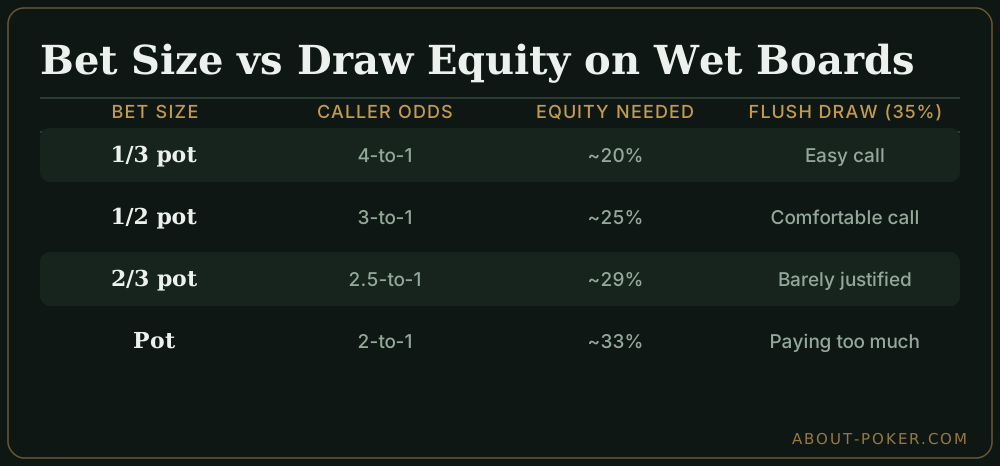
Here’s the arithmetic that justifies sizing up. A flush draw has roughly 9 outs, about 35% equity to complete by the river with two cards to come, or about 19% on any single card. To make a draw fold or at least pay too much, you want to offer worse pot odds than their equity.
A two-thirds-pot bet lays the caller 2.5-to-1, so they need about 29% equity to call. A pot-sized bet lays 2-to-1, requiring 33%. A flush draw with 35% two-card equity is right on the edge, but crucially it rarely gets to see both cards for one price — you’ll bet again on the turn. When you charge them the flop and threaten another barrel, their true realized equity drops well below their raw number, and the large flop bet becomes hugely profitable. Compare this to the opposite texture in sizing on dry boards, where there’s almost nothing to charge.
A Worked Example
You raise with A-A and get one caller. The flop comes J-T-9 with two spades — about as wet as it gets. The pot is $30. Your aces are ahead of most of the range, but the board is a minefield: any queen, king, eight, or spade is a scare card.
You bet $25, roughly 80% pot. A flush draw calling here is paying more than 2-to-1 with a hand that’s under 20% to hit on the next card, and it now faces the threat of another big turn bet. A hand like K-Q (open-ended) is in a similar bind. Meanwhile, the strong made hands — sets, two pair — will call or raise, paying you handsomely. If you’d bet $10 instead, every draw calls happily and realizes its equity, and you’ve turned a strong hand into a passive one on the exact board where protection matters most.
Sizing Up Your Range, Not Just Your Hand
Big bets on wet boards work best with a polarized range — strong made hands that want a big pot, plus a proportion of your own draws and air as bluffs. The strong hands get value and protection; the bluffs generate fold equity from the many marginal made hands (weak pairs, ace-high) that hate calling a large bet on a scary board. A merged, medium-strength hand doesn’t want to be leading a huge bet into this texture; those hands prefer smaller sizes or a check. The texture-by-texture logic behind matching size to board is laid out in c-bet sizing by board texture.
Common Wet-Board Sizing Mistakes
- Betting too small “to keep them in.” On a wet board, keeping draws in cheaply is the mistake — you want them paying or folding, not floating for free.
- Betting big with medium hands. A weak top pair doesn’t want to bloat the pot on a board where it’s often behind; it prefers pot control.
- Forgetting to barrel. A big flop bet only fully charges a draw if you follow through on the turn when the draw misses. One big bet then giving up lets them peel.
- Ignoring your own equity. Your combo draws want to be in the aggressive, big-betting range, not the checking range.
A Wet-Board Sizing Checklist
- Default size: two-thirds pot to full pot; overbet on the wettest, most polarized spots.
- Charge every draw: offer worse odds than their equity to hit.
- Bet a polarized range: strong value plus draws and air, not medium hands.
- Plan the next street: a big flop bet is only half the pressure — barrel when the draw bricks.
- Protect your equity: get value and deny it in the same bet.
On wet boards, the bet size is your protection. Size up, charge the draws, and make your opponent’s equity expensive to realize.
Frequently asked
How big should you bet on a wet board?
Large — typically two-thirds pot up to a full-pot bet, and sometimes an overbet. The bigger size charges the many draws present a price that's worse than their odds to complete, and it gets called by the strong made hands the wet texture creates.
Why do you bet bigger on wet boards than dry ones?
Wet boards are full of draws worth 30-40% equity. A small bet lets those draws call cheaply and realize their equity, whereas a large bet makes them pay too much every time they continue, which is where your profit comes from.
What pot odds does a two-thirds-pot bet give a draw?
A two-thirds-pot bet gives the caller roughly 2.5-to-1, meaning they need about 29% equity to call. A flush draw has about 35% on the flop, so it can barely continue; a gutshot at 16% is priced out entirely.