Value Bet vs Bluff
Value bet or bluff? Learn the one question that classifies every bet, correct bluff-to-value ratios by street, and a worked river example turning a hand into.
On this page · 7 sections
Every chip you put in the pot on a bet is doing one of two jobs. Either you’re getting called by worse hands — a value bet — or you’re making better hands fold — a bluff. There is no third good option. Understanding which of the two you’re doing on every single bet is the clearest, most powerful mental model in poker. Confuse them, and you’ll value-bet into folds and bluff into calls; keep them straight, and your betting becomes ruthless.
The one question that classifies every bet
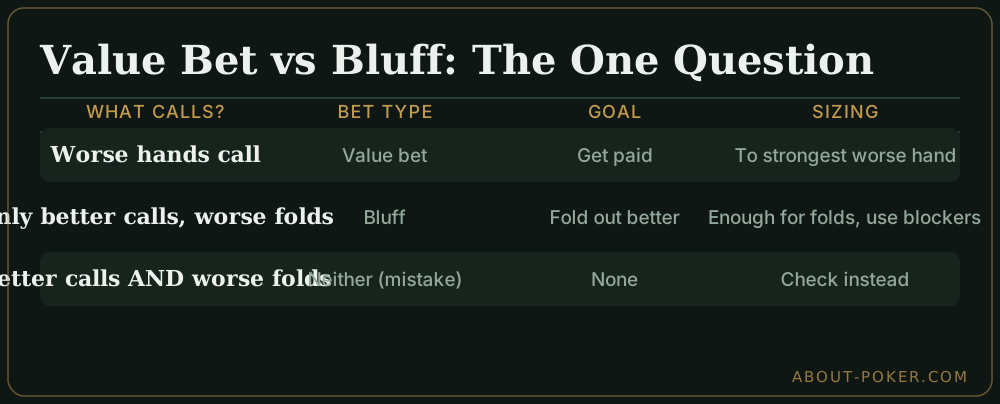
Before you push chips forward, answer this: what does my opponent call with?
- If worse hands call, you’re value betting. Good — size to the strongest worse hand.
- If only better hands call and worse hands fold, you’re bluffing. Only do it when you can actually fold something better out.
- If better hands call and worse hands fold, you’re doing neither and burning money. Check instead.
That’s it. Master players run this check on autopilot. The rest of this article is just consequences of it. For the value side in depth, see value betting in poker.
Value bets: get paid, size to the call
A value bet’s only goal is to extract chips from worse hands. That means the sizing question isn’t “how much do I want to win” but “how much will the worse hand pay?” Against a hand that’s crushed, bet small so it can call. Against a strong second-best hand that can’t fold — a flush when you hold the nut flush — bet big, even overbet, because it’ll pay anyway. The best value bettors also hunt thin value on the river, betting hands like second pair that most players check, because a small edge repeated over thousands of hands is where the real money lives.
Bluffs: fold out better, and pick your spots
A bluff needs fold equity — better hands must be capable of folding. Bluffing a calling station is lighting money on fire; bluffing a thinking player who can lay down a hand is where bluffs earn. The best bluffs also carry blockers: cards that remove combos of the hands that would call. Firing the river with the ace of the missed flush suit means your opponent holds one fewer nut-flush combo, so more of their range is foldable.
Balance: the bluff-to-value ratio by size
If you only ever bet value, opponents fold everything but the nuts. If you only bluff, they call you down. Balance means mixing the two in a ratio the pot odds justify. Your bet size sets that ratio, because it sets the price the opponent is getting.
A rough river guide: at a pot-sized bet you can support about 2 value hands per 1 bluff; at a half-pot bet about 3 value per 1 bluff; at an overbet you can run even more bluffs. Bigger bets lay worse odds, so they justify more bluffs. This is why polarized overbet ranges can be so bluff-heavy and still unexploitable.
A worked example: turning a hand into a bluff
You hold A♠5♠ on 8♠ 7♠ 2♦ K♣ J♠ — wait, that hearts a flush; let’s be precise: the board is 8♠ 7♠ 2♦ K♣ J♥ and your flush draw missed. You have ace-high, no pair. The pot is $120 and it’s checked to you on the river.
Value bet? No — nothing worse calls ace-high, and every pair beats you. So a bet here can only be a bluff. Should you fire? You hold the A♠, which blocks the strongest missed flush draws in your opponent’s range, and your line (betting flop and turn on the draw) tells a credible story of a made hand. Betting two-thirds pot targets the many K-high and pair-of-eights hands that can fold. This is a textbook bluff with a blocker and a story — far better than checking and giving up, and far better than a “value bet” that no worse hand pays.
Flip it: if you’d rivered a pair of aces here, worse hands (Kx, missed draws that pair) might call a smaller bet — now you’d size down and bet for value.
Common mistakes
- Value-betting into folds. Betting big with a marginal made hand only gets called by better. Check-call or bet small instead.
- Bluffing calling stations. No fold equity means no bluff. Value bet them relentlessly instead.
- One-size-fits-all sizing. Sizing should follow the job — big for the value hand that gets paid, sized for the bluff that generates folds.
- No blockers on your bluffs. Bluffing with a hand that unblocks the folds (holding cards that make their fold more likely to be there) wastes your fold equity.
Quick checklist
- Ask: does a worse hand call? Yes to value, no means bluff or check.
- Size value bets to the strongest worse hand that calls.
- Bluff only with fold equity, and prefer hands with blockers.
- Balance value and bluffs to your bet size — bigger sizings support more bluffs.
- Against stations, cut bluffs and pile on value; against thinkers, keep both.
Get value and bluffs cleanly separated in your head and your whole betting game sharpens. Dive into the full postflop hub for sizing, board texture, and hand-reading.
Frequently asked
What is the difference between a value bet and a bluff?
A value bet is made with the best hand to get called by worse hands — you want the call. A bluff is made with a worse hand to make better hands fold — you want the fold. A bet that gets called by better and folds out worse is neither and simply loses chips.
What is the correct bluff-to-value ratio?
It depends on your bet size, because the size sets the pot odds you lay. A pot-sized river bet should be roughly 2 value to 1 bluff; a half-pot bet about 3 value to 1 bluff. Larger bets support more bluffs; smaller bets support fewer.
How do I decide whether to bet for value or bluff?
Ask what your opponent calls with. If worse hands call, bet for value and size to the strongest worse hand. If only better hands call and worse fold, you're bluffing — do it only when you have fold equity and ideally blockers, or check instead.