Turning Second Pair Into a Bluff
Second pair often can't win at showdown. Learn when to turn second pair into a bluff, which cards to fire on, and how blockers decide it — with a worked example.
On this page · 6 sections
Some hands are worth more as a bluff than as a check. Second pair — a pair using the second-highest board card — is a prime candidate. It’s too weak to win a lot at showdown, but it’s not pure air, and on the right runout it can credibly represent a monster. Turning second pair into a bluff is one of the more advanced moves in postflop poker: done right, it prints; done carelessly, it torches chips against hands that were never folding.
Why second pair makes a bluff candidate
The logic starts with showdown value. If your hand almost never wins by checking it down, then betting it costs you little in surrendered showdowns — and it can gain a lot by folding out better hands. Second pair frequently lands in exactly this zone: it beats bluffs, but it loses to top pair, overpairs, and everything stronger that will bet or call.
This is the core idea behind turning made hands into bluffs: the best bluffs come from the bottom of your value range and the top of your air, hands with weak showdown value that block your opponent’s continues. Second pair, especially with a blocker to a straight or flush, checks both boxes — it can’t win a showdown often, and it removes some of the hands that would call.
The prerequisites
Three things must be true before you fire. First, your second pair should have poor showdown value in this specific spot — if it’s actually beating a chunk of your opponent’s range, check it down and take the showdown instead. Second, the board and runout should favor your range, so your bet tells a believable story (a scare card that completes draws you’d have, or an overcard that hits your range harder than theirs). Third, your opponent must be capable of folding — this move is dead against stations.
When those line up, betting beats checking. When they don’t, this is where knowing when to check down second pair keeps you out of trouble — not every second pair wants to become a bluff.
A worked example
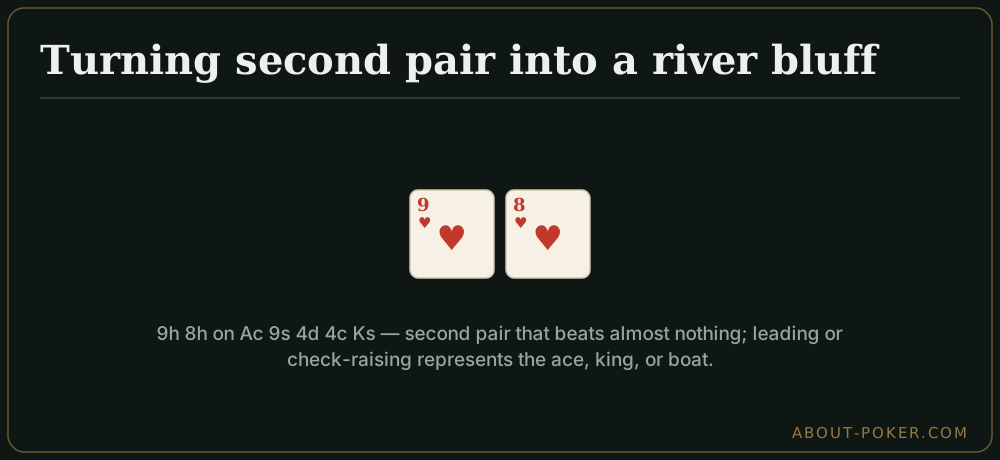
You call a button raise from the big blind with 9♥ 8♥. The flop comes A♣ 9♠ 4♦ — you have second pair (nines). You check-call a small c-bet, planning to reassess. The turn is the 4♣, pairing the board, and the river is the K♠.
Now think it through. Your nines are second pair on a board of A-9-4-4-K. You lose to any ace, any king, any full house, and any better pair — that’s most of your opponent’s continuing range. Checking almost never wins; your second pair is effectively a bluff-catcher that catches almost nothing here because a button who barrels this runout is rarely bluffing enough to beat. So instead of check-calling and losing, you lead or check-raise as a bluff, representing the ace or the king or the boat. The board pairing and the king river are scare cards that favor your perceived range, and your nine blocks a couple of the two-pair combos (A9, 9-x) your opponent might have. Against a thinking button, betting your worthless second pair to fold out ace-high and weak pairs is worth more than checking and giving up.
Contrast that with the flop: on A-9-4 with second pair, you’re not turning it into a bluff — you’re pot-controlling and taking a cheap showdown, because that early it still has some value and the pot is small. Timing is everything.
When to just give up instead
Turning second pair into a bluff is a scalpel, not a hammer. Give up — check and fold — when the board doesn’t favor your range, when your opponent is a calling station, or when the sizing needed to fold them out is bigger than you’re willing to risk. A pure check-fold with a hopeless second pair loses the pot but saves the extra bet; a failed bluff loses both.
It also connects to overall discipline. If you find yourself turning every weak pair into a bluff, you’ve over-corrected — opponents will start calling you down light. Balance the bluffs with real value in the same lines, and keep some second pairs as pot-control check-downs. Predictable aggression gets punished as fast as predictable passivity.
Common mistakes
The first mistake is bluffing with second pair that still has showdown value — you fold out worse and get called by better, the worst of both worlds. The second is doing it against stations, who turn your clever bluff into a value bet for them. The third is picking bad runouts: if the board favors your opponent’s range, your bet has no credible story and gets snapped off.
Checklist for turning second pair into a bluff
Ask: Does my second pair actually win often enough at showdown to justify checking? Does the runout favor my range and tell a believable story? Do I hold blockers to my opponent’s calling hands? And can this specific opponent fold? If showdown value is low, the story is credible, the blockers help, and the opponent can fold — turn it loose. Otherwise, check-fold and wait for a better spot.
Frequently asked
When should you turn second pair into a bluff?
Turn second pair into a bluff when it can no longer win at showdown but can credibly represent a stronger hand, and when it has poor showdown equity relative to the hands you're trying to fold out. This usually happens on the turn or river, on scare cards that favor your range, and when the passive line of check-calling would just lose.
Why bluff with second pair instead of a worse hand?
Second pair often makes a better bluff than total air because it can block some of your opponent's calling hands and because it has almost no showdown value to protect. If a hand rarely wins by checking, betting to fold out better hands captures value it otherwise throws away.
Is turning second pair into a bluff a good idea for beginners?
Do it sparingly at first. It requires reading that your opponent can fold and that the board favors your range. Beginners often turn hands into bluffs with good showdown value or against calling stations, both of which lose money. Start by giving up more, then add these bluffs as your reads sharpen.