Using Blockers to Read Hands
How the cards in your hand tell you what your opponent can't have — using blockers and unblockers to sharpen bluff-catches, value bets, and river bluffs.
On this page · 6 sections
The single most useful idea in hand reading is that the cards in your hand are cards your opponent can’t have. Every card you hold subtracts specific combinations from their range — that’s a blocker. And every strong card you don’t hold leaves their nut hands fully available — that’s an unblocker. Learning to read the board through the lens of what you remove turns two random cards into a partial X-ray of the other player’s range. This is the applied side of blockers in poker: not the definition, but how to actually use it to decide.
Blockers for bluff-catching
When you’re deciding whether to call a big river bet, you want your bluff-catcher to unblock the opponent’s bluffs and, ideally, block their value. Suppose the river completes a flush and villain jams. If you hold a card of the flush suit, you’re blocking one of your own likely bluffs’ backup story but also blocking their made flushes — that cuts their value. If instead you hold a non-flush card that matches a busted straight draw they might have, you unblock their bluffs, meaning more of their air is still available to call you. The best bluff-catchers hold value-blockers and leave bluffs untouched. This is why two hands of identical showdown value can be a call and a fold on the river — the blockers differ.
Blockers for bluffing
Flip it around when you’re the one betting air. A great river bluff holds cards that block the opponent’s calling range and unblock their folding range. Say the board is A♠ K♠ 9♦ 4♣ 2♠ and you’re representing the nut flush. Holding the K♠ is powerful: it removes a chunk of their flushes and blocks KX two-pair-plus, thinning the hands that can call, while your non-showdown-value hand happily folds out. Hold the actual bare A♠ and you block the very nut flush you’re representing — sometimes good, sometimes it just means they can’t have the hand you’re scaring them off. Choosing bluffs by their blockers is the practical core of turning made hands into bluffs: among your give-up candidates, fire the ones that remove their continues.
A worked example
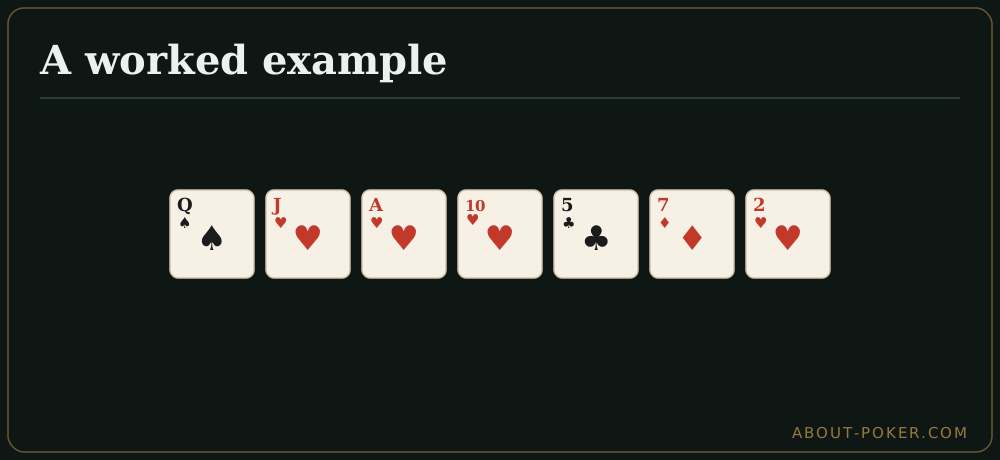
You hold Q♠ J♥ on a runout of A♥ T♥ 5♣ 7♦ 2♥ — a third heart landed on the river, completing a flush you don’t have. You have queen-high, no pair, and a missed straight draw (you were peeling with a broadway shot). Villain checks and you consider a bluff. Your J♥ is a strong blocker — it removes half of the JX-of-hearts flushes and blocks some straight-flush-adjacent combos, cutting his calling range. You also don’t hold the A♥ or K♥, so his nut and second-nut flushes are fully live to fold out under pressure from a big bet representing exactly those. That combination — blocking mid flushes, unblocking his ability to have folded a made hand — makes Q♠J♥ a better bluff than, say, 8♣8♦, which blocks nothing relevant. This is the kind of card-by-card reasoning that separates good and bad rivers in how to play the river.
Value blockers work too
Blockers aren’t only for bluffs. When you make a thin value bet, you want to block the hands that would raise you and get called by worse. If you hold top pair and also hold a card that blocks the nut straight or the sets villain would raise with, you can bet thinner because a raise is less likely. Holding the A on an ace-high board blocks his AK/AQ raises, so your A-J can value bet a street it otherwise couldn’t. The principle is symmetric: for value, block his raises; for bluffs, block his calls.
Common mistakes
The most common error is treating blockers as a trump card. A single blocker is a tiebreaker, not a reason to bluff into an obvious calling station or to hero-call a nit. Blockers refine close spots; they don’t overturn strong reads. A second mistake is blocking your own story — bluffing with the exact card that makes the nuts you’re representing impossible for anyone, which sometimes just means villain knows you can’t have it either in a thinking game. The third is ignoring unblockers on the call side: people fixate on what they block and forget that leaving the opponent’s bluffs available is what makes a bluff-catch profitable.
A quick checklist
Before you commit chips on the river, ask three things. What does my hand block — their value or their bluffs? What do I unblock — are their bluffs still available if I call, or their folds still available if I bet? And is this spot close enough that blockers should decide it, or is the read already clear? Run those and your two cards will stop being just a hand and start being a lens on theirs.
Frequently asked
What is a blocker in hand reading?
A blocker is a card in your hand that removes specific combinations from your opponent's range. If you hold the ace of hearts on a three-heart board, your opponent cannot hold the nut flush, so you can read their range as missing its strongest hands.
What is an unblocker?
An unblocker is a card you don't hold that leaves the opponent's strong hands fully available. When you want a bluff-catch to be good, you want to unblock their bluffs — hold cards that don't remove the hands you beat and that leave their bluffs intact.
How do blockers help you bluff?
The best river bluffs hold cards that block the opponent's calling range and unblock their folding range. Blocking their nutted continues means fewer combos can call, so your bluff gets through more often for the same size.
Do blockers matter more for value or bluffs?
Both, in opposite directions. For thin value you want to block their raising hands so you get called by worse. For bluffs you want to block their calls and unblock their folds. The same card can be great for one plan and bad for the other.