3-Bet vs Flat Call
3-bet or flat call a raise? Learn the value-and-bluff logic behind re-raising, when flatting keeps more dead money in, and a worked AQs example by position.
On this page · 7 sections
You raise, they raise, and now the pot is live before a single card hits the felt. Facing an open, your two aggressive options are to re-raise (3-bet) or to flat call. Both keep you in the hand — the difference is enormous. A 3-bet bloats the pot, seizes initiative, and folds out weaker hands. A flat keeps the pot small, keeps the opener’s junk in, and disguises your strength. Choosing between them well is one of the highest-EV skills in the game.
What a 3-bet actually does
A 3-bet works on two fronts. With value hands it builds a big pot heads-up against a range you dominate. With bluffs it applies pressure, folding out the middling hands that make up most of an opener’s range and picking up dead money uncontested. The trick is that your 3-betting range should contain both, so a thinking opponent can’t simply fold everything but premiums when you re-raise. A range of only nutted hands is transparent and easy to play against.
Build a polarized 3-bet range
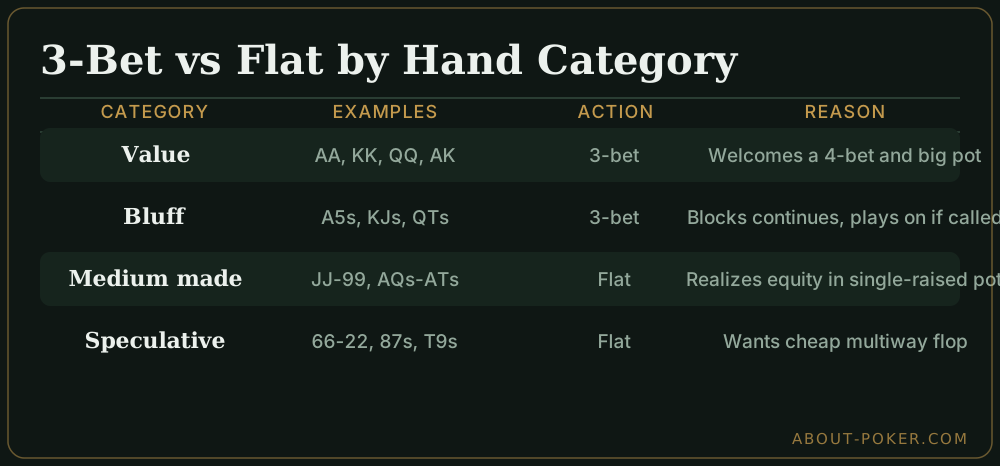
The modern default is a polarized 3-bet: strong value at the top, bluffs at the bottom, and the medium hands flatted in the middle.
- Value: QQ, KK, AA, AK — hands that welcome a 4-bet and a big pot.
- Bluffs: A5s–A2s, KJs, QTs — hands with blockers to the opener’s strong continues (an ace in your hand removes AA/AK combos) and enough playability to barrel postflop if called.
- Flats: JJ–99, AQs–ATs, suited connectors — hands that realize equity best in a single-raised pot and hate being 4-bet off their equity.
This structure is exactly the flip side of the call vs raise preflop decision: everything you don’t 3-bet, you’re choosing to flat or fold.
A worked example: AQs facing a cutoff open
A solid regular opens to 3bb from the cutoff. You’re on the button with A♠Q♠. 3-bet or flat?
Against a tight opener whose range is heavy in AK, AA, KK, you’re often dominated or flipping, and 3-betting mostly folds out his AJ/KQ (the hands you crush) while getting action from the hands that crush you. So you flat in position, keep his weak hands in, and use your positional edge postflop.
Against a loose opener with a wide, weak cutoff range, AQs plays great as a 3-bet: it dominates his AJ/AT/KQ, denies equity, and takes the pot down often preflop. Now you 3-bet for value. Same hand, opposite action — the opponent’s range decides.
When flatting is simply better
Flat-calling wins when 3-betting would fold out worse and get called by better, or when your hand’s value comes from flopping big cheaply. Small pairs want to set-mine vs flat, not get blown off their implied odds by a 4-bet. Suited connectors want a multiway pot to make disguised straights and flushes. And in position, flatting a wider range lets you outplay a capped, out-of-position opener street by street.
Common mistakes
- 3-betting a “call” hand. Blasting 66 or 87s as a 3-bet turns a beautiful implied-odds flat into a hand that folds out your action and plays a bloated pot as an underdog.
- Flatting your premiums out of position. Cold-calling KK from the small blind invites the blinds in and plays a monster passively. Re-raise for value.
- A linear 3-bet range with no bluffs. If you only 3-bet QQ+/AK, observant opponents fold everything but premiums and you never get paid. Add the blocker bluffs.
- Ignoring who’s behind. Flatting in the cutoff invites the button and blinds to squeeze. Multiway risk pushes marginal flats toward 3-bet-or-fold.
Position and opponent tune the dial
Out of position, tighten toward 3-bet-or-fold — flatting out of position leaks equity all hand. In position, flat more freely because you’ll act last and realize equity easily. Against a nit who never folds to 3-bets, cut your bluffs and 3-bet pure value. Against a fit-or-fold opener who over-folds, expand your bluff 3-bets and print. The structure is the same; the frequencies bend to the table.
Quick checklist
- Does a worse hand call a 3-bet, or continue? If worse continues, 3-bet for value.
- Does my hand want a small multiway pot? Lean flat.
- Do I have blockers to their strong hands? Good 3-bet bluff candidate.
- Am I in position? In position widens flats; out of position narrows toward 3-bet-or-fold.
- Would 3-betting only fold worse and get called by better? Then flat or fold instead.
Nail the 3-bet-versus-flat fork and every street after it gets easier. Browse the wider postflop hub to connect it to the rest of your game.
Frequently asked
Should I 3-bet or flat call?
3-bet for value with hands that want a bigger heads-up pot (QQ+, AK), and as a bluff with hands just below your calling range that block the opener's continues (A5s, KJs). Flat call with hands that flop well multiway and lose value when 3-bet, like small pairs and suited connectors.
What is a polarized 3-bet range?
A polarized 3-bet range is built from strong value hands plus bluffs, with the medium hands flatted instead. Against a good opener who 4-bets and folds correctly, polarized 3-betting is standard because your bluffs have blockers and your value gets paid.
When is flatting better than 3-betting in position?
Flatting in position is better when you have a hand that realizes equity well postflop but doesn't want to fold out the opener's weaker hands — medium pairs, suited broadways, and suited connectors that make disguised nuts and can outplay a capped opener after the flop.